Ghana’s Economy Shows Signs of Recovery — But Many Households Still Feel the Strain


Follow Nukunya
Get the latest breaking news and updates from Nukunya.
Accra, Ghana — 26 April 2026 |
Ghana’s economy is showing signs of stabilisation following recent reforms, but many households say the cost of living remains high, raising questions about how widely the recovery is being felt.
Recent economic updates indicate improvements in key indicators, including inflation trends and fiscal stability, following policy measures supported by international partners. However, analysts say these gains have yet to translate into meaningful relief for many citizens.
According to reporting by Reuters, Ghana has been implementing economic reforms aimed at restoring stability after a period of financial strain, including measures linked to its programme with the International Monetary Fund (IMF).
Economic Stability vs Everyday Reality
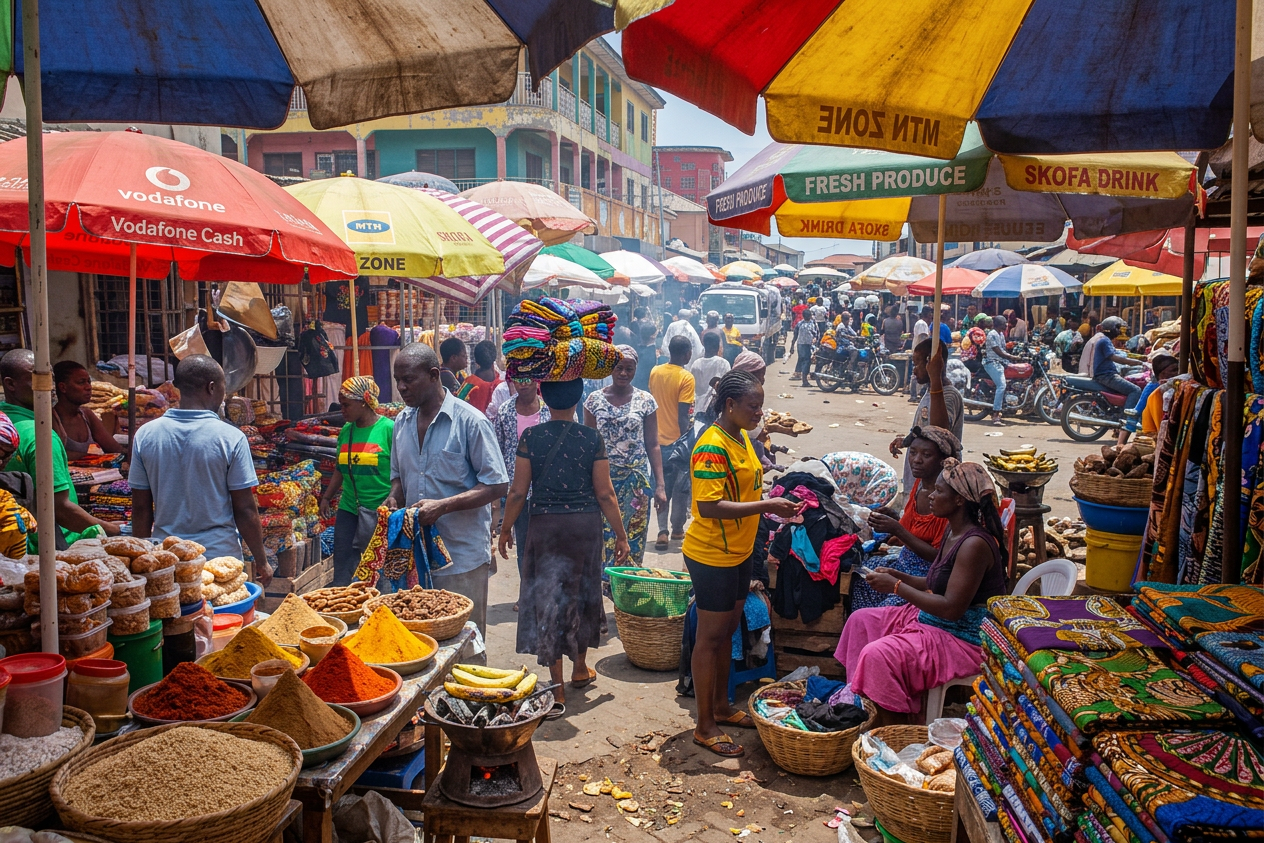
While macroeconomic indicators suggest gradual improvement, everyday expenses remain a major concern for many households.
Residents continue to face pressure from:
- Rising food prices
- High transport costs
- Increased rent and utility expenses
Analysts say there is often a lag between macroeconomic recovery and real improvements in living standards. “Stabilisation at the national level does not immediately reduce household costs,” an economic observer noted, pointing to the time it takes for policy measures to filter through the wider economy.
Inflation Pressures Still Felt
Although inflation has shown signs of easing compared to previous peaks, price levels remain elevated.
This means that:
- Even slower price increases still feel expensive
- Household purchasing power remains constrained
Additional coverage from the Ghana News Agency has highlighted ongoing public concerns about affordability and the rising cost of essential goods.
The Role of Economic Reforms
Ghana’s recovery efforts have included:
- Fiscal adjustments
- Debt restructuring measures
- Monetary policy interventions
These reforms were designed to restore confidence in the economy, stabilise the currency, and reduce inflation over time.
However, experts caution that:
- The benefits of reform take time
- Short-term hardship can persist during adjustment periods
What It Means for Households
For many Ghanaians, the key question is not whether the economy is improving, but whether daily life is becoming more affordable.
Current challenges include:
- Limited wage growth
- High living expenses
- Ongoing financial uncertainty
Observers say sustained improvement in living conditions will depend on:
- Continued economic stability
- Job creation
- Lower inflation over time
A Continuing National Conversation
Citizens are increasingly prioritising affordability and economic inclusion while policymakers concentrate on stabilisation. The gap between economic recovery and lived experience has become a central topic in public discussion. Citizens are increasingly prioritising affordability and economic inclusion while policymakers concentrate on stabilisation. Analysts say bridging this gap will be critical to ensuring that economic recovery is both sustainable and widely felt.
Sources
- Reuters (April 2026): Coverage of Ghana’s economic reforms and recovery efforts
- Ghana News Agency (April 2026): Reporting on cost of living and economic conditions
Editor’s Note
This is a developing economic story and will be updated as more data and analysis become available.
Related posts:
 Ghana’s inflation slows for third consecutive month as food prices ease
  Ghana Cocoa Farmers Warn of Harvest Risks as Payment Delays Deepen
  Ghana exits IMF programme as government shifts focus to jobs and growth
  IMF PCI to Strengthen Bank of Ghana’s Balance Sheet
  Ghana Nears First Non-Interest Banking Licence as BoG Warns on Fintech Trust