Christian Council of Ghana defends right to speak on governance amid neutrality concerns


Accra, Ghana — 29 April 2026
The Christian Council of Ghana has defended its right to comment on national issues, rejecting criticism that its public interventions risk political bias and insisting it will continue to speak on governance without aligning with any party.
The statement comes amid growing public debate over the role of religious institutions in Ghana’s democracy, particularly as churches increasingly address economic pressures, elections and leadership accountability.
Religious influence under scrutiny
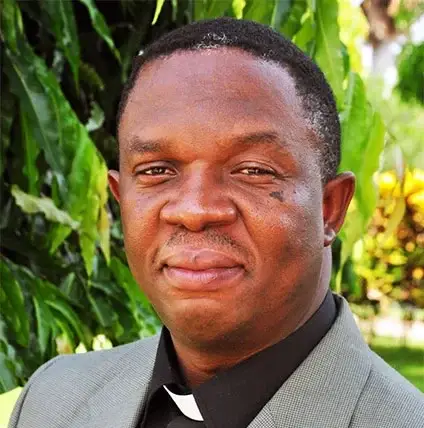
Speaking on PM Express, the Council’s General Secretary, Rev. Cyril Fayose, acknowledged the influence of religious leaders but said this should not restrict their participation in national discourse.
He stressed that member churches remain “non-partisan” despite representing congregations drawn from across political divides.
“Christian Council member churches are careful not to be partisan,” he said, adding that they engage all members equally regardless of political affiliation.
‘Non-partisan does not mean silent.’
Rev. Fayose said neutrality should not be interpreted as silence, arguing that faith-based organisations have a civic responsibility to contribute to public debate.
“But that does not mean we should refrain from commenting on political happenings… without fear of being branded,” he said. “We have to say it as it is.”
He framed the Council’s position within Ghana’s democratic tradition, emphasising citizens’ right to free expression.
“We all have the right to speak,” he said, referencing the principle that citizens should be active participants in national life.
Criticism and concerns over political alignment
Critics argue that increased commentary from religious organisations risks confusing moral guidance with political engagement, particularly during periods of heightened political tension.
Some analysts say such interventions, even when framed as neutral, can be interpreted as indirect support for or opposition to government policies.
Rev. Fayose rejected that view, stating that the Council does not endorse political parties or specific positions.
“We are not going out to declare our support for a particular party,” he said. “We are out there to help comment on the actions of our leaders so that together, we’ll have a better country.”
Historical role of churches in Ghana
Religious organisations in Ghana have long played a role in civic advocacy, often speaking out on governance, corruption, and social welfare issues.
Their influence has grown in recent years as economic challenges and political competition have intensified public scrutiny of leadership.
Analysts say that the trustworthiness of these kinds of organisations depends on keeping a clear line between moral authority and political alignment.
Implications for governance and public discourse
The Christian Council’s stance highlights a broader tension in Ghana’s democracy between freedom of expression and the expectation of institutional neutrality.
While religious bodies remain influential voices in public life, they continue to contest their role in shaping political discourse.
The debate is likely to intensify as the country approaches key political and economic milestones, with civil society groups increasingly expected to balance advocacy with impartiality.
Source: MyJoyOnline
Additional reporting and analysis by Nukunya News Desk
Related posts:
 Akosombo Dam Breakthrough Brings Relief to Ghana’s Power Crisis
  Ghana Premier League Fixtures Postponed as Funeral Rites Set for Slain Footballer Dominic Frimpong
  Ghana’s inflation slows for third consecutive month as food prices ease
  Ghana Allocates GH¢442 Million for Flood Recovery and Coastal Protection
  Dr Ofori Sarpong donates 600-bed dormitory to PRESEC Legon to ease student congestion