Ghana’s UK High Commissioner Calls on Diaspora to Drive Investment and Growth


Follow Nukunya
Get the latest breaking news and updates from Nukunya.
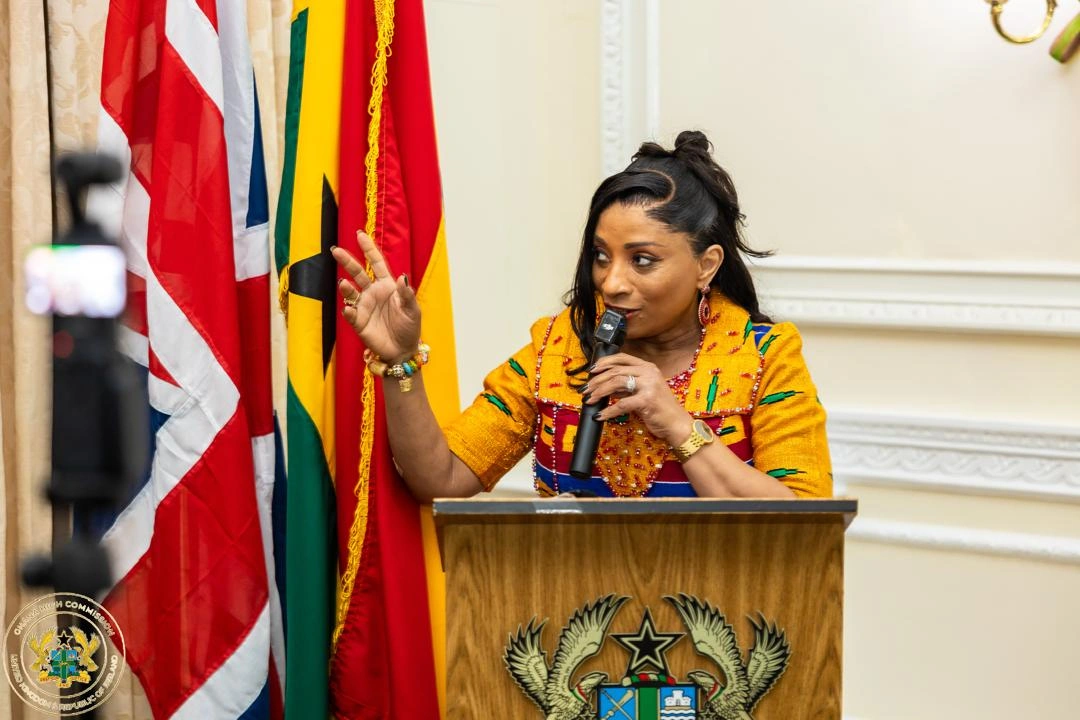
Ghana’s High Commissioner to the United Kingdom, Mrs Sabah Zita Benson, has urged Ghanaians abroad to expand their role in investment, innovation and skills transfer, arguing that diaspora communities can become a major force in the country’s economic transformation. Her remarks come as Ghana seeks to deepen engagement with overseas citizens beyond remittances.
LONDON, United Kingdom — Ghana’s High Commissioner to the United Kingdom, Mrs Sabah Zita Benson, has called on Ghanaians living abroad to play a larger role in investment, entrepreneurship, innovation and skills transfer, arguing that the country’s long-term development will depend increasingly on how effectively it harnesses the expertise and resources of its global diaspora.
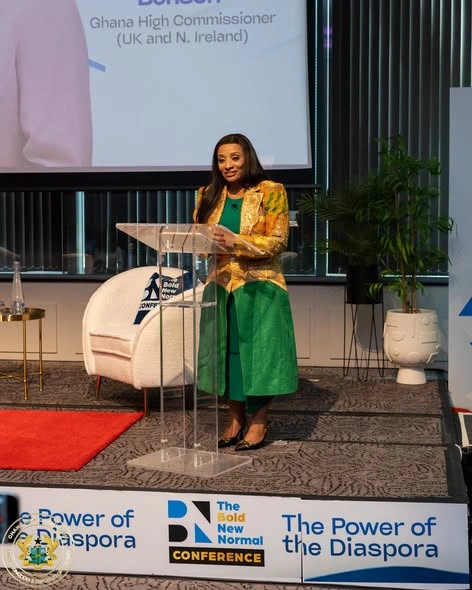
Speaking at the Bold New Normal Conference in London, Mrs Benson said the Ghanaian diaspora represents one of the country’s most valuable strategic assets and should be viewed as a partner in national development rather than solely as a source of remittances.
“The Ghanaian diaspora remains one of our greatest assets,” she said, highlighting the contributions made by Ghanaians abroad through professional expertise, mentorship, innovation, business investment and international networks. Her remarks come as governments across Africa seek new ways to attract diaspora capital, knowledge and technology to support economic growth and industrial transformation.
Beyond Remittances
For decades, remittances have been one of Ghana’s most significant sources of foreign exchange.
According to data from international financial institutions, remittance inflows to Ghana have consistently reached billions of dollars annually, providing critical support to households, businesses and local communities. Policymakers increasingly argue, however, that the economic value of the diaspora extends far beyond money transfers.
Mrs Benson said diaspora professionals possess expertise, global networks and entrepreneurial experience that can contribute to job creation, innovation and institutional development in Ghana. She urged governments, businesses and educational institutions to create stronger pathways for overseas Ghanaians to participate in national development projects.
A Growing Development Strategy
The High Commissioner’s comments align with broader efforts by successive Ghanaian governments to strengthen diaspora engagement.
Recent initiatives have focused on encouraging investment, promoting tourism, supporting business partnerships and facilitating knowledge transfer between Ghanaian professionals abroad and institutions at home.
Diaspora engagement has become an increasingly important policy area as countries compete globally for investment, technology and highly skilled talent.
For Ghana, which has substantial diaspora communities in the United Kingdom, the United States, Canada and across Europe, policymakers view overseas citizens as potential contributors to economic growth, innovation and competitiveness.
Research, Innovation and Knowledge Transfer
Mrs Benson also emphasised the importance of connecting academic research to practical development outcomes. Addressing researchers, academics and policymakers, she argued that universities should play a greater role in generating solutions to national challenges and ensuring that research informs public policy and economic decision-making.
She called for stronger collaboration between academia, government and industry, particularly in areas such as technology, industrial development, sustainability and entrepreneurship. According to the High Commissioner, innovation-driven growth will be essential if Ghana and other African countries are to compete effectively in an increasingly knowledge-based global economy.
Opportunities and Challenges
While diaspora engagement presents significant opportunities, experts have noted that several challenges continue to affect investment flows from overseas communities.
Diaspora investors have frequently cited concerns including bureaucratic delays, land ownership disputes, regulatory uncertainty and difficulties navigating administrative processes.
Development specialists argue that addressing these obstacles will be critical if governments hope to convert diaspora interest into sustained long-term investment.
Mrs Benson’s remarks suggest that policymakers increasingly recognise the need to create stronger institutional frameworks capable of supporting diaspora participation in economic development.
Moving Beyond Raw Material Dependence
The High Commissioner also reiterated the need for African economies to move beyond dependence on raw material exports.
She argued that long-term prosperity would require greater emphasis on value addition, manufacturing, innovation and industrial development.
The continent, she said, must increasingly position itself as a producer of finished goods and knowledge-based services rather than relying primarily on commodity exports.
Economists have long argued that industrialisation and diversification remain central to Africa’s efforts to create jobs, improve productivity and strengthen economic resilience.
Why It Matters
The debate over diaspora engagement has become increasingly important as countries seek new sources of growth amid global economic uncertainty.
For Ghana, the issue carries particular significance because of the size, influence and economic strength of its overseas communities.
Beyond remittances, diaspora members occupy senior positions in business, academia, healthcare, technology and public service across major international markets.
Supporters of deeper engagement argue that harnessing this expertise could help accelerate economic development, strengthen institutions and improve competitiveness.
Looking Ahead
Mrs Benson’s remarks reflect a broader shift in thinking among policymakers who increasingly view diaspora communities as development partners rather than distant observers.
As Ghana seeks to attract investment, expand industrial capacity and strengthen innovation ecosystems, the ability to mobilise diaspora talent, capital and expertise may become an increasingly important element of national development strategy.
The High Commissioner’s message was clear: the future relationship between Ghana and its diaspora should be built not only on emotional ties and remittances but also on investment, innovation, knowledge transfer and shared economic opportunity.
Related posts:
 Mahama Meets King Charles III as Ghana Seeks UK Investment
  Ghana Evacuates 345 More Citizens from South Africa as Other African States Study Rescue Plan
  Diaspora Affairs Office Backs New Volunteerism Initiative to Harness Ghanaian Talent Abroad
  Ghana moves nearly 900 citizens to safe havens ahead of South Africa protests
  Council of State Advises Parliament Against Ghana’s Dual Citizenship Amendment Bill