Ghana judicial workers’ strike: Labour Commission intervenes ahead of November 2 deadline
Ghana's Labour Commission has intervened to avert a November 2 strike by judicial workers over delayed 2026 salaries. Here are JUSAG's demands, key deadlines and what the dispute could mean for court users.

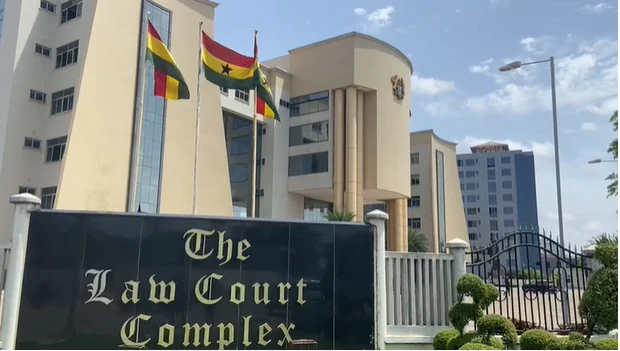

Ghana’s National Labour Commission has intervened in a dispute over judicial workers’ 2026 salaries, directing their union to abandon a threatened November 2 strike as concerns grow over possible disruption to court services.
ACCRA — Ghana’s National Labour Commission (NLC) has directed the Judicial Service Staff Association of Ghana (JUSAG) to abandon its planned indefinite strike and called for negotiations over delayed salary reviews and allowances.
The intervention follows a warning by JUSAG that its members could withdraw their services from Monday, November 2, unless the government approves their revised salaries and makes arrangements to pay arrears covering January to October 2026.
In a letter dated October 26, the commission asked the Minister for Jobs, Labour and Employment Relations to lead discussions aimed at resolving the dispute.
The commission’s intervention was reported after JUSAG formally notified the labour regulator of its intention to take industrial action.
The dispute has raised concerns about the possible consequences for Ghana’s courts, where administrative and support staff play important roles in processing cases, maintaining records and facilitating hearings.
However, the proposed November 2 strike has not begun, and there is no verified announcement that courts have closed because of this latest dispute.
Why are Ghana’s judicial workers threatening to strike?
JUSAG says the government has delayed approving salary and allowance adjustments for 2026, despite recommendations submitted by the Judicial Council.
According to the association, the previous salary review expired in December 2025, making a new review necessary for the current year.
The union says it has repeatedly sought progress through correspondence and meetings with judicial authorities.
In its notification of industrial action, dated October 23, JUSAG said the prolonged delays had weakened staff morale and created financial difficulties for its members.
The association argues that the situation is particularly frustrating because other public-sector workers received revised salaries earlier in 2026.
These are the union’s stated grievances. The precise amount owed to individual workers and the government’s financial assessment of the proposed adjustments have not been independently established.
What has the National Labour Commission ordered?
According to a report by 3News, the National Labour Commission issued a letter dated October 26 directing JUSAG to abandon its intended industrial action.
The letter, identified in the report by reference number NLC/C-423/2026/35F, was signed by the commission’s Executive Secretary, Dr Bernice A. Welbeck.
The commission also requested that the Minister for Jobs, Labour and Employment Relations lead negotiations to address the workers’ concerns.
The intervention represents an attempt to resolve the dispute before the proposed strike date.
It does not, by itself, establish that the union has withdrawn its threat or that an agreement has been reached.
At the time of the reports reviewed, there was no independently verified final settlement between JUSAG and the government.
The NLC has reportedly directed JUSAG to abandon its intended action. This does not establish that the union has complied, that negotiations have concluded or that a settlement has been reached.
JUSAG strike: Key dates and demands
Interactive: timeline of the dispute
Select a development to examine the sequence leading to the proposed November strike.
Previous salary review period
According to JUSAG, the previous salary review period ended in December 2025.
| Date | Development |
|---|---|
| December 2025 | Previous salary review period ends, according to JUSAG |
| 19 January 2026 | JUSAG says it wrote to the Judicial Council seeking progress |
| 10 September 2026 | Association says it issued another reminder |
| 23 October 2026 | JUSAG issues notification of intended industrial action |
| 26 October 2026 | National Labour Commission reportedly intervenes |
| 31 October 2026 | Deadline sought by JUSAG for salary approval |
| 1 November 2026 | Final date in the union’s strike warning |
| 2 November 2026 | Proposed start of indefinite industrial action, conditional on unresolved demands |
The association’s demands concern two related but distinct matters.
Approve the 2026 salary review
JUSAG wants approval of the Judicial Council’s recommendations on salaries and allowances for 2026.
Implement revised pay and arrears
JUSAG wants revised salaries paid in November, alongside adjustments covering January to October 2026.
The ten-month period is the basis of the union’s arrears demand. It does not mean workers received no salary during those months.
The dispute concerns outstanding salary adjustments and related allowances, not an independently verified total absence of regular pay.
Could the strike disrupt Ghana’s courts?
An indefinite withdrawal of services by judicial workers could affect court administration and the handling of cases.
Depending on which staff participate, potential consequences could include delays in processing court documents, managing records, scheduling proceedings and providing administrative support.
Such disruption could create difficulties for lawyers, litigants, witnesses and members of the public who rely on timely access to the justice system.
However, the precise operational impact cannot be determined before the scope of any industrial action is confirmed.
There is no verified evidence that every court would close, that all hearings would be cancelled or that emergency judicial arrangements would cease.
Do not assume that a scheduled hearing has been cancelled. Check official Judicial Service communications or contact the relevant court registry to confirm any changes.
What does Ghanaian law say about judicial workers’ salaries?
The salary dispute involves the constitutional and regulatory framework governing remuneration within Ghana’s Judicial Service.
Article 149 of Ghana’s 1992 Constitution provides for the salaries, allowances and other conditions of service of specified judicial personnel to be determined by the President, acting on the advice of the Judicial Council.
JUSAG also cites the Judicial Service (Terms and Conditions of Service) Regulations, 2025, known as Constitutional Instrument 141.
According to the association, the Judicial Council has completed its recommendations for the 2026 review and submitted them for presidential determination.
The central disagreement therefore concerns the approval and implementation of the proposed adjustments.
The union’s account of the review process has been widely reported, but the complete recommendations and associated financial calculations have not been independently examined for this report.
Why this dispute matters beyond judicial workers
The immediate disagreement concerns employment conditions, but its potential consequences extend to the administration of justice.
Courts depend on a range of professional, technical and administrative staff to function effectively.
If a prolonged strike were to interrupt these services, the effects could extend beyond the workers and their employer.
Individuals involved in civil disputes, criminal proceedings and other legal matters could face uncertainty about administrative processes and hearing arrangements.
The public-interest issue is therefore twofold: whether judicial employees receive remuneration determined through the applicable framework, and whether the authorities can resolve the dispute without undermining access to justice.
The latest intervention by the National Labour Commission creates an opportunity for negotiations before industrial action begins.
Its effectiveness will depend on whether the parties reach an agreement that addresses the outstanding salary review and provides a credible timetable for implementation.
Has JUSAG threatened strike action before?
The latest warning follows an earlier salary dispute in January 2026.
At that time, JUSAG threatened industrial action over arrears associated with a previous pay adjustment.
Reporting by Citi News and Graphic Online shows that the planned January action was subsequently suspended following government engagement.
That earlier suspension is relevant because it demonstrates that negotiations have previously prevented a threatened withdrawal of services.
However, the January dispute and the current demand for approval of the 2026 salary review should not be treated as identical.
The latest disagreement concerns the implementation of the current year’s salary recommendations and associated arrears.
What happens next?
The immediate focus is on discussions involving the government, judicial authorities and JUSAG.
Three developments will determine whether the planned strike proceeds:
Interactive: three developments to watch
These are reporting checkpoints, not live confirmations of the negotiations.
Approval of the salary review
Look for an official decision confirming whether the Judicial Council’s 2026 recommendations have received the required approval.
Until those developments are confirmed, the threat of industrial action remains a developing story.
The National Labour Commission has sought to prevent disruption, but its intervention should not be confused with a completed settlement.
For court users, the practical advice is to monitor official Judicial Service announcements and confirm any changes to scheduled proceedings directly with the relevant court.
For the government and judicial workers, the coming days will test whether negotiations can resolve a prolonged pay dispute before it affects the delivery of justice.
Related posts:
 Ghana Parliament Passes Human Sexual Rights and Family Values Bill
 NDC Renames Headquarters ‘Jerry Rawlings House’ on Founder’s 79th Birthday.
 EOCO under pressure to explain detention of Dennis Miracles Aboagye as NPP supporters protest
 Mahama Nominates Three to Ghana Supreme Court, Parliament to Vet Appointments
 PAC Chair Demands Openness in Tax Collection for State Agencies