
Ghana Targets 80,000 Garment Jobs — How Does the Plan Compare With Earlier Forecasts?
Ghana targets 80,000 garment jobs across four regions. Nukunya compares earlier forecasts and examines investment, factory capacity and employment delivery.

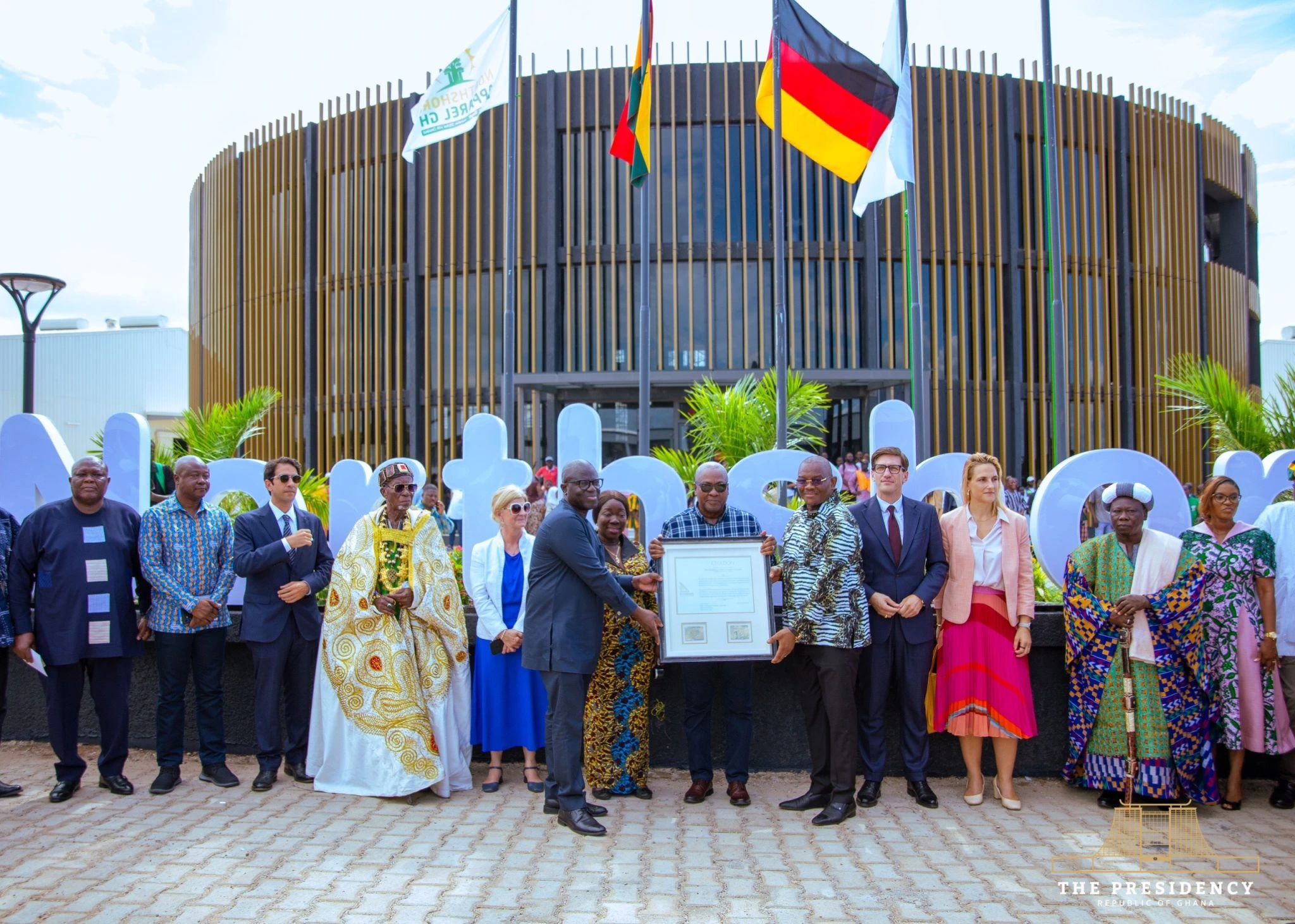

Ghana’s latest garment manufacturing plan targets 80,000 direct jobs across four regions. Earlier official projections were considerably lower. Nukunya examines the differences and the evidence needed to turn industrial ambitions into sustainable employment.
Accra — Trade, Agribusiness and Industry Minister Elizabeth Ofosu-Adjare has outlined an expansion of garment manufacturing intended to employ 80,000 people, particularly women and younger workers. She discussed the initiative during the Sixth German-African Business Summit in Accra.
The ambition is substantially larger than figures published earlier this month. The government has not yet supplied a reconciled factory-level employment schedule in the reports reviewed by Nukunya. The question is whether the latest figure covers additional facilities, expanded capacity or a different programme scope.
Ghana’s textile and garment industry: examining the 80,000-job target
Ghana’s textile and garment expansion has been associated with three employment projections: 27,000, 36,000 and 80,000 direct jobs. The figures cover potentially different programme scopes and should not be interpreted as actual employment counts.
Three employment projections, three different scopes
The 2027 Budget identifies 27,000 projected direct jobs across three proposed factories. The Information Services Department subsequently reported 36,000 jobs across four factories at full capacity. Summit reporting on 24 November 2026 identified a target of 80,000 jobs across four regions.
| Source | Projected direct jobs | Programme scope |
|---|---|---|
| 2027 Budget, paragraph 1246 | 27,000 | Three proposed factories |
| Information Services Department, 17 November 2026 | 36,000 | Four factories at full capacity |
| Ministerial announcement reported 24 November 2026 | 80,000 | Factories across four regions |
Nukunya calculations: 80,000 − 36,000 = 44,000; 44,000 ÷ 36,000 × 100 = 122.2%; 80,000 ÷ 27,000 = 2.96. These differences do not establish that the government revised an identical programme.
Where are the proposed factories?
The 2027 Budget identifies three proposed factory locations. The identity of the fourth region mentioned in the latest reporting has not been established in the material reviewed.
Bono East Region
Identified in the 2027 Budget.
Central Region
Identified in the 2027 Budget.
Eastern Region
Identified in the 2027 Budget.
Fourth region
Identity not established in the reporting reviewed.
The three budget locations are proposed facilities, not independently verified operational factories.
What would 80,000 jobs mean in practice?
If 80,000 jobs were distributed equally across four regions, each region would account for 20,000 jobs. If those jobs were also divided equally across three shifts, the illustrative result would be approximately 6,667 workers per region per shift.
These are mathematical scenarios, not an official workforce distribution plan.
80,000 jobs ÷ 4 regions ÷ 3 shifts ≈ 6,667 workers per region per shift.
The calculator assumes equal distribution of jobs across regions and shifts. Actual employment would depend on factory size, staffing requirements, shift patterns and occupational composition. The selected region and shift counts are illustrative assumptions, not official plans.
Understanding the US$1 billion investment programme
Ghana’s wider textile and garment programme envisages US$1 billion in investment during 2027–2030, covering infrastructure, textile production, factory expansion and support for smaller apparel businesses.
This ratio is not a verified cost of creating each job. The investment programme covers activities beyond the proposed factories, and the scope of the employment projection has not been reconciled with the investment programme.
Reported programme timeline
-
2026
Employment projections, proposed factory locations and feasibility work described in government reporting.
-
2027
Infrastructure work expected to begin.
-
2028
Production lines expected to begin coming into operation.
-
2027–2030
Wider textile and garment investment programme period.
Future milestones are stated plans or expectations, not confirmed completed activities.
What must happen before employment targets become sustainable jobs?
Commercial demand and repeat orders
Factories need customers willing to place repeat orders at prices sufficient to cover labour, materials, utilities, logistics and financing.
Skills, productivity and quality standards
Manufacturers need trained workers, reliable production processes and consistent quality to meet domestic and international customer requirements.
Infrastructure and operating reliability
Electricity, water, transport, machinery maintenance and supply-chain reliability influence whether installed production capacity can be used commercially.
Employment quality and retention
Job creation should be assessed alongside wages, employment contracts, workplace safety, predictable working hours and worker retention.
Participation of smaller garment businesses
Tailors, dressmakers and smaller manufacturers could participate through training, subcontracting and specialised production, subject to viable commercial arrangements.
These are analytical conditions for sustainable industrial employment, not findings from an independent factory inspection.
Six indicators Ghana should publish to demonstrate delivery
Employment announcements should be followed by measurable implementation evidence. Nukunya proposes the following indicators.
| Indicator | Evidence required |
|---|---|
| Sites operational | Commissioning and production records |
| Net additional direct jobs | Reconciled payroll counts excluding transfers |
| Employment retention | Six- and twelve-month worker cohorts |
| Capacity utilisation | Actual output against installed capacity |
| Commercial demand | Delivered orders and repeat contracts |
| Employment quality | Aggregated wage, safety and contract indicators |
Original monitoring framework proposed by Nukunya. No official indicator values, implementation baselines or achieved employment totals are asserted.
Frequently asked questions about Ghana’s garment employment projections
Has Ghana already created 80,000 textile and garment jobs?
No. The 80,000 figure is a reported employment projection. It is not a verified count of workers employed in operational factories.
Why are there three different employment figures?
The 27,000, 36,000 and 80,000 figures are associated with potentially different factory configurations, geographic coverage and programme assumptions. A formal government reconciliation is needed.
Which regions are identified for the proposed factories?
The 2027 Budget identifies Bono East, Central and Eastern regions. The fourth region mentioned in the latest reporting has not been established in the material reviewed.
Does US$12,500 represent the cost of creating each job?
No. It is an illustrative ratio obtained by dividing the wider US$1 billion sector investment programme by the 80,000-job target. The programme and employment estimate may have different scopes.
When are the new factories expected to begin production?
The wider programme anticipates infrastructure work beginning in 2027 and production lines coming into operation from 2028. These are projected milestones rather than verified completion dates.
How should Ghana verify that the programme is creating jobs?
Publish factory commissioning records, reconciled payroll counts, employment retention, capacity utilisation, delivered orders and aggregated employment-quality indicators.
The real test is delivery, not the headline
Ghana’s garment expansion could create substantial employment, but the headline target is not evidence of delivery. The meaningful test is commercially sustainable production and verified additional jobs.
A transparent reconciliation of the 27,000, 36,000 and 80,000 projections would help establish whether the latest ambition reflects a wider industrial programme or a change in earlier assumptions.