Senegal Reinstated as AFCON 2025 Champions After CAS Overturns CAF Decision
CAS restores Senegal’s 1–0 AFCON final victory over Morocco. Nukunya examines the ruling, the 310-day dispute and its implications for African football.

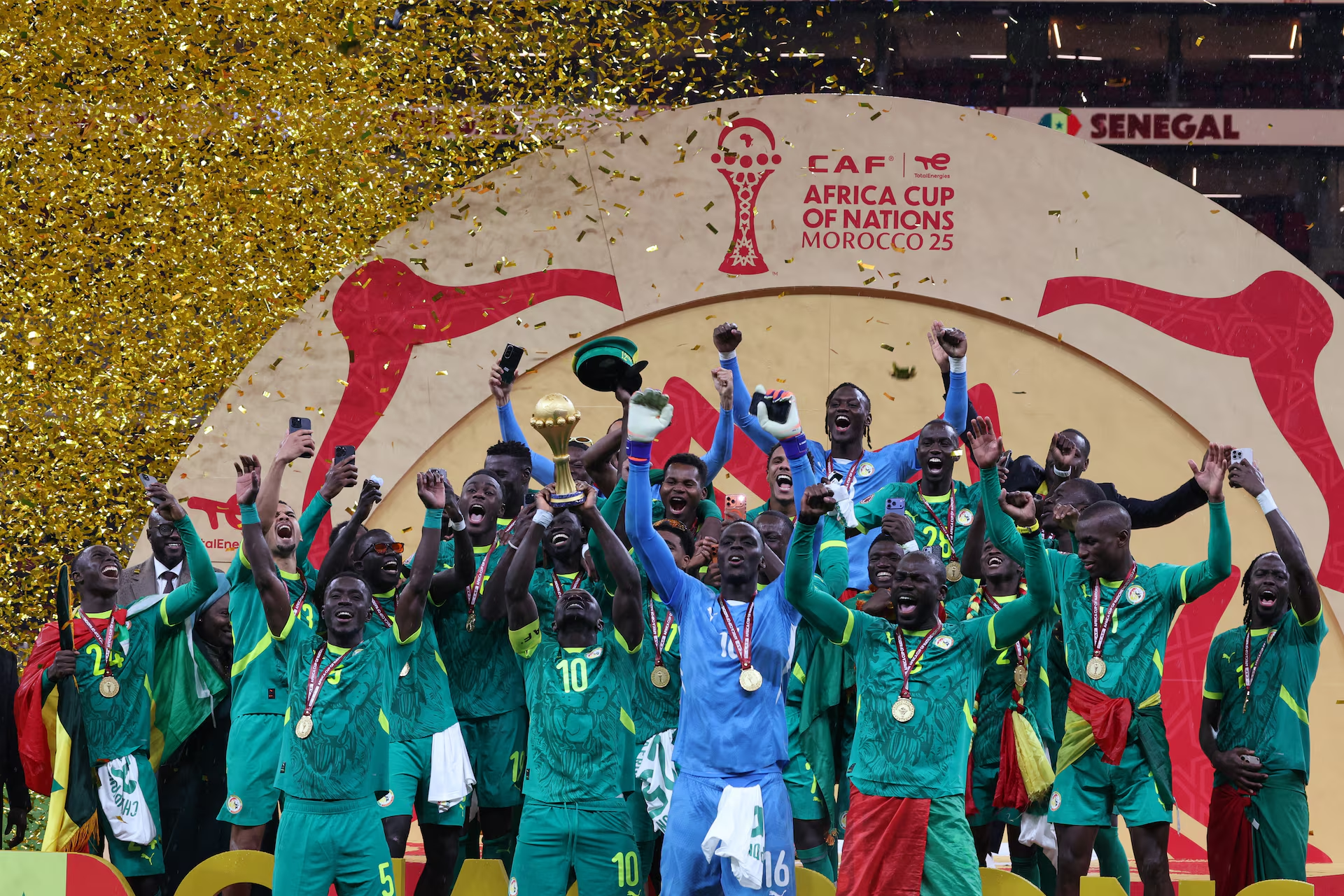

Senegal have reclaimed their second continental championship after the Court of Arbitration for Sport overturned the administrative result that awarded Morocco the title.
Lausanne — On 24 November 2026, the Court of Arbitration for Sport upheld the Senegalese Football Federation’s appeal against CAF and the Royal Moroccan Football Federation. Its official media release confirms that Senegal’s original 1–0 victory stands.
From victory in Rabat to an arbitration dispute
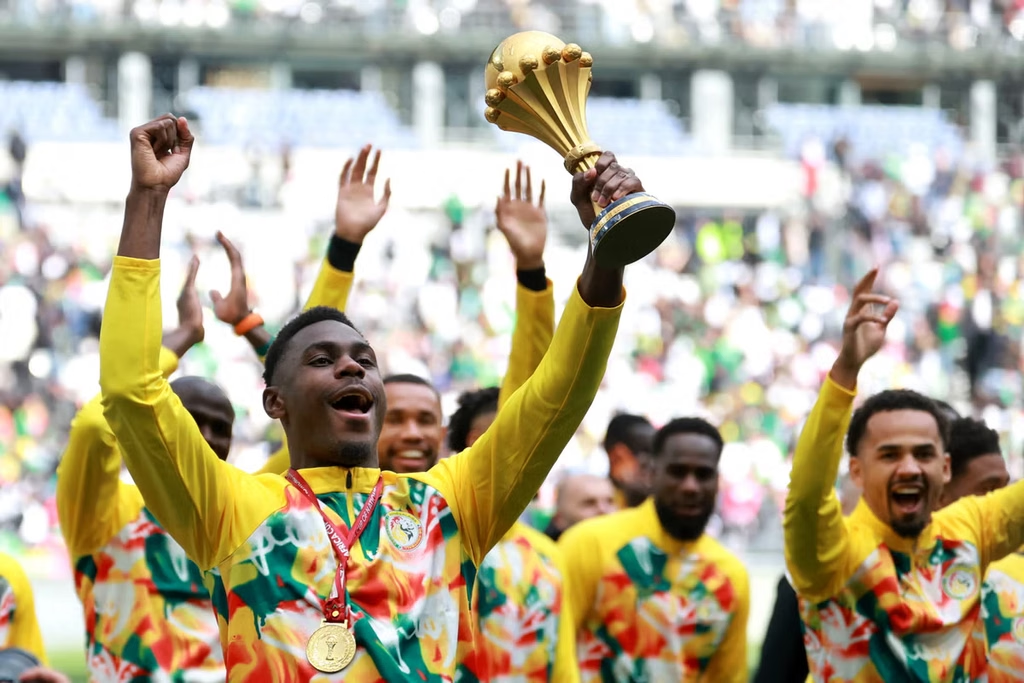
The final took place on 18 January 2026. A late Moroccan penalty prompted a temporary Senegalese walk-off. Play resumed, Brahim Díaz’s penalty was saved and Pape Gueye scored in extra time. Senegal lifted the trophy, but Morocco challenged the result.
On 17 March, the CAF Appeal Board applied Article 84 of the competition regulations and awarded Morocco a 3–0 result. Senegal appealed to CAS on 25 March. The case was heard on 8 October, as independently documented in contemporaneous reporting.
AFCON: Anatomy of a 310-Day Dispute
Senegal, Morocco and the limits of disciplinary intervention in completed football matches.
Source: Published procedural dates and Nukunya calendar-day calculations.
Why the referee’s decision mattered
The central legal question was whether the disciplinary rules permitted a completed match to be treated as forfeited.
Morocco
Morocco argued that Senegal’s departure triggered Articles 82 and 84 and that restarting play was legally erroneous.
Senegal
Senegal maintained that the referee’s judgment was protected by the field-of-play doctrine.
The distinction at the heart of the dispute
| Issue | Legal significance |
|---|---|
| Temporary disruption | Does not necessarily mean the match has been permanently abandoned. |
| Referee authority | The announced decision recognises the referee’s authority to restart or end this contest. |
| Permanent abandonment | Central to the panel’s interpretation of the disputed provisions. |
| Separate misconduct | May remain subject to disciplinary proceedings and sanctions. |
Editorial explanation of the announced decision, not a reproduction of the complete reasoned award or a universal interpretation of football regulations.
A 310-day dispute in numbers
The dispute progressed from the January final through CAF’s administrative reversal and subsequent arbitration before the announced CAS decision in November.
CAS decision
Day 310Senegal’s championship is restored under the announced decision.
100% of the observed 310-day interval.The progress bar represents elapsed calendar time, not the percentage of legal work completed.
-
AFCON final
Day 0Original sporting result.
-
CAF reversal
Day 58Administrative reversal of the sporting result.
-
CAS appeal
Day 66The dispute proceeds to sports arbitration.
-
Arbitration hearing
Day 263The arbitration hearing takes place.
-
CAS decision
Day 310Senegal’s championship is restored under the announced decision.
| Milestone | Date | Days since final |
|---|---|---|
| Final | 18 January | 0 |
| CAF reversal | 17 March | 58 |
| CAS appeal | 25 March | 66 |
| Hearing | 8 October | 263 |
| CAS decision | 24 November | 310 |
How the 310 days were distributed
Duration of the administrative reversal
252 out of 310 days
The administrative reversal stood for 252 days, approximately 81.3% of the interval between the final and the CAS decision.
How long did the appeal take?
| Interval | Days | Share of total |
|---|---|---|
| Final to reversal | 58 | 18.7% |
| Reversal to appeal | 8 | 2.6% |
| Appeal to hearing | 197 | 63.5% |
| Hearing to decision | 47 | 15.2% |
| Total | 310 | 100% |
Does the ruling permit teams to walk off?
No. Restoring a sporting result and imposing penalties for misconduct are distinct matters. The judgment should not be understood as blanket permission to interrupt matches.
Sporting result
Concerns whether the completed match result remains valid under the applicable competition rules.
Disciplinary accountability
Concerns whether particular conduct warrants separate sanctions under the applicable disciplinary rules.
Frequently asked questions
Does the ruling authorise teams to abandon matches?
No. The announced decision concerns the circumstances of this completed contest. It does not create blanket permission to interrupt or abandon matches.
Why was the referee’s decision important?
The panel concluded that the referee had authority to restart or end the contest and found neither legal error nor arbitrariness in the decision to continue.
Were all disciplinary penalties overturned?
The available announcement does not establish that every separate disciplinary sanction has been cancelled.
Does the decision prevent future disciplinary action?
The announcement does not establish such a general restriction. Future cases depend on their facts, applicable regulations and relevant legal decisions.
Does the 310-day duration prove unreasonable delay?
No. Calendar-day calculations alone cannot establish whether the applicable procedural requirements were breached.
Can the decision be challenged further?
Any further proceedings should be assessed using official filings and applicable procedural rules. No further challenge is established by the material presented here.
Implications for African football governance
The ruling highlights the importance of clear rules distinguishing temporary disruption from permanent abandonment.
Competition organisers should consider whether their regulations adequately specify the relationship between referee authority and subsequent disciplinary powers.
Nukunya’s proposed governance framework
Regulatory clarity
Clearly distinguish temporary disruption, resumed matches and permanent abandonment.
Referee authority
Specify the relationship between field-of-play decisions and subsequent disciplinary intervention.
Proportionate sanctions
Preserve accountability without unnecessarily destabilising completed sporting results.
Expedited dispute resolution
Consider accelerated procedures for disputes affecting championship status, while protecting procedural fairness.
Transparency and procedural certainty
Publish clear procedural information, applicable rules and reasoned decisions where permitted.
Proposed accountability indicators
| Indicator | Purpose |
|---|---|
| Time to initial decision | Assess procedural timeliness. |
| Time to final resolution | Assess the duration of uncertainty over competition outcomes. |
| Publication of reasons | Improve understanding of regulatory interpretations. |
| Procedural consistency | Compare equivalent cases under applicable regulations. |
| Disciplinary proportionality | Examine whether sanctions reflect the conduct and relevant rules. |
These are original editorial recommendations, not announced CAF reforms, measured governance outcomes or official regulatory indicators.
What happens next?
Senegal’s championship restored
2 continental titlesSenegal’s second continental championship is restored under the announced decision. The first came at the 2021 edition, when Senegal defeated Egypt on penalties.
Any further legal proceedings should be assessed on the basis of official filings rather than speculation.
The CAS procedural update of 23 November 2026 preceded the announced decision.
Related posts:
 The Senegal Model: How Africa’s Most Consistent Football Nation Became a World Cup Contender
 Black Sharks Face Senegal in Beach Soccer AFCON 2026: Fixtures and Ghana’s Road to the World Cup
 Morocco Move Closer to Knockouts After Fastest Goal of World Cup 2026
 Ivory Coast Benefitted From Our Mistakes – Kurt Okraku
 34 Dead as Migrant Boat Sinks off Senegal Near Kebemer