
Ghana Misses Treasury Bill Target by GH¢1.077 Billion as Borrowing Rates Fall
Ghana raises GH¢3.177bn against a GH¢4.254bn Treasury bill target. Nukunya examines auction demand, accepted bids and falling interest rates.

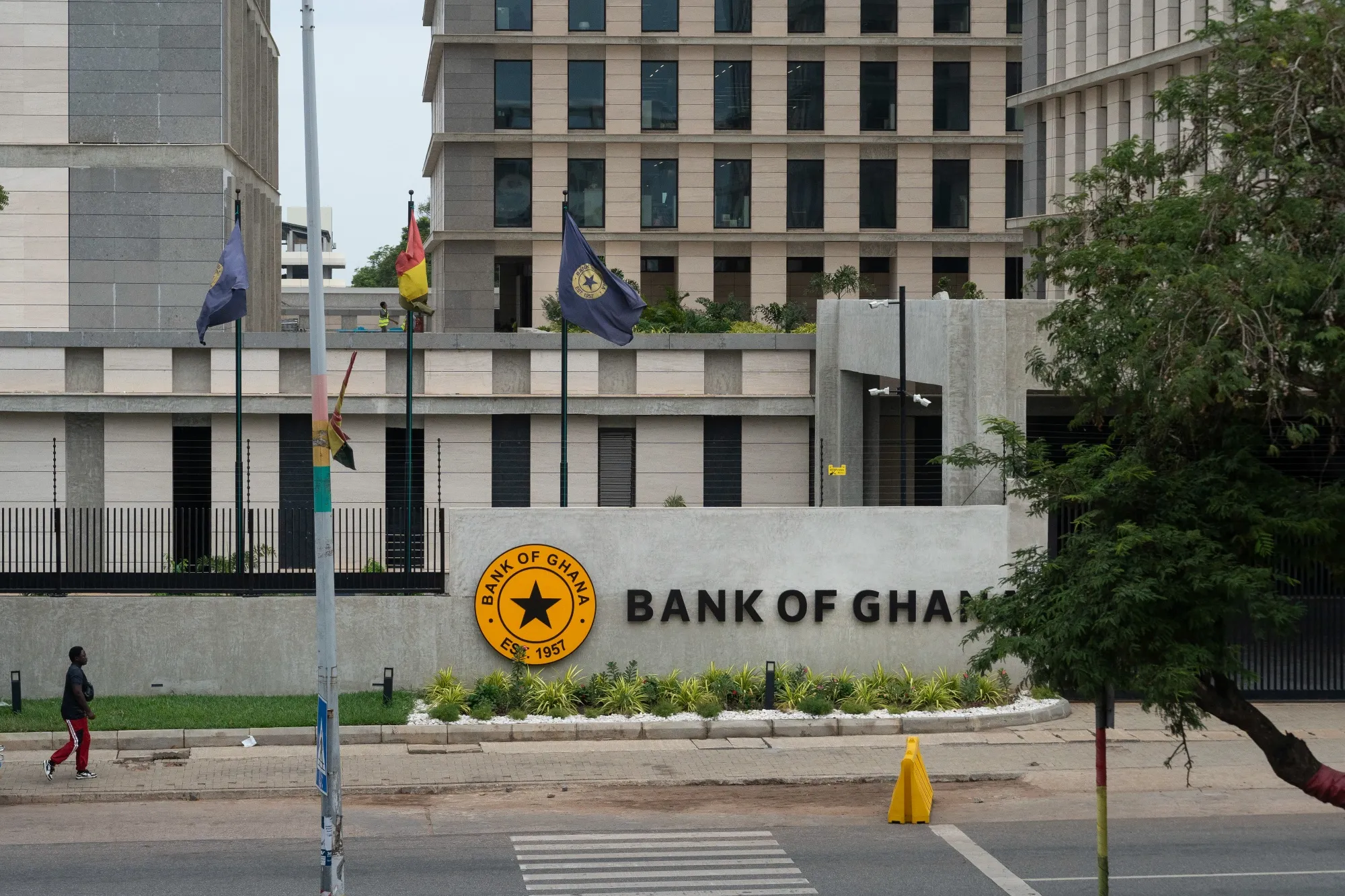

Ghana’s 20 November Treasury bill auction raised only 74.7% of its intended amount. Official auction data reveal that weaker demand and selective acceptance both contributed to the shortfall.
Accra — Ghana accepted GH¢3.177 billion in Treasury bill bids against a GH¢4.254 billion target, leaving a gap of GH¢1.077 billion. The Bank of Ghana’s tender 2034 notice records the results of the 20 November 2026 auction for securities issued on 23 November.
Ghana Treasury Bill Auction: Understanding the GH¢1.077 Billion Shortfall
Explore investor demand, accepted bids, Treasury bill interest rates and the funding requirements for Ghana’s next auction.
Bank of Ghana tender notice BG/FMD/2026/57
Accepted amounts represent approximately 74.68% of the auction target. Figures are rounded for display.
Two distinct sources of the auction shortfall
Investors offered GH¢3,640.36 million against a target of GH¢4,254 million. The Treasury accepted GH¢3,176.97 million.
| Measure | Amount (GH¢m) | Share of target |
|---|---|---|
| Auction target | 4,254.00 | 100% |
| Total bids | 3,640.36 | 85.57% |
| Accepted bids | 3,176.97 | 74.68% |
| Insufficient bids | 613.64 | 14.43% |
| Unaccepted bids | 463.39 | 10.89% |
| Total funding shortfall | 1,077.03 | 25.32% |
Investor demand concentrates in 91-day Treasury bills
Approximately 64.8% of total bids were submitted for 91-day bills, which accounted for approximately 68.8% of accepted amounts.
| Tenor | Bids (GH¢m) | Accepted (GH¢m) | Annual interest rate | Acceptance ratio |
|---|---|---|---|---|
| 91 days | 2,357.41 | 2,185.40 | 4.5193% | 92.70% |
| 182 days | 645.97 | 590.57 | 6.1210% | 91.42% |
| 364 days | 636.98 | 401.00 | 9.4471% | 62.95% |
| Total | 3,640.36 | 3,176.97 | Not applicable | 87.27% |
Compare Treasury bill maturities
91 days
182 days
364 days
Demand falls even as target coverage improves
| Measure | Previous auction | Latest auction |
|---|---|---|
| Target (GH¢m) | Approximately 5,570 | 4,254.00 |
| Total bids (GH¢m) | 4,333.25 | 3,640.36 |
| Accepted (GH¢m) | 3,451.65 | 3,176.97 |
| Bid coverage | Approximately 77.8% | 85.6% |
Bid coverage relative to auction targets
Ghana Treasury bill interest rates continue to ease
Annualised interest rates declined across all three Treasury bill maturities compared with the previous week.
| Tenor | Previous rate | Latest rate | Change (basis points) |
|---|---|---|---|
| 91 days | 4.5571% | 4.5193% | −3.78 |
| 182 days | 6.1678% | 6.1210% | −4.68 |
| 364 days | 9.4603% | 9.4471% | −1.32 |
Latest annualised rates by maturity
Calculated as 9.4471% minus 4.5193%.
Lower rates may reduce borrowing costs on new issuance. Actual savings depend on principal, maturity and pricing conventions. They do not automatically reduce costs on existing fixed-rate debt.
Source: Bank of Ghana Treasury bill interest rate series .
Related: How Bank of Ghana rates affect borrowers and savers .
Can Ghana meet its next Treasury bill auction target?
The next auction target is GH¢5.192 billion, approximately 22.0% higher than the current auction target.
Explore hypothetical changes in total bids and the proportion accepted.
A funding gap remains under the selected assumptions.
| Scenario | Accepted (GH¢m) | Funding gap (GH¢m) |
|---|---|---|
| Repeat current outcome | 3,176.97 | 2,015.03 |
| Same bids, full acceptance | 3,640.36 | 1,551.64 |
| 20% more bids, same acceptance ratio | 3,812.36 | 1,379.64 |
| Full target achieved | 5,192.00 | 0.00 |
How much additional investor demand is required?
What the auction results mean for Ghana’s public finances
Refinancing pressure
Concentration in shorter maturities can increase the frequency with which government must refinance obligations.
Borrowing costs
Lower annualised interest rates may reduce the cost of new borrowing, depending on issuance amounts and pricing conventions.
Liquidity and cash management
Assessing the significance of a funding shortfall requires information about maturities, cash balances, expenditure obligations and alternative financing.
Ghana Treasury bill auction: questions and answers
How much did Ghana raise in the latest auction?
Bank of Ghana tender notice BG/FMD/2026/57 records accepted bids of GH¢3,176.97 million against a target of GH¢4,254 million.
What was the Treasury bill funding shortfall?
The difference between the target and accepted bids was GH¢1,077.03 million, equivalent to approximately 25.32% of the auction target.
Why did the auction miss its target?
Total bids were GH¢613.64 million below target, and a further GH¢463.39 million was not accepted. The published figures do not establish the reasons individual bids were declined.
What are the latest Ghana Treasury bill rates?
The tender notice records annualised interest rates of 4.5193% for 91-day bills, 6.1210% for 182-day bills and 9.4471% for 364-day bills.
Which Treasury bill maturity attracted the most bids?
The 91-day maturity attracted GH¢2,357.41 million, approximately 64.8% of total bids.
What is Ghana’s next Treasury bill auction target?
The next target is GH¢5.192 billion, approximately 22.0% higher than the current auction target.
Does a Treasury bill shortfall mean Ghana is insolvent?
No. A single auction result is insufficient to establish insolvency. A broader assessment requires debt maturities, government revenues, cash balances, alternative funding and expenditure obligations.
Look beyond the headline funding gap
The latest auction illustrates why investor demand, bid acceptance, maturity composition and borrowing costs should be analysed separately.
The next auction will provide further evidence about whether the latest decline in absolute demand persists. Improved target coverage alone should not be interpreted as stronger investor demand.
Related posts:
 Ghana Treasury Bill Auction Attracts GH¢10bn in Bids as One-Year Borrowing Cost Climbs
 Ghana’s Debt Climbs to GH₵674bn Despite IMF Recovery Gains
 Bank of Ghana suspends proposed 0.75% mobile money transfer fee
 Supreme Court Halts Reinstatement of GN Savings Licence Pending Bank of Ghana Appeal
 Ghana’s public debt reaches GH¢720.8bn as domestic borrowing drives a three-month surge