Ghana Treasury Bill Auction Attracts GH¢10bn in Bids as One-Year Borrowing Cost Climbs


Follow Nukunya
Get the latest breaking news and updates from Nukunya.
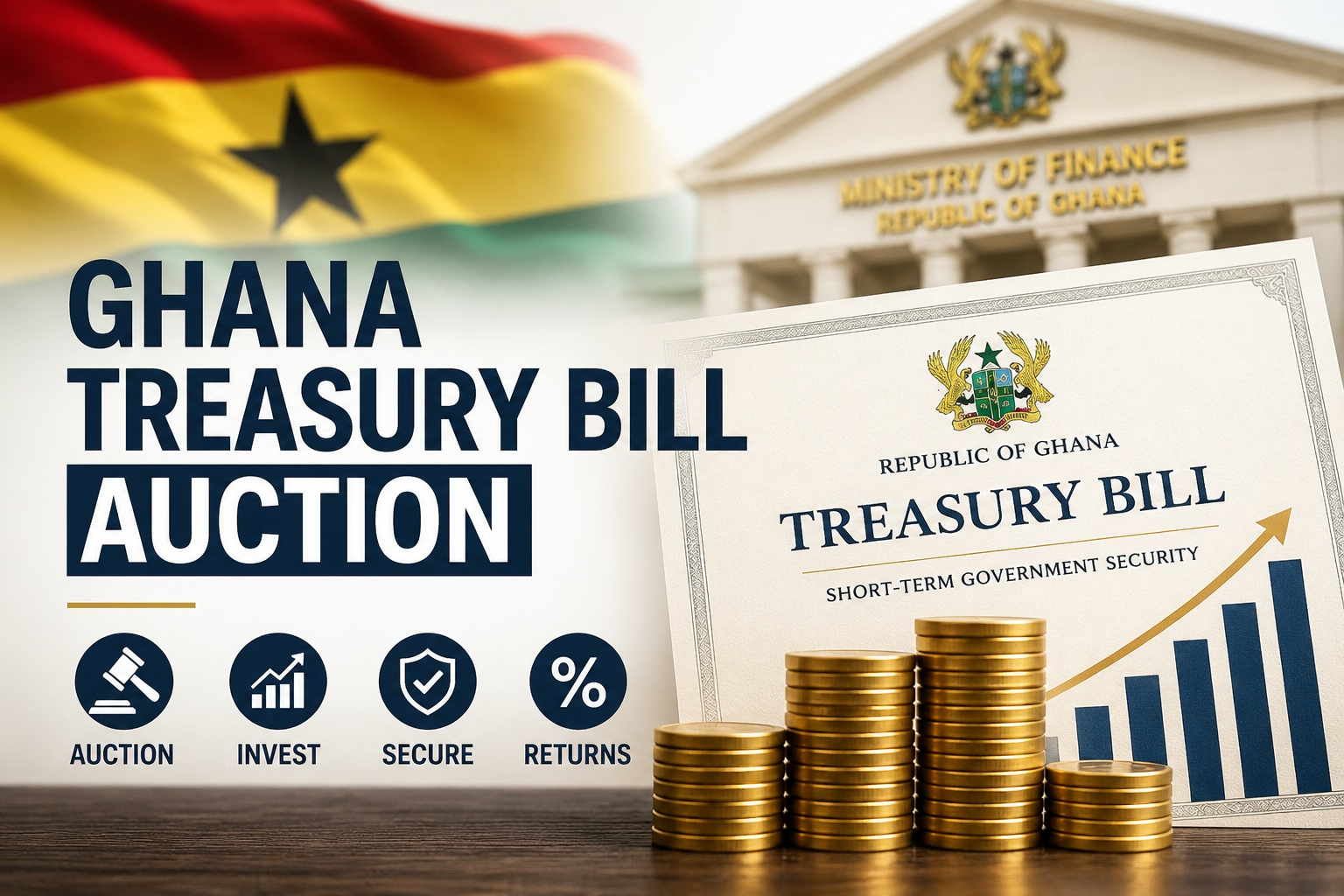
Strong investor demand pushed Ghana’s latest Treasury bill auction well above its fundraising target, but the government will pay more to borrow for one year after the 364-day yield rose to 12.99%.
ACCRA, Ghana — Ghana’s latest Treasury bill auction attracted more than GH¢10 billion in investor bids, exceeding the government’s fundraising target by 77%, although the cost of borrowing for one year increased as investors continued to demand higher returns on longer-dated securities.
According to the latest auction results released by the Bank of Ghana, investors submitted bids worth GH¢10.03 billion across the 91-day, 182-day and 364-day Treasury bills against a target of approximately GH¢5.67 billion. The government accepted GH¢7.38 billion, surpassing its financing target by about GH¢1.71 billion.
The results underline continued confidence in short-term government securities even as yields remain elevated, reflecting investors’ appetite for relatively low-risk assets amid Ghana’s ongoing economic recovery. The strongest demand came for the 364-day Treasury bill, which attracted GH¢5.65 billion in bids. Of that amount, the government accepted approximately GH¢4.53 billion, making the one-year instrument the largest source of financing in the auction.
However, despite the oversubscription, the government will pay more to borrow over one year. The yield on the 364-day bill increased by seven basis points to 12.99%, compared with 12.92% at the previous auction. By contrast, shorter-term yields remained stable or eased slightly. The 91-day Treasury bill yield declined marginally to 5.86%, while the 182-day bill remained unchanged at 7.79%.
Strong investor demand
The latest auction marks a significant increase in demand compared with the previous Treasury bill sale, when total bids amounted to just over GH¢4.1 billion. Market participants generally interpret strong oversubscription as evidence that investors remain willing to lend to government, particularly when Treasury bills continue to offer attractive returns relative to other short-term investment opportunities. The government’s decision to accept GH¢7.38 billion, rather than the full amount tendered, suggests it remained selective in managing its borrowing costs while raising sufficient funds to meet near-term financing requirements.
Why did long-term borrowing become more expensive?
Although investor demand was exceptionally strong, the rise in the one-year yield illustrates that investors continued to seek higher compensation for committing funds over a longer period. Longer-dated Treasury bills are typically more sensitive to expectations about inflation, future interest rates and broader macroeconomic risks.
The increase in the 364-day yield therefore indicates that while confidence in government securities remains robust, investors still require relatively higher returns before locking in their money for a full year. At the same time, the modest decline in the 91-day yield may suggest improving confidence in near-term economic conditions and expectations that monetary policy could gradually ease if inflation continues to moderate.
What it means for Ghana
The auction provides two important signals for the economy.
First, the strong level of investor participation demonstrates that domestic demand for government securities remains resilient, giving the government continued access to local financing. Second, the increase in longer-term borrowing costs highlights the balancing act facing fiscal authorities. While the government successfully exceeded its funding target, higher yields on longer maturities increase future debt-servicing costs.
Treasury bill auctions remain an important indicator of investor confidence, liquidity conditions within Ghana’s financial system and expectations for inflation and interest rates.
The latest results come as Ghana continues implementing economic reforms under its International Monetary Fund-supported programme, with policymakers seeking to strengthen macroeconomic stability, restore fiscal discipline and sustain investor confidence. Looking ahead, attention will focus on whether future Treasury bill auctions continue to attract strong demand and whether longer-term yields begin to moderate as inflation and broader economic conditions improve.
Key Takeaways
Ghana’s latest Treasury bill auction attracted exceptionally strong investor demand, although the government accepted only part of the bids submitted while yields showed mixed movements across maturities.
Auction Highlights
- Investor demand exceeded expectations Investors submitted GH¢10.03 billion in bids against an initial target of approximately GH¢5.67 billion.
- 77% oversubscription The auction attracted demand significantly above the government’s original financing target.
- Government accepted GH¢7.38 billion Not every bid submitted was accepted, reflecting treasury funding and pricing decisions.
- 364-day Treasury bill led demand The one-year instrument recorded the strongest investor interest among the three maturities offered.
- Longer-term borrowing costs increased The 364-day yield rose to 12.99%, indicating higher borrowing costs for longer-dated government debt.
- Short-term yields remained relatively stable The 91-day yield eased to 5.86%, while the 182-day Treasury bill remained at 7.79%.
Related posts:
 Ghana’s Debt Climbs to GH₵674bn Despite IMF Recovery Gains
  Bank of Ghana suspends proposed 0.75% mobile money transfer fee
  Ghana Holds Cocoa Producer Price Despite Global Market Decline
  Appeal Court reverses GN Savings licence revocation in major BoG setback
  GhIPSS returns GH¢14.58m dividend to Bank of Ghana after profitable year