
Former Ghanaian G4S guard jailed after using old uniform in £117,000 London bank theft
A former G4S security guard has been jailed after stealing £117,200 from a London bank by posing as a cash collector before fleeing to Ghana.


Follow Nukunya
Get the latest breaking news and updates from Nukunya.
A former security guard Kwabena Kissi has been jailed after using an old G4S uniform to deceive staff at a London bank into handing over more than £117,000 before fleeing to Ghana. The case highlights how digital evidence and international cooperation helped police solve a sophisticated insider-style fraud nearly four years later.
LONDON — A former security guard has been jailed after stealing more than £117,000 from a London bank by wearing an old work uniform to impersonate a cash collection employee before fleeing to Ghana, in a case that exposed how insider knowledge can be exploited to bypass routine security procedures.
Kwabena Kissi, 43, was sentenced at Snaresbrook Crown Court to three years and four months’ imprisonment after admitting fraud by false representation. The court heard he stole £117,200 from a Santander branch in Brixton before leaving the United Kingdom the following day for Ghana, where he remained for almost four years.
He was arrested shortly after returning to Britain in March 2026, bringing to an end a lengthy investigation led by the Metropolitan Police’s Flying Squad into one of London’s more unusual bank fraud cases.

How the theft unfolded
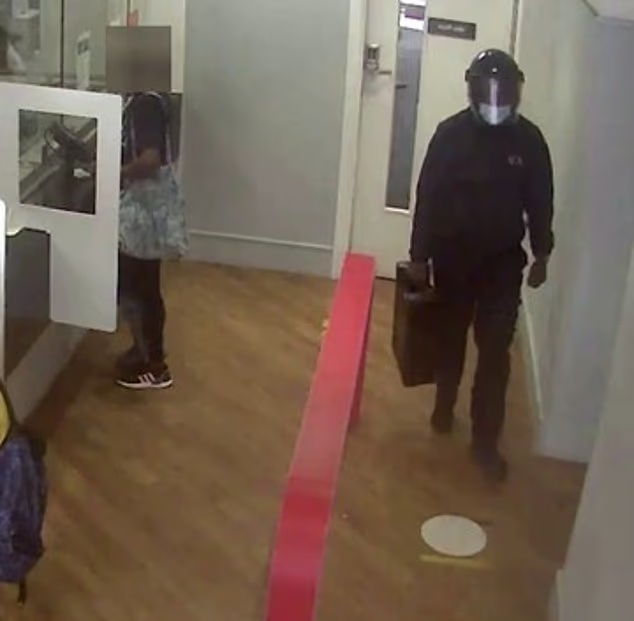
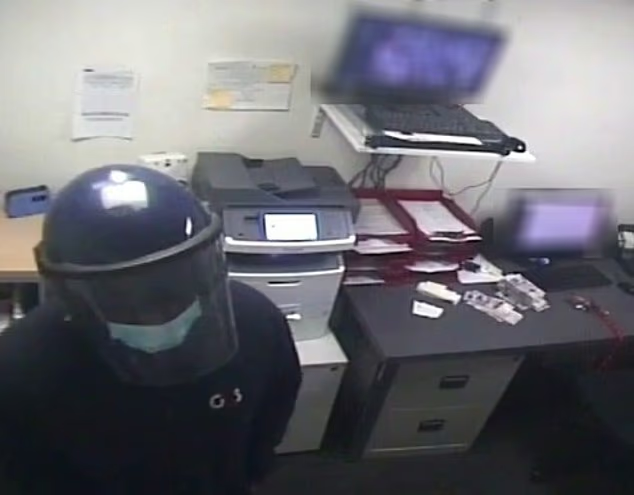
Prosecutors told the court that Kissi previously worked as a security guard responsible for transporting cash between banks and cash processing centres. On 5 July 2022, he entered the Santander branch wearing his former G4S uniform and carrying a secure cash collection case. Employees, believing he was carrying out a scheduled collection, handed over cash prepared for transport without realising he no longer worked for the company. By the time staff discovered the deception, Kissi had left the bank with £117,200. Court proceedings heard he boarded a flight to Ghana the following day.
How detectives tracked him down
The investigation relied on a combination of CCTV footage, telephone records and digital evidence.
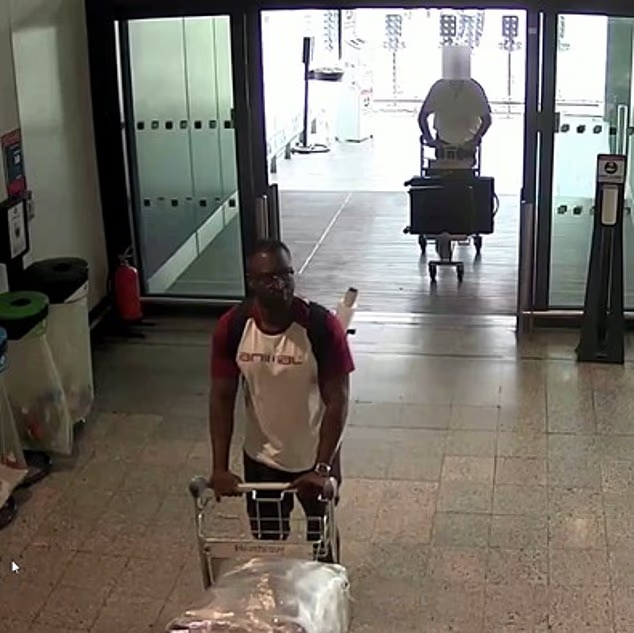
Detectives said they identified Kissi through CCTV images, mobile phone enquiries and subsequent investigative work before monitoring his return to the United Kingdom. He was arrested after landing at Gatwick Airport on 26 March 2026. Police later recovered part of the stolen money, although much of it has not been recovered.
Court hears impact on bank staff
Sentencing Kissi, Judge Rosa Dean said the offence involved a deliberate abuse of trust that had a lasting impact on employees who believed they were carrying out a routine cash transfer.
“You left the staff at Santander feeling extremely upset,” the judge told him before imposing the prison sentence.
Kissi pleaded guilty to fraud by false representation.
In mitigation, defence counsel said he had accepted responsibility for the offence and returned to Britain voluntarily before his arrest. The judge acknowledged the guilty plea when determining sentence but concluded that the seriousness of the offence warranted immediate imprisonment.


Why this case matters
The case illustrates the growing role of digital evidence in investigating financial crime.
Modern investigations increasingly combine CCTV footage, mobile phone analysis, travel records and financial evidence to identify suspects, even when offences involve international travel or lengthy periods outside the jurisdiction.
It also demonstrates how insider knowledge of banking procedures can be exploited if routine verification processes fail.
A Ghana-UK dimension
The case has attracted attention in both Ghana and the United Kingdom because Kissi travelled to Ghana immediately after the theft and remained there for almost four years before returning to Britain.
Although the investigation centred on offences committed in London, it reflects the increasingly international nature of financial crime investigations, with police relying on cross-border cooperation and intelligence-sharing to pursue suspects who move between jurisdictions.
How cash collections normally work
Banks typically use contracted cash-in-transit companies to move money between branches and secure processing centres. Collections are carried out by authorised security personnel following strict identification and verification procedures. Prosecutors said Kissi exploited his previous employment and familiarity with those procedures to convince staff he remained an authorised collector.
Investigation timeline
5 July 2022
Cash collected from a Santander branch using a former G4S uniform.
6 July 2022
Kissi flies to Ghana.
26 March 2026
Returns to the UK and is arrested at Gatwick Airport.
2026
Pleads guilty at Snaresbrook Crown Court.
2026
Sentenced to three years and four months’ imprisonment.
Key Takeaways
SentenceThree years and four months in prison
MethodOld G4S uniform used to deceive bank employees
Amount stolen£117,200 from a Santander branch in Brixton
FlightLeft the UK for Ghana the following day
ArrestArrested nearly four years later after returning to Britain
EvidenceInvestigation relied heavily on CCTV and digital evidence
FAQs
Who is Kwabena Kissi?
Kwabena Kissi is a former G4S security guard who admitted fraud by false representation after stealing £117,200 from a Santander branch in London.
How was the theft carried out?
The court heard he wore an old G4S uniform and collected cash prepared for legitimate transportation, leading staff to believe he remained an authorised cash collection officer.
Why did police arrest him years later?
Investigators continued gathering evidence after the theft and arrested him when he returned to the United Kingdom in March 2026.
Did the court recover the stolen money?
Police recovered some of the money, but the majority remains outstanding, according to court proceedings.
Why is this case significant?
The case demonstrates how insider knowledge can be used to commit financial crimes and highlights the growing importance of digital evidence and international cooperation in modern criminal investigations.
What this means
While the theft itself lasted only minutes, the investigation continued for almost four years. The prosecution illustrates how law enforcement agencies increasingly rely on technology, surveillance and international cooperation to investigate serious financial crimes, even after suspects leave the country.
For banks, the case also reinforces the importance of rigorous identity verification procedures for cash collections, particularly where former employees may retain knowledge of internal processes.

Related posts:
 Ghana demands justice after citizen killed during South Africa anti-immigration protests
  ECOWAS backs Ghana’s anti-xenophobia push as West African ministers endorse AU petition and reparatory justice framework
  Mahama Calls for Renewed Pan-African Unity and Reparations Agenda During UK Visit
  Ghana moves nearly 900 citizens to safe havens ahead of South Africa protests Ghana to Begin Final Evacuation of Nearly 900 Citizens from South Africa on July 25