Ghana demands justice after citizen killed during South Africa anti-immigration protests


Follow Nukunya
Get the latest breaking news and updates from Nukunya.
Ghana has formally protested to South Africa after a Ghanaian national was shot dead during anti-immigration demonstrations in Cape Town, calling for a swift investigation, the arrest of those responsible and stronger protection for African migrants.
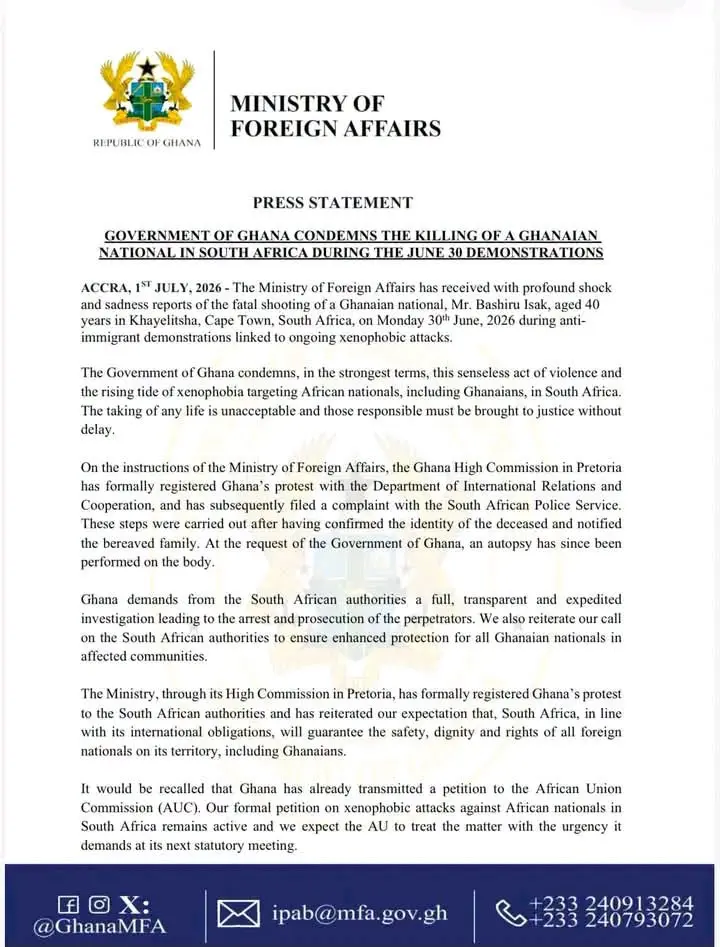
ACCRA, Ghana — Ghana has formally demanded justice from South African authorities following the fatal shooting of a Ghanaian national during anti-immigration demonstrations in Cape Town, describing the killing as a “senseless act of violence” and calling for a comprehensive investigation, the arrest of those responsible and stronger protection for foreign nationals.
In a statement issued on Wednesday, the Ministry of Foreign Affairs confirmed that Bashiru Isak, a 40-year-old Ghanaian living in Khayelitsha, Cape Town, was killed on 30 June during demonstrations linked to ongoing anti-immigration protests. The ministry said it had received the news with “profound shock and sadness” after confirming his identity.
The government said Ghana’s High Commission in Pretoria had formally lodged a diplomatic protest with South Africa’s Department of International Relations and Cooperation and had also filed a complaint with the South African Police Service after notifying the deceased’s family. According to the ministry, an autopsy has been carried out at Ghana’s request as part of efforts to establish the full circumstances surrounding the killing.
Ghana is demanding what it described as a full, transparent and expedited investigation, leading to the identification, arrest and prosecution of those responsible. It has also urged South African authorities to strengthen security measures for Ghanaian nationals and other foreign residents who may be at risk during the continuing demonstrations.

Foreign Affairs Minister Samuel Okudzeto Ablakwa later reiterated the government’s position, saying Ghana expected South Africa to uphold its obligations under international law by protecting the lives, dignity and rights of all foreign nationals living within its borders. He said the government would continue engaging South African authorities until justice was secured for the victim and his family.
A diplomatic response gathers pace
The killing has become the most serious diplomatic issue to emerge from the latest wave of anti-immigration protests in South Africa.
According to the Foreign Ministry, Ghana has already submitted a petition to the African Union Commission (AUC) regarding repeated xenophobic attacks against African nationals in South Africa. The ministry said the petition remains active and expressed the expectation that the African Union would consider the issue at its next statutory meeting.
The latest diplomatic démarches add to broader efforts by Ghana to secure greater protection for its citizens abroad while encouraging African governments to work collectively to address violence targeting migrants within the continent.
The wider protests
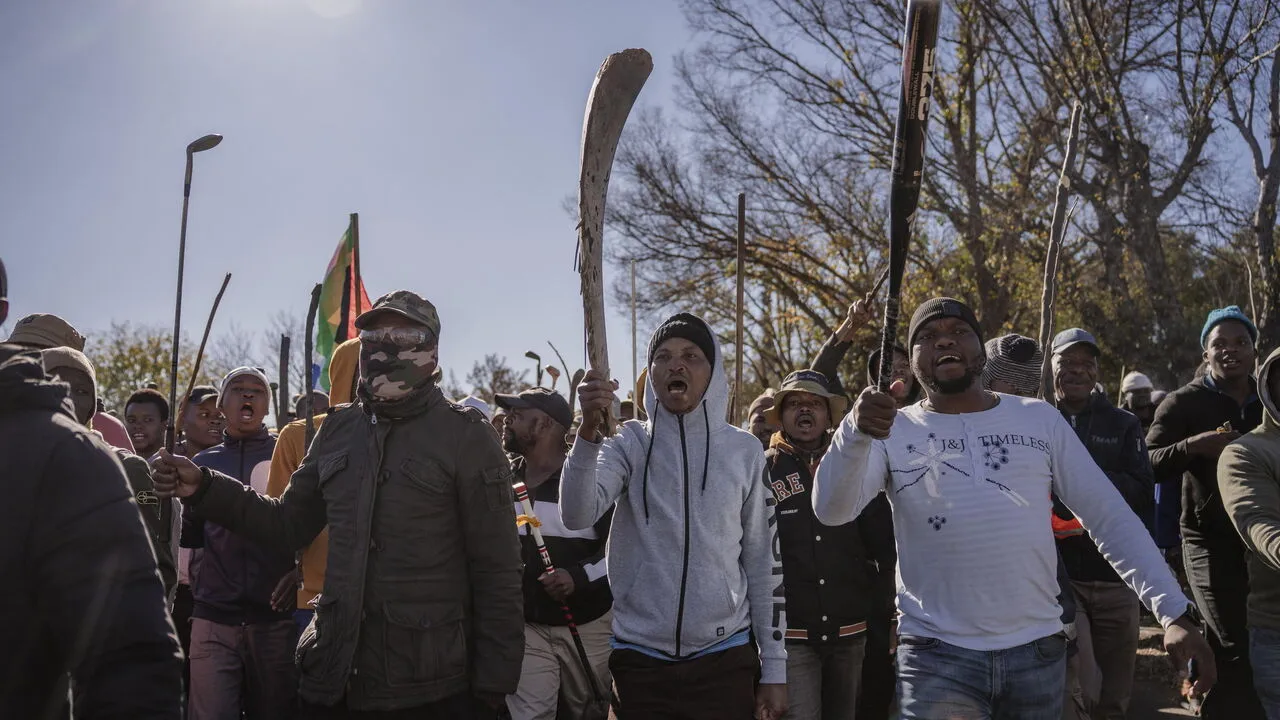
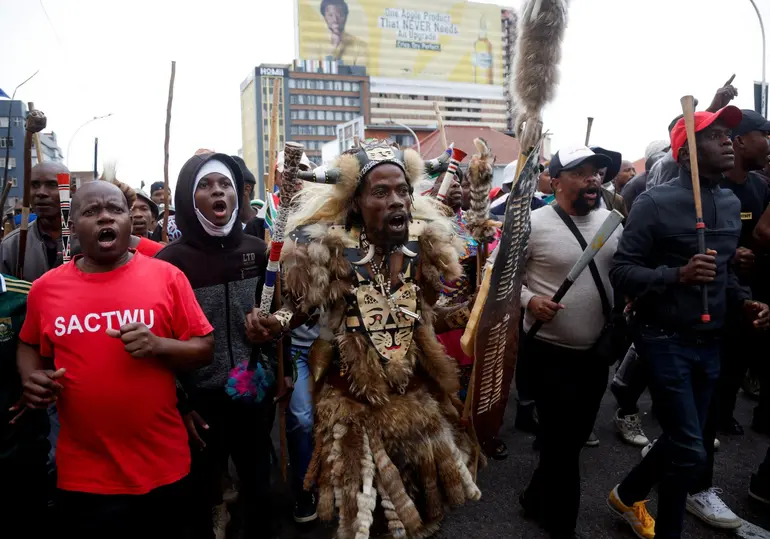
The demonstrations during which Bashiru Isak was killed formed part of broader anti-immigration protests that have taken place in several parts of South Africa in recent weeks.
Protesters have called for stricter immigration enforcement and action against undocumented migrants. South African authorities have not publicly stated that Bashiru Isak was specifically targeted because of his nationality. However, Ghana says the killing occurred during demonstrations linked to anti-immigration protests and has condemned what it described as a growing tide of xenophobic violence affecting African migrants. At the time of publication, South African authorities had not publicly responded to Ghana’s latest diplomatic protest or its demand for an expedited investigation into the killing.
A history of recurring violence
South Africa has experienced several outbreaks of violence against foreign nationals over the past two decades. Previous incidents have affected migrants from Zimbabwe, Mozambique, Malawi, Ethiopia, Somalia, Nigeria and other African countries, prompting repeated calls from governments and regional organisations for stronger protections and improved law enforcement.
Although the motivations behind individual incidents have varied, recurring tensions linked to unemployment, crime and immigration have periodically fuelled attacks on migrant communities and strained diplomatic relations within Africa.
Concern for Ghana’s diaspora
The latest killing has heightened concerns among Ghanaians living in South Africa, one of the continent’s largest destinations for migrants seeking employment and business opportunities.
The Ghanaian government has already assisted hundreds of citizens wishing to return home following recent unrest and has advised nationals remaining in South Africa to exercise caution, avoid areas affected by demonstrations and maintain contact with the High Commission in Pretoria where necessary.
Officials say the High Commission continues to monitor developments closely while providing consular support to affected Ghanaian nationals and liaising with South African authorities as investigations continue.
Why the case matters
Beyond the individual tragedy, the killing has renewed debate over the safety of African migrants living elsewhere on the continent and the responsibility of governments to protect foreign nationals during periods of civil unrest.
The incident is also likely to feature prominently in discussions on regional migration, freedom of movement and the protection of African citizens under the African Union’s integration agenda. Ghana’s decision to escalate the matter diplomatically signals that it views the killing not only as a criminal investigation but also as an issue with wider implications for regional cooperation and the rights of migrants across Africa. As investigations continue, Ghana says it expects those responsible for Bashiru Isak’s death to be identified and prosecuted without delay while broader measures are taken to improve the safety of foreign nationals living in South Africa.
Timeline
30 June 2026
Bashiru Isak is fatally shot in Khayelitsha, Cape Town, during demonstrations linked to anti-immigration protests.
1 July 2026
Ghana confirms the victim’s identity and notifies his family.
2 July 2026
Ghana formally protests to South Africa, files a police complaint and demands justice.
What This Means
The killing has transformed a domestic protest into a diplomatic issue between two African countries. It also raises wider questions about the protection of migrants, regional solidarity and the effectiveness of existing mechanisms to prevent violence against African nationals living elsewhere on the continent.

Related posts:
 Ghana moves nearly 900 citizens to safe havens ahead of South Africa protests
  ECOWAS backs Ghana’s anti-xenophobia push as West African ministers endorse AU petition and reparatory justice framework
  Ghana Welcomes First Evacuees From South Africa Amid Xenophobia Fears
  Ghana Evacuates 345 More Citizens from South Africa as Other African States Study Rescue Plan Ghana to Begin Final Evacuation of Nearly 900 Citizens from South Africa on July 25