
Nigeria seeks compensation from South Africa over migrant property losses
Nigeria plans to seek compensation from South Africa after citizens fled anti-immigration unrest, abandoning homes, businesses and property.


Follow Nukunya
Get the latest breaking news and updates from Nukunya.
Nigeria says it will pursue compensation from South Africa after hundreds of its citizens fled anti-immigration unrest, abandoning homes, businesses and other property. The move adds to growing diplomatic pressure following Ghana’s demand for justice over the killing of one of its nationals.
ABUJA, Nigeria — Nigeria says it intends to seek compensation from South Africa for citizens who abandoned homes, businesses and other property while fleeing recent anti-immigration unrest, marking another diplomatic consequence of a wave of protests that has unsettled relations across parts of the African continent.
The Nigerian government said officials have begun documenting losses suffered by returning citizens before deciding whether to submit a formal compensation claim through diplomatic channels. Authorities insist any request will be supported by verified evidence rather than estimates.
Foreign Ministry spokesperson Kimiebi Imomotimi Ebienfa said the issue would be discussed between Abuja and Pretoria “at the highest levels”, adding that Nigeria remained committed to resolving the matter through established diplomatic processes. He said every claim would first be verified before being formally presented to the South African government.
“We have not severed ties with South Africa,” Ebienfa said, adding that both countries remained engaged despite the tensions.
Government documenting losses
Nigeria’s Acting High Commissioner to South Africa, Alexander Ajayi, said returning nationals had been instructed to record every business, vehicle, movable asset and property they were forced to leave behind before departing South Africa.
According to Ajayi, the documentation exercise is intended to establish an accurate record of losses before any compensation discussions begin. “I have asked all of those who have left South Africa to document very accurately those things they were leaving behind,” he said. Officials say the process forms part of the government’s voluntary repatriation programme launched after anti-immigration demonstrations intensified in several South African cities.
Hundreds have already returned
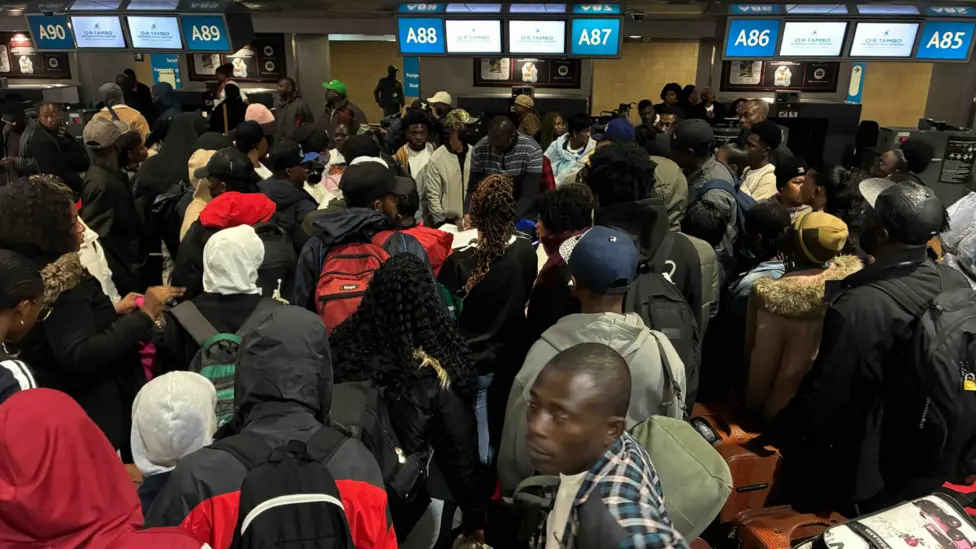
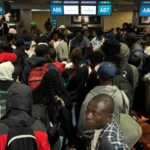
Nigeria says more than 600 of its citizens have already been repatriated, while hundreds more remain registered to return home. The government disputes suggestions that those returning were solely undocumented migrants, arguing that many left because they feared for their safety amid escalating tensions. Among those preparing to leave is trader Oghodero Erejor Wilson, who told the BBC he had spent nearly a decade building a clothing business in Centurion before abandoning it during the unrest.
Wilson said he left behind both his home and business, estimating that stock remaining in his shop was worth more than 16,000 rand. Despite Nigeria’s plans, he said he was uncertain any compensation would ultimately be paid.
“If the South African government can compensate it, it will be nice, but I know they won’t,” he told the BBC.
Regional diplomatic pressure grows
Nigeria’s proposed compensation claim comes as governments across Africa respond to the fallout from South Africa’s recent anti-immigration demonstrations.
Earlier this week, Ghana formally demanded justice after one of its nationals was fatally shot during demonstrations linked to the unrest. Ghana has called for a full investigation, stronger protection for foreign nationals and action by South African authorities, underscoring growing concern among African governments about the safety of their citizens living in the country. Together, Ghana’s diplomatic protest and Nigeria’s planned compensation claim illustrate how what began as a domestic protest movement is increasingly affecting regional relations and migration policy.
Protests and arrests
The demonstrations were organised by groups calling for tougher action against undocumented migrants and stricter immigration enforcement.
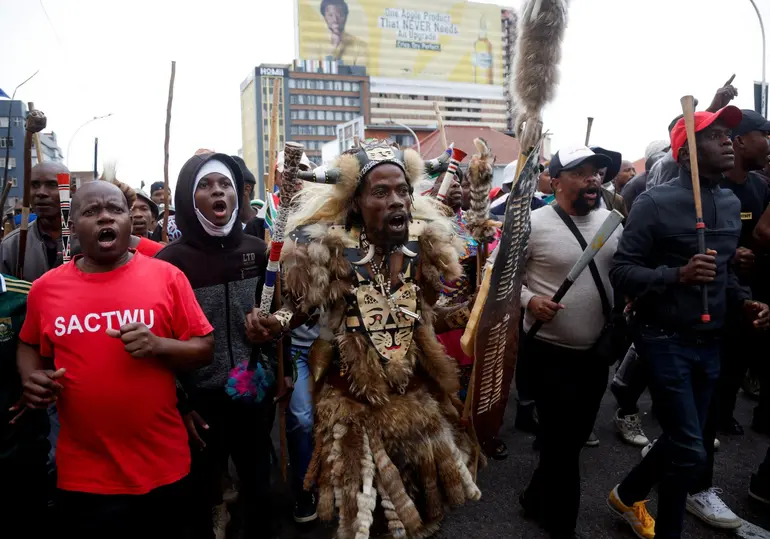
While many marches remained peaceful, there were isolated attacks on foreign nationals that prompted many migrants to leave the country. South African police said approximately 900 people were arrested during nationwide demonstrations, most for immigration-related offences and looting.
According to reports, about 25,000 foreign nationals from several African countries have left South Africa during recent weeks as tensions escalated, although those figures have not been independently verified. At the time of publication, South Africa had not publicly responded to Nigeria’s proposed compensation request.
Why it matters
The dispute highlights the increasingly complex diplomatic consequences of migration tensions within Africa. If Nigeria proceeds with a formal compensation claim, it would represent an unusual attempt by one African government to seek financial redress from another over losses suffered by its citizens during civil unrest.
The case also raises broader questions about governments’ obligations to protect foreign nationals, the treatment of migrants during periods of instability and the role of regional institutions in resolving disputes arising from cross-border migration.
Timeline
June 2026
Anti-immigration protests intensify across parts of South Africa.
Recent weeks
More than 600 Nigerians return home through voluntary repatriation, according to Nigerian authorities.
1 July 2026
Nigeria announces plans to document losses before considering a formal compensation claim against South Africa.
What this means
Nigeria’s announcement signals that the consequences of South Africa’s anti-immigration unrest are extending beyond domestic security concerns into regional diplomacy. Alongside Ghana’s recent diplomatic protest, it suggests African governments are increasingly willing to pursue formal channels to seek accountability and protection for their citizens abroad.

Related posts:
 Nigeria Warns Against Reprisal Attacks Amid South Africa Anti-Migrant Tensions
  Thousands of Migrants Seek Exit as South Africa’s 30 June Deadline Looms
  South Africa Police Inquiry Hears Corruption, Drug Raid and Crime Syndicate Allegations
  Nigeria Begins Repatriation from South Africa as Anti-Migrant Tensions Spark Regional Concern
  South Africa anti-migrant protests: Thousands flee as Ramaphosa calls for calm ahead of unofficial deadline