
Thousands of Migrants Seek Exit as South Africa’s 30 June Deadline Looms

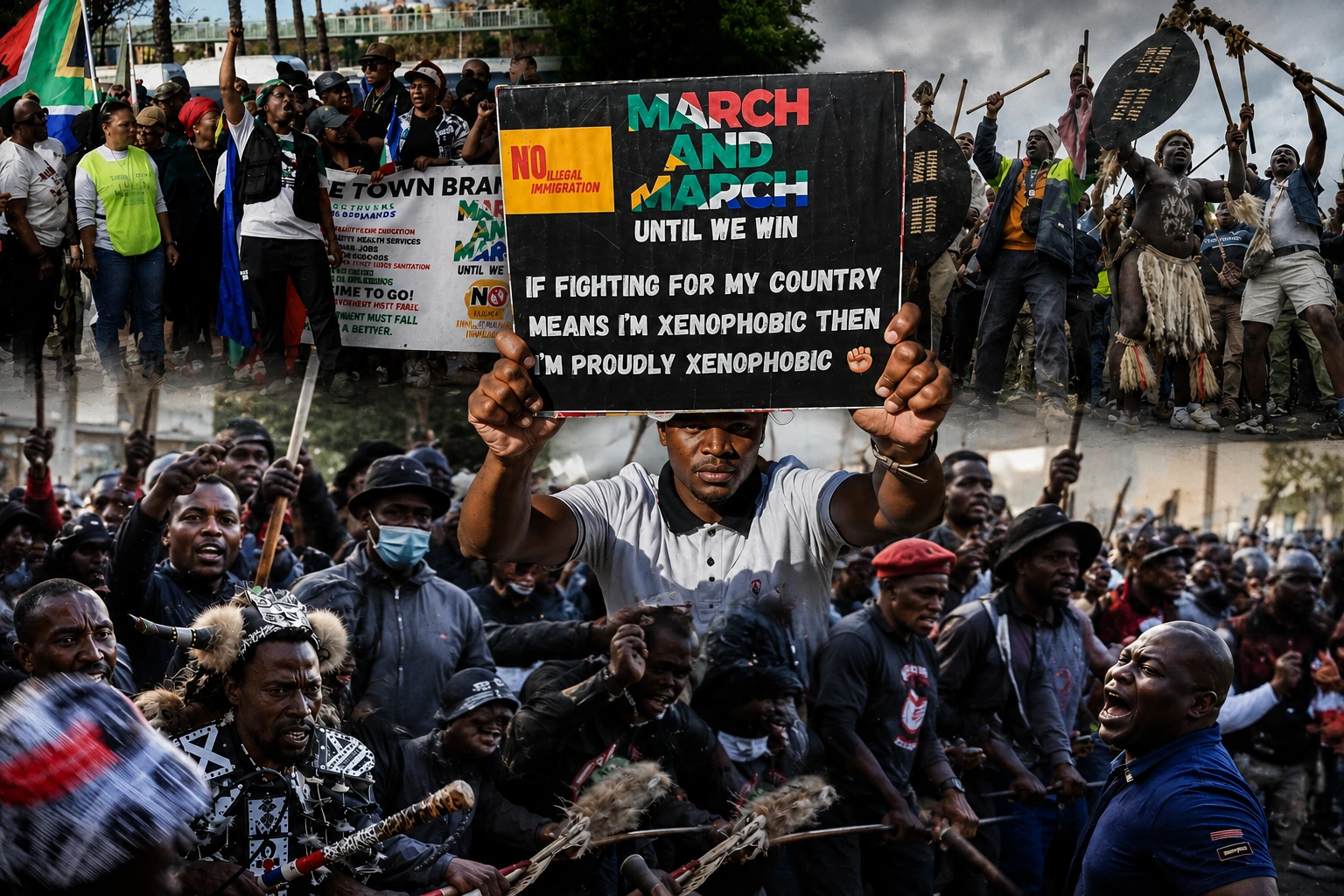

Governments across southern Africa are assisting citizens seeking to leave South Africa as fears grow ahead of a controversial 30 June anti-migrant deadline that has no legal status but is prompting widespread anxiety among foreign nationals and renewed debate over immigration policy.
JOHANNESBURG, South Africa – Thousands of migrants across South Africa are seeking assistance to leave the country as a controversial 30 June deadline promoted by anti-immigration activists approaches, prompting fears among foreign nationals and raising fresh questions about migration, economic hardship and social cohesion in Africa’s most industrialised economy.
The deadline, which has no legal standing under South African law, has become a focal point for growing tensions over immigration. Reports indicate that around 7,000 migrants have gathered at temporary sites in Durban seeking repatriation assistance, while several African governments have organised transport for citizens wishing to return home. Approximately 3,500 foreign nationals have already left South Africa through organised repatriation efforts, according to officials cited in reports.
President Cyril Ramaphosa has warned that immigration enforcement remains the responsibility of the state and that no individual or private group has the authority to demand proof of nationality or compel people to leave the country. The developments have placed South Africa’s immigration debate under an international spotlight, with governments, rights groups and regional organisations closely monitoring events.
Fear Among Migrant Communities
Migrants interviewed in Durban described growing anxiety about their safety as the deadline approaches.
Many are from Malawi, Zimbabwe, Mozambique, Ghana, Burundi and other African countries. Some reported incidents of intimidation, threats and growing hostility in neighbourhoods where foreign nationals have traditionally lived and worked.
Several governments have responded by organising repatriation programmes for citizens wishing to leave voluntarily. Malawi, Mozambique, Nigeria and Zimbabwe have all facilitated departures in recent weeks, while Ghana has engaged South African authorities over concerns affecting Ghanaian nationals.
For many migrants, the decision to leave reflects uncertainty rather than formal government action.
There is currently no South African government directive ordering all foreign nationals to depart.
Why Immigration Has Become Politically Charged
The immigration debate cannot be separated from South Africa’s economic challenges.
The country continues to face one of the world’s highest unemployment rates, particularly among young people. Economic growth has remained weak, while concerns about crime, public services, corruption and inequality continue to dominate political discourse.
Supporters of stricter immigration controls argue that the government has failed to enforce existing immigration laws and that undocumented migration places additional pressure on jobs, housing, healthcare and education.
Anti-immigration activists say South African citizens should receive priority access to economic opportunities and public services.
However, human rights organisations and migration experts argue that migrants are increasingly being blamed for structural economic problems that predate recent migration pressures. They warn that inflammatory rhetoric risks fuelling hostility towards vulnerable communities.
Migration therefore remains one of South Africa’s most politically contested issues, sitting at the intersection of economics, national identity, security and human rights.
A History That Shapes Current Fears
Authorities are particularly sensitive to the current tensions because South Africa has experienced several major outbreaks of anti-foreigner violence over the past two decades.
In 2008, attacks targeting foreign nationals left more than 60 people dead and displaced thousands. Further outbreaks occurred in 2015 and 2019, drawing international condemnation and straining relations with neighbouring countries.
While current protests have largely remained peaceful, officials and community leaders have repeatedly warned against any actions that could trigger violence or intimidation.
Security agencies are closely monitoring developments as the deadline approaches.
Government Response
The South African government has sought to balance competing pressures.
Officials have acknowledged concerns about undocumented migration while insisting that immigration enforcement must occur through lawful channels and due process.
At the same time, authorities have introduced measures aimed at tightening immigration controls, reducing administrative backlogs and strengthening border management. Recent initiatives include efforts to improve digital identification systems and review pathways to citizenship and legal residency.
Government officials have also rejected claims circulating on social media that millions of undocumented migrants are overwhelming public services, warning that misinformation risks inflaming tensions.
What It Means for Ghana
The developments carry particular significance for Ghana.
Ghanaian nationals are among the foreign citizens affected by rising uncertainty, and Ghana’s diplomatic mission in South Africa has previously engaged local authorities regarding the safety and welfare of Ghanaians living in the country.
Beyond immediate safety concerns, the issue also touches on wider questions about African integration, freedom of movement and the role of diaspora communities in supporting economic development across the continent.
For Ghanaian businesses, students and professionals living in South Africa, the situation serves as a reminder of how quickly migration debates can affect daily life, even for those legally resident in a host country.
Regional Implications
South Africa hosts an estimated three million foreign nationals, most of whom originate from neighbouring African countries. Their contributions span sectors including agriculture, construction, domestic work, logistics and informal trade.
Any significant increase in departures could have implications not only for South Africa’s labour market but also for economies across southern Africa that depend on remittances and cross-border commerce.
The situation is therefore being watched closely by governments throughout the region.
Five Key Questions
What is the 30 June deadline?
It is a deadline promoted by anti-immigration activists demanding that undocumented migrants leave South Africa. It has no legal force under South African law.
Are migrants legally required to leave?
No. South African authorities have not issued any blanket order requiring foreign nationals to leave the country.
Why are migrants leaving?
Many report fears about safety, intimidation and uncertainty surrounding the anti-migrant campaign.
What is the government’s position?
President Ramaphosa has said immigration enforcement is the responsibility of the state and warned against intimidation or vigilantism.
Why does this matter for Africa?
The issue affects regional migration, diplomatic relations, labour markets and the welfare of millions of Africans living outside their countries of origin.
Related posts:
 Nigeria Warns Against Reprisal Attacks Amid South Africa Anti-Migrant Tensions
  Ghana Repatriates Nearly 300 Citizens From South Africa Amid Migrant Tensions
  Ghana Evacuates 345 More Citizens from South Africa as Other African States Study Rescue Plan
  Nigeria Begins Repatriation from South Africa as Anti-Migrant Tensions Spark Regional Concern
  South Africa’s World Cup Defeat Sparks Debate Over Migration and African Solidarity