

Food Hygiene: Simple Steps to Protect Your Health and Prevent Food Poisoning


Follow Nukunya
Get the latest breaking news and updates from Nukunya.
Food hygiene is an essential part of protecting your health. From washing your hands and keeping kitchen surfaces clean to storing food correctly and cooking it thoroughly, simple everyday habits can significantly reduce the risk of foodborne illness.
Food is an important part of a healthy lifestyle, but unsafe food can also carry bacteria, viruses, parasites, chemicals and toxins that can cause illness. The World Health Organization (WHO) estimates that unsafe food causes hundreds of millions of illnesses globally each year, making food safety an important public health issue.
Foodborne illnesses can cause symptoms such as diarrhoea, vomiting, stomach cramps, nausea and fever. In some cases, particularly among young children, older adults, pregnant women and people with weakened immune systems, foodborne infections can become serious.
The good news is that many foodborne illnesses can be prevented by following basic food hygiene practices at home, when shopping and when eating outside.
What is food hygiene?
Food hygiene refers to the practices used to keep food safe from contamination during purchasing, preparation, cooking, serving and storage.
Contamination can occur at almost any stage of the food chain. Food can become contaminated through dirty hands, contaminated water, insects, unclean utensils, unsafe storage temperatures or contact between raw and cooked foods.
The WHO recommends five key principles for safer food: keep clean, separate raw and cooked food, cook thoroughly, keep food at safe temperatures, and use safe water and raw materials.
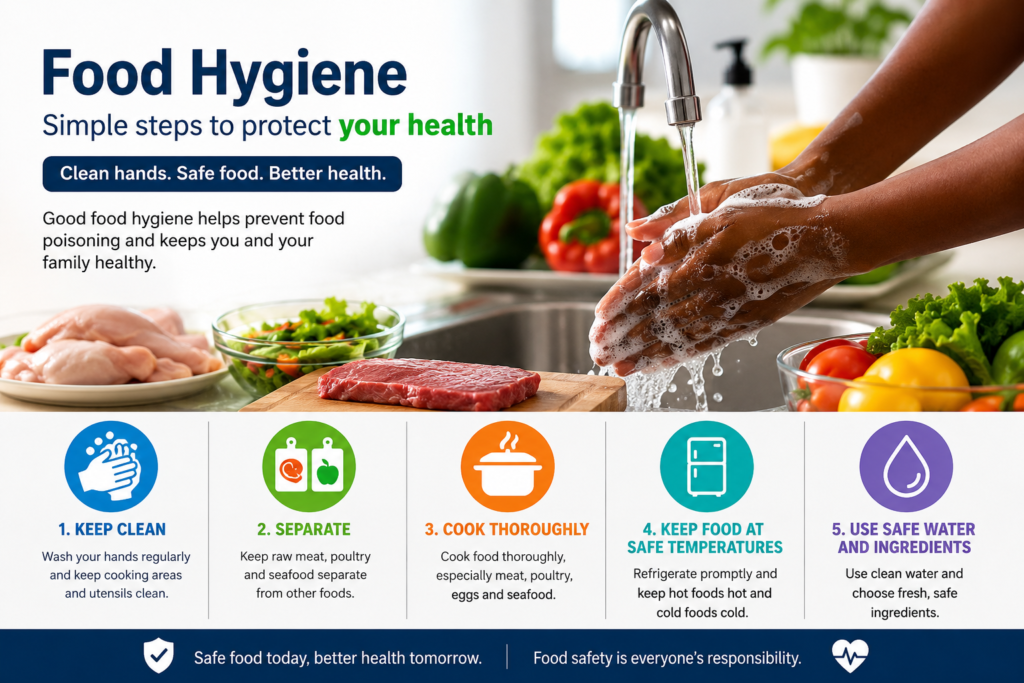
1. Keep your hands and kitchen clean
One of the simplest ways to reduce the spread of harmful microorganisms is regular handwashing.
Wash your hands thoroughly with soap and clean water:
- Before preparing or eating food
- After using the toilet
- After handling raw meat, poultry, fish or eggs
- After touching rubbish
- After handling pets or other animals
- Before preparing food for young children or vulnerable people
Kitchen worktops, chopping boards, knives, utensils and other surfaces should also be cleaned regularly.
Keeping food covered and protecting kitchen areas from insects, pests and animals can further reduce the risk of contamination.
2. Keep raw and cooked foods separate
Raw meat, poultry, seafood and eggs can contain harmful microorganisms. If these foods come into contact with ready-to-eat food, they can transfer bacteria through a process known as cross-contamination.
Use separate chopping boards and utensils for raw and cooked foods where possible. Store raw meat and seafood in sealed containers in the refrigerator so that juices cannot drip onto other foods.
Never place cooked food on a plate or surface that previously held raw meat unless it has been thoroughly washed first.
3. Cook food thoroughly
Cooking food properly is one of the most effective ways to destroy harmful microorganisms.
Particular care should be taken with meat, poultry, eggs and seafood. Food should be cooked thoroughly, with the centre reaching a safe temperature. WHO recommends that food should reach at least 70°C where appropriate for controlling certain foodborne pathogens.
Soups and stews should be brought to boiling, while meat and poultry should be cooked until properly done. When reheating previously cooked food, make sure it is heated thoroughly rather than simply warmed.
4. Store food at safe temperatures
Temperature plays an important role in preventing bacteria from multiplying.
Cooked and perishable foods should not be left at room temperature for extended periods. WHO guidance advises refrigerating cooked and perishable food promptly and keeping refrigerated food preferably below 5°C.
Practical habits include:
- Refrigerate leftovers promptly.
- Keep your refrigerator at a safe temperature.
- Follow storage instructions on food packaging.
- Avoid keeping cooked food at room temperature for long periods.
- Do not repeatedly reheat the same food.
- Thaw frozen food safely rather than leaving it at room temperature.
5. Use safe water and fresh ingredients
Safe water is essential for food preparation, drinking and cleaning.
When preparing food, use water that is known to be safe. Wash fruits and vegetables carefully, particularly when they will be eaten raw.
Check packaging, expiry dates and the condition of food before purchasing or consuming it. Avoid food with damaged packaging, unusual smells, visible mould or other signs of spoilage.
WHO also recommends selecting fresh and wholesome foods and choosing foods that have been processed for safety, such as pasteurised milk.
Food hygiene when buying food
Food safety begins before you reach the kitchen.
When shopping, consider how food is stored and handled. Keep raw meat and seafood separate from ready-to-eat foods in your shopping basket where possible.
Check that refrigerated and frozen products are appropriately chilled or frozen and avoid products with damaged or leaking packaging.
When buying food from markets, street vendors or restaurants, look for good hygiene practices. Food should be protected from dust, insects and other sources of contamination, while cooked food should be stored appropriately.
Food safety is a shared responsibility involving consumers, food handlers, producers and public health authorities.
Why food hygiene matters in Ghana and across Africa
Food hygiene is particularly important in communities where food may be prepared outdoors, sold in open markets or transported without reliable refrigeration.
Hot weather can also make appropriate food storage particularly important because microorganisms can multiply more quickly at unsuitable temperatures.
Safe water, proper sanitation, clean food preparation areas and good hygiene practices all play an important role in preventing foodborne disease.
For households, small businesses, market traders and food vendors, improving everyday hygiene practices can make a meaningful difference to public health.
Who is most vulnerable to foodborne illness?
Although anyone can become ill after eating contaminated food, some people are more vulnerable to serious complications.
These include:
- Children under five
- Older adults
- Pregnant women
- People with weakened immune systems
- People with certain underlying health conditions
WHO notes that unsafe food can have particularly serious consequences for vulnerable groups.
What are the symptoms of food poisoning?
Foodborne illness can cause:
- Diarrhoea
- Vomiting
- Nausea
- Stomach cramps
- Abdominal pain
- Fever
- Weakness and dehydration
Symptoms can vary depending on the microorganism or toxin responsible.
Most mild cases improve with adequate fluids and rest, but medical advice may be necessary if symptoms are severe, persistent or accompanied by signs of significant dehydration.
Young children, older adults and other vulnerable people may need medical attention sooner.
Simple food hygiene habits that can protect your family
Good food hygiene does not have to be complicated. Families can reduce their risk by making a few habits part of everyday life:
Wash. Separate. Cook. Chill. Protect.
Wash hands and surfaces, separate raw and cooked foods, cook food thoroughly, keep perishable food at safe temperatures and use safe water and ingredients.
These simple principles form the basis of the WHO’s internationally recognised Five Keys to Safer Food.
Related posts:
 Why More Ghanaians Are Being Diagnosed with Type 2 Diabetes
  The Hidden Power of Sleep: 4 Essential Reasons It Supports Health, Wellbeing and Long-Term Survival
  How to Prevent Haemorrhoids: Simple Lifestyle Changes Every Ghanaian Should Know
  Hidden Heart Disease Risk Factors: Life-Saving Lifestyle Changes Every Ghanaian Should Know
  Sepsis: The Silent Medical Emergency Everyone Should Know About