

Police arrest woman over fruit-ripening chemicals at Madina Market


Follow Nukunya
Get the latest breaking news and updates from Nukunya.
Police arrest woman over alleged sale of unapproved fruit-ripening chemicals at Madina Market
The Madina-La Nkwantanang Municipal Assembly taskforce, in collaboration with the Madina Police and the Environmental Health Unit, has arrested a woman suspected of selling unapproved chemicals allegedly used to artificially ripen bananas and plantains at the Madina Market.
The arrest was made on Tuesday, August 18, 2026, following concerns raised by traders over the alleged use of unapproved substances to speed up the ripening of fruits sold to consumers.
The Municipal Chief Executive (MCE) of Madina-La Nkwantanang, Ibrahim Fialla, said the Assembly would intensify monitoring and conduct a wider search of the market to identify persons involved in the sale or use of unapproved substances.
Traders raise concerns
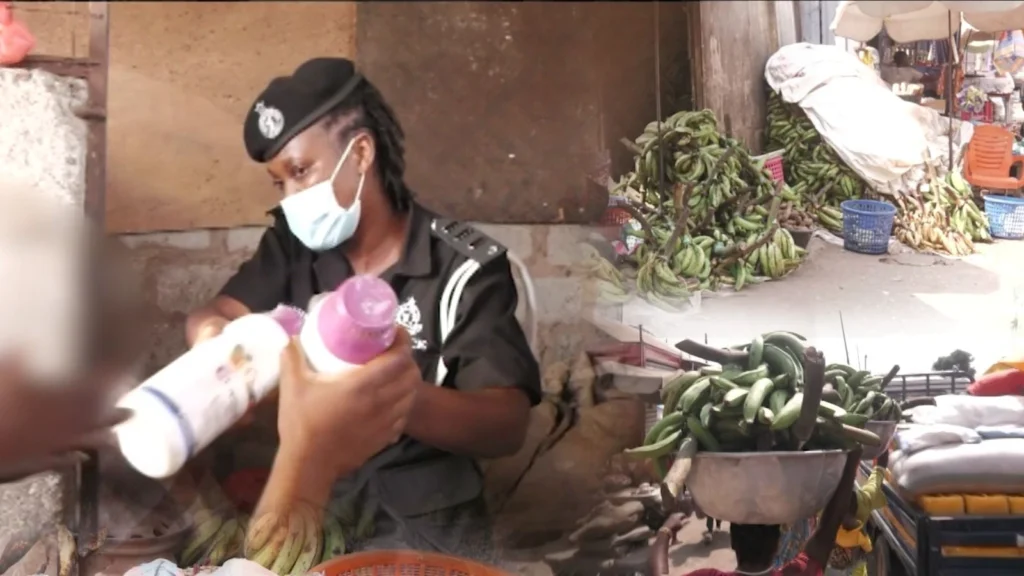
The development follows an engagement between the Assembly and traders at the Madina Market on August 12, where traders raised several concerns affecting their businesses.
Some traders specifically raised concerns about the alleged use of chemicals to ripen bananas and plantains.
Following the complaints, the Assembly’s Environmental Health Unit, acting on the directive of the MCE and with support from the Madina Police, conducted an operation at the market.
A woman whose identity has not been disclosed was identified as allegedly being involved in the sale of the substances and was taken into police custody for questioning and further investigations.
Traders call for wider monitoring
Some traders have expressed concern that the alleged practice could extend beyond the Madina Market.
They are therefore calling on the Assembly and the Food and Drugs Authority (FDA) to expand surveillance at fruit markets and take steps to prevent the sale and use of potentially harmful substances.
A trader who initially raised the concern also claimed that her son became ill after eating bananas suspected to have been treated with the substance.
The child has since received medical treatment and was discharged. However, there is currently no scientific evidence establishing that the illness was caused by the suspected chemical.
Health concerns over unapproved chemicals
Food-safety experts have consistently warned against using chemicals that have not been approved for application to food.
One substance commonly associated with concerns over artificial fruit ripening is calcium carbide. Food-safety authorities have warned against its use because it can generate acetylene gas and may contain harmful impurities.
However, it is important to distinguish between the illegal use of unapproved chemicals and approved fruit-ripening processes. Ethylene, for example, is a naturally occurring plant hormone involved in fruit ripening, and controlled ethylene-based processes are permitted in some food-safety systems.
The concern is therefore not fruit ripening itself, but the use of prohibited substances or the improper application of approved products.
Assembly to intensify checks
MCE Ibrahim Fialla said the Assembly would conduct a comprehensive search of the market to identify and remove unapproved products from circulation.
He added that the exercise would also involve educating traders on the potential dangers associated with using unapproved substances.
Mr Fialla urged traders to cooperate with environmental health officers, the police and other relevant authorities, while cautioning against actions that could create unnecessary fear among the public.
The Food and Drugs Authority is also expected to intensify monitoring as investigations continue.
Authorities have urged consumers to remain vigilant but cautioned against assuming that all bananas or plantains sold at Madina Market have been chemically treated.
Further investigations and laboratory analysis are expected to establish the identity of the substance allegedly being sold and determine whether other traders are involved.
Related posts:
 NACOC Arrests 10 KTU Students Over Alleged Cannabis-Infused Products Sales
  NER: 2 Arrested as 118 Bags of Cocoa Are Hidden Under Plantains
  NACOC Charges 5 Over Methamphetamine Shipment
  FDA Warns Against Buying Flood-Damaged Food
  Adwoa Safo petitions the Attorney-General to move alleged shooting case to High Court