China AI Strategy | 7 Bold Plans Xi Jinping Revealed for Global AI Cooperation


China AI Strategy | China Calls for Global AI Cooperation as Xi Jinping Warns Against One-Country Dominance
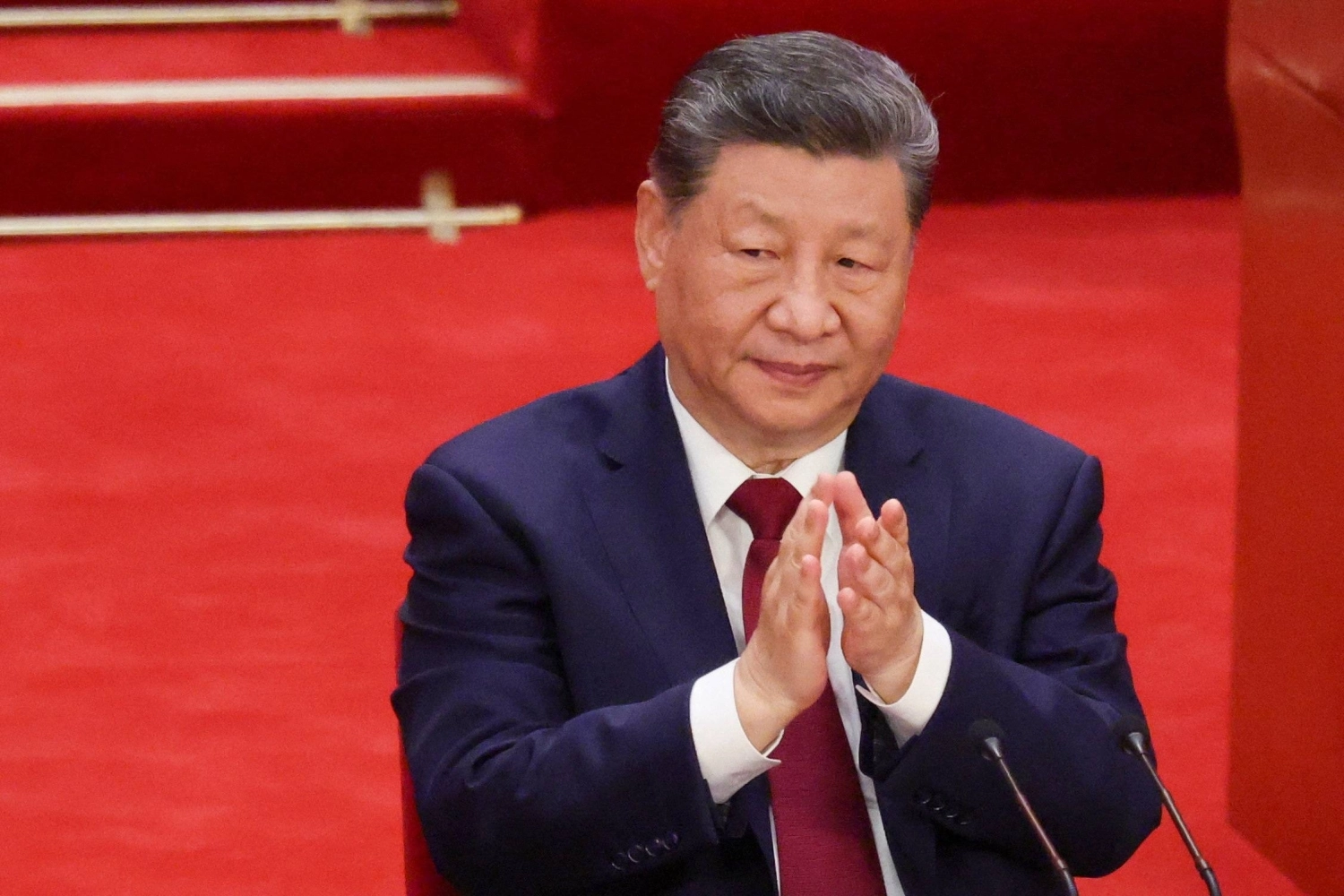
Chinese President Xi Jinping has urged the world to work together on artificial intelligence (AI), warning that the technology should never become “a solo performance by a single country.”
Speaking at the opening ceremony of the World Artificial Intelligence Conference (WAIC) 2026 in Shanghai, Xi outlined China AI Strategy (China’s vision) for a more inclusive global AI ecosystem—one where developing countries have equal opportunities to benefit from the technology rather than being left behind by a handful of dominant nations.
His remarks come as global competition in artificial intelligence intensifies, particularly between China and the United States, with both countries racing to develop more advanced AI models, chips, and digital infrastructure.
Xi Jinping China AI Strategy: AI Should Be Built Through International Cooperation
Addressing government leaders, technology executives, researchers, and policymakers, Xi said artificial intelligence must become a platform for international collaboration rather than geopolitical competition.
“AI development should not be a solo performance by a single country, but a symphony of international cooperation.”
According to Xi, countries should work together to create common AI standards, share technological progress responsibly, and ensure that developing nations are not excluded from the next wave of digital transformation.
He also warned against expanding national security restrictions in ways that could limit international AI collaboration.
“We should jointly oppose overstretching the national security concept in the field of AI.”
China Wants Greater AI Access for Developing Countries
A major focus of Xi’s speech was ensuring that emerging economies have access to AI technology.
China announced plans to deepen cooperation with international organizations and governments across:
- Africa
- Latin America
- Asia
- BRICS member countries
- Other developing economies
The goal is to support AI research, digital infrastructure, skills development, and technology transfer while reducing the global digital divide.
Xi argued that unequal access to AI could create “new historical injustices,” where only a few wealthy nations control the future of technological innovation.
A People-Centered Approach to Artificial Intelligence
Beyond technological progress, Xi emphasized that AI development must remain focused on people rather than machines.
He called for stronger governance frameworks that include:
- AI legislation
- Regulatory oversight
- Risk monitoring systems
- Emergency response mechanisms
- Ethical AI standards
Most importantly, Xi stressed that artificial intelligence should always remain under human supervision.
“We should ensure AI is always under human control.”
His comments reflect growing international concern about the rapid advancement of frontier AI models and their potential misuse in cyberattacks, misinformation campaigns, military applications, and autonomous decision-making.
China Continues Expanding Its AI Industry
Artificial intelligence has become one of China’s highest national priorities.
Over the past few years, Beijing has invested heavily in:
- Domestic AI research
- Semiconductor manufacturing
- Large language models
- Data centers
- Cloud infrastructure
- Robotics
- AI education
Chinese technology companies have also released increasingly competitive AI models that are attracting global users because of their lower operating costs compared to some Western alternatives.
State media reports that AI usage in China has expanded dramatically, with daily token consumption increasing nearly 1,000-fold over the past two years.
The US-China AI Rivalry Continues
Xi’s comments come against the backdrop of growing technological tensions between Beijing and Washington.
The United States has imposed strict export controls on advanced AI chips and semiconductor technologies destined for Chinese companies, arguing that these restrictions are necessary for national security.
Earlier this year, the US Commerce Department reaffirmed licensing requirements that limit exports of advanced AI hardware to Chinese firms and their overseas subsidiaries.
These measures are intended to slow China’s development of next-generation AI systems, particularly those with military or strategic applications.
China, however, argues that excessive restrictions undermine global innovation and international cooperation.
Energy Could Be China’s Biggest AI Advantage
While the United States still leads in access to some of the world’s most advanced AI chips, China holds another critical advantage: energy.
Modern AI models require enormous computing power, and that computing power depends on electricity.
According to the International Energy Agency (IEA), a single hyperscale AI data center can consume as much electricity as two million households.
China currently generates more than twice as much electricity as the United States and continues investing aggressively in:
- National power grids
- Renewable energy
- Nuclear power
- Large-scale data centers
This abundant energy supply could become one of China’s strongest competitive advantages as AI infrastructure expands worldwide.
AI Governance Is Becoming a Global Priority
The rapid rise of artificial intelligence has sparked worldwide debates about how governments should regulate the technology.
Key concerns include:
- National security
- Cybersecurity
- Privacy protection
- Deepfakes and misinformation
- Military AI
- Intellectual property
- Human oversight
- Ethical AI development
Countries are increasingly introducing AI regulations while balancing innovation with public safety.
China has positioned itself as a supporter of international AI governance, although its approach differs significantly from those adopted in the United States and Europe.
What This Means
Xi Jinping’s remarks highlight China’s ambition to become one of the world’s leading AI powers while presenting itself as a champion of international cooperation and digital inclusion.
As competition between China and the United States continues to shape the future of artificial intelligence, global discussions are shifting beyond technological leadership toward broader questions about governance, regulation, energy infrastructure, and equitable access.
The debate over who will shape the future of AI and under what rules is likely to remain one of the defining technology issues of the coming decade.
Read More from Tech Category
Related posts:
 Telkom Commits R100 Million to Launch AI Institute for South Africa
  Anthropic Suspends Fable 5 and Mythos 5 Over Security Concerns
  The AI Race Is Changing: Why Anthropic Is Winning And Google May Dominate
  Top 10 Free AI Tools
  GPT-5.6 Sol Launches as OpenAI’s Most Powerful AI Yet, Challenging Claude Fable 5 at One-Third the Cost