Ghana receives GH¢2.88m in clinical training equipment to strengthen maternity care
New simulation equipment backed by Canada and UNICEF offers Ghana an opportunity to strengthen emergency maternity training. Its impact will depend on how regularly staff can practise.

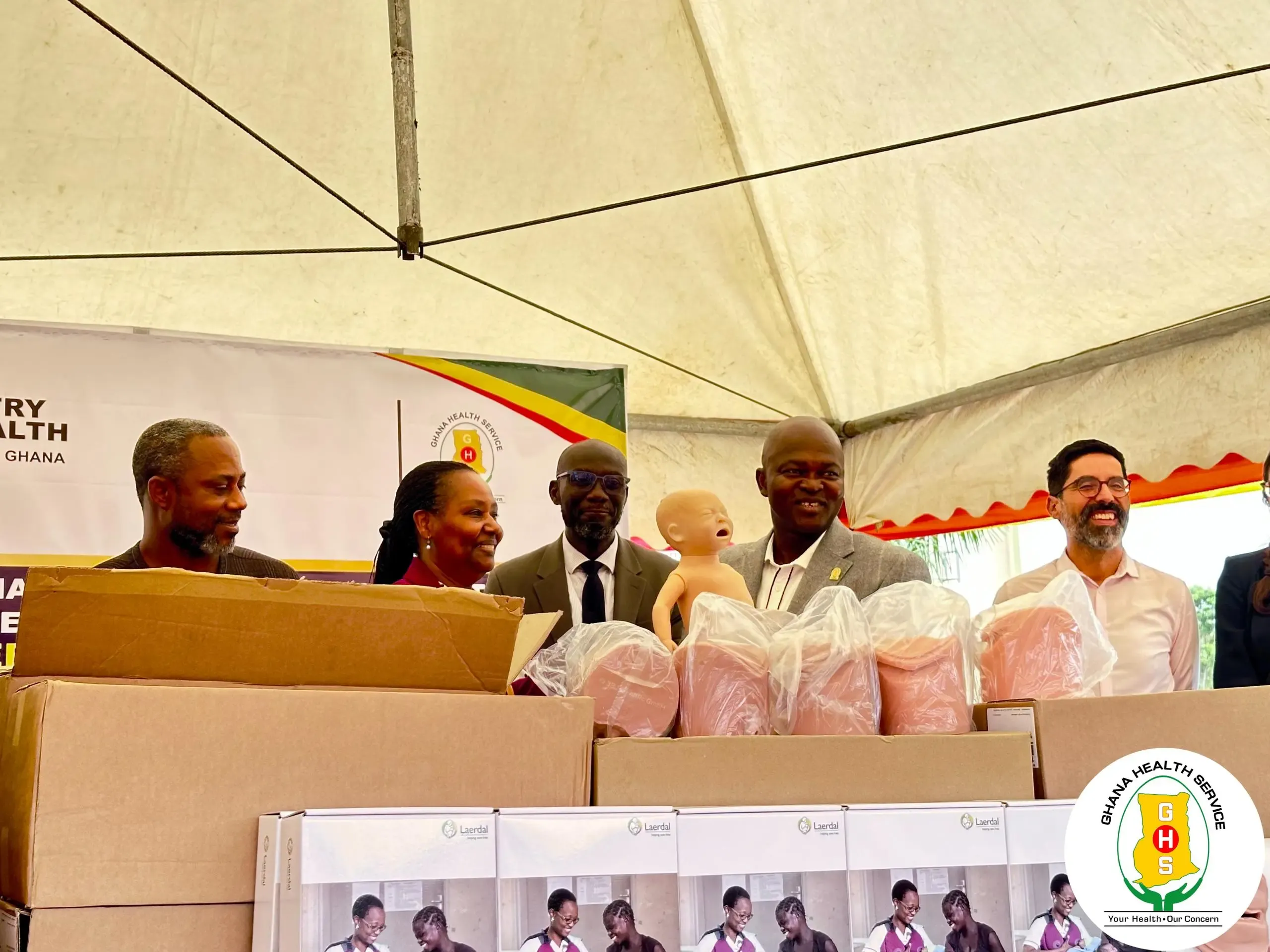

Ghana’s efforts to improve emergency care for mothers and newborns have received a GH¢2.88 million boost in training equipment, with the emphasis on helping frontline staff practise critical procedures before encountering emergencies in clinical settings.
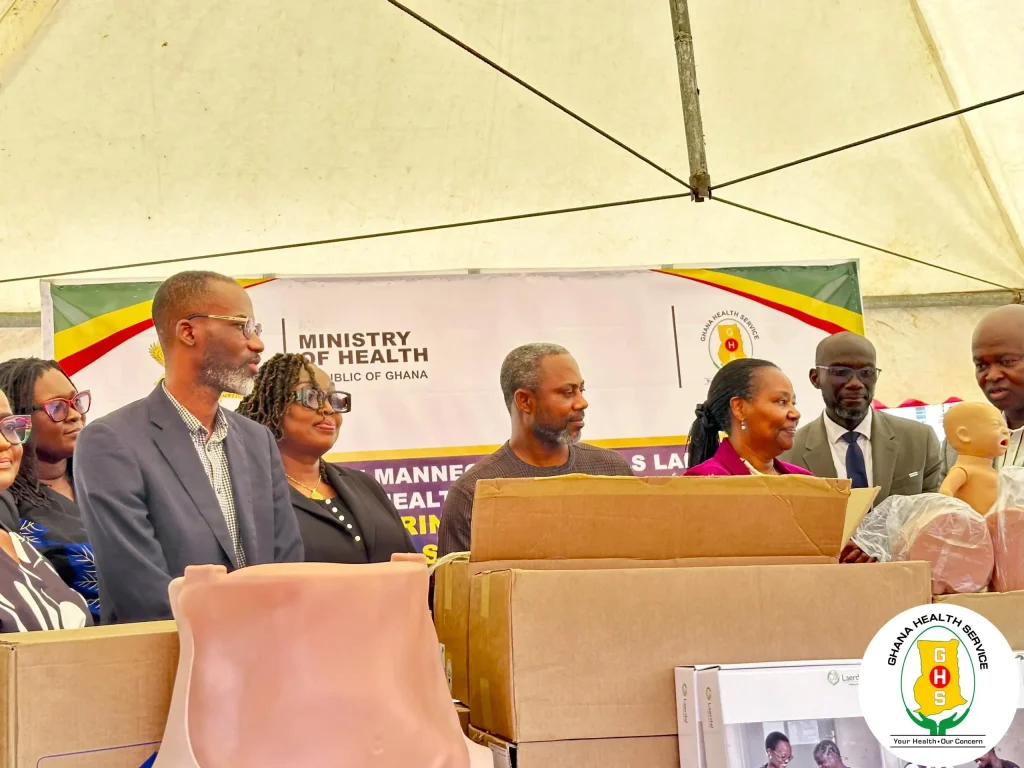
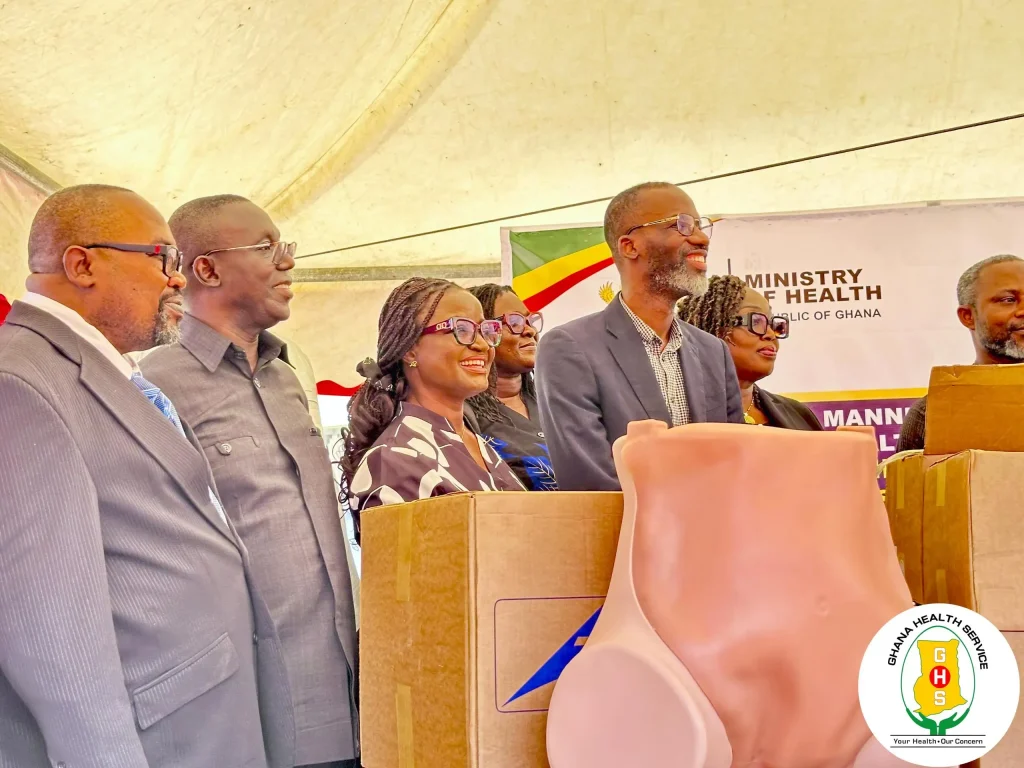
The Ghana Health Service (GHS) announced on 25 November 2026 that it had received the donation from UNICEF and Canada. The equipment includes models for practising delivery, newborn care and responses to severe bleeding after childbirth.
The investment raises a wider question for Ghana’s health system: how can a donation of equipment become a sustained improvement in the quality of care rather than a one-off procurement achievement?

Bringing practice closer to the frontline
Simulation gives health professionals a setting in which to rehearse procedures without exposing patients to the risks associated with learning a new skill. It also allows teams to examine how they communicate and coordinate during an emergency. The equipment would support practical learning in Greater Accra and Ashanti. The newspaper also reported that GHS leadership highlighted the relevance of training for staff conducting community visits.
For facilities with limited access to specialist training centres, the practical question is whether staff can attend repeated sessions without leaving their communities understaffed. A training model that relies on a single workshop may offer fewer opportunities to reinforce skills than one integrated into routine professional development.
Beyond the equipment donation
Measuring the transition from healthcare investment to maternal and newborn emergency care readiness in Ashanti.
Programme figures are attributed to Ghana Health Service reporting in the accompanying article. They do not establish facility-level clinical readiness or patient outcomes.
From 20 districts to all 43
The Health System Innovation project began operating in Ashanti in 2022, with Canadian funding channelled through UNICEF. Ghana Health Service says the programme has expanded from 20 districts to all 43 districts in the region.
| Programme stage | Districts | Reference coverage |
|---|---|---|
| Initial coverage | 20 | 46.5% |
| Expanded coverage | 43 | 100% |
| Difference | 23 | 53.5 percentage points |
How equipment could contribute to better care
-
Equipment investment
Appropriate training resources are allocated, installed and made available for practical instruction.
-
Instructor preparation
Instructors develop the capability to deliver structured practical training and assess healthcare workers.
-
Simulation and assessment
Healthcare workers rehearse relevant emergency scenarios and demonstrate competence against defined standards.
-
Clinical readiness
Competent teams operate alongside appropriate staffing, clinical supplies, functional equipment and referral systems.
-
Patient outcomes
Appropriate evaluations examine whether emergency response, care quality and maternal and newborn outcomes improve.
This is a proposed editorial evaluation pathway, not an independently validated causal model or evidence that these outcomes have already been achieved.
What would demonstrate meaningful progress?
Equipment readiness
Is the donated equipment functional and available when needed?
Evidence required
Equipment inventories, maintenance records and functionality checks.
Staff competence
Can healthcare workers demonstrate relevant emergency care skills?
Evidence required
Structured practical assessments against defined competency standards.
Training continuity
Do frontline teams regularly rehearse emergency scenarios?
Evidence required
Training schedules, attendance records, instructor availability and simulation logs.
Clinical readiness
Can facilities respond effectively to maternity and newborn emergencies?
Evidence required
Staffing, essential supplies, referral arrangements and emergency response assessments.
Patient outcomes
Are maternal and newborn outcomes improving over time?
Evidence required
Appropriately defined clinical indicators, risk adjustment and evaluation designs capable of examining alternative explanations.
Long-term sustainability
Can facilities maintain training capacity beyond September 2027?
Evidence required
Maintenance budgets, instructor development and documented post-project arrangements.
These dimensions are proposed assessment categories, not an official Ghana Health Service readiness index.
Training attendance is not the same as competence
Counting healthcare workers who attend training does not establish how many can demonstrate the required practical skills. Assessment coverage and competency achievement should be measured separately.
Illustrative staff competence calculator
All inputs are hypothetical. Calculated worker counts are rounded to whole people. No actual GHS workforce data are used.
Illustrative competency scenarios
| Assessment coverage | Pass rate among assessed | Workers meeting standard | Overall proportion |
|---|---|---|---|
| 50% | 60% | 30 | 30% |
| 80% | 75% | 60 | 60% |
| 90% | 90% | 81 | 81% |
| 100% | 95% | 95 | 95% |
What should healthcare facilities measure?
| Indicator | Proposed measurement | Evidence source |
|---|---|---|
| Equipment functionality | Functional equipment as a proportion of equipment due for functionality checks. | Equipment registers and inspection logs. |
| Assessment coverage | Unique eligible workers assessed divided by all eligible workers. | Workforce and assessment records. |
| Competency achievement | Unique workers meeting the defined standard divided by workers assessed. | Practical assessment records. |
| Overall demonstrated competence | Unique eligible workers meeting the standard divided by all eligible workers. | Reconciled workforce and assessment records. |
| Simulation frequency | Completed emergency simulation sessions per facility per reporting period. | Training and simulation logs. |
| Competency retention | Workers meeting the required standard at a defined follow-up assessment. | Follow-up assessment records. |
| Maintenance performance | Scheduled maintenance tasks completed on time relative to tasks due. | Maintenance schedules and service logs. |
| Emergency response readiness | Performance against defined, clinically appropriate readiness criteria. | Facility assessments and clinical audits. |
| Referral performance | Timeliness and completion of referrals, using consistent definitions. | Referral and transport records. |
| Maternal and newborn outcomes | Appropriately defined outcome measures assessed over comparable periods, accounting for case mix where feasible. | Clinical records and outcome evaluations. |
These indicators are editorial proposals, not official project targets. Implementation requires consistent definitions, reporting periods, denominators and data-quality checks. Rates with zero denominators should be reported as not applicable.
Will the investment remain useful after the project ends?
The reported project end date provides an opportunity to establish arrangements for maintaining equipment, preparing instructors and sustaining regular practical training.
This checklist records reader selections. It does not retrieve live facility data, certify clinical readiness or establish that any particular arrangement is absent. The script does not transmit or persistently store selections.
What is known and what remains unknown?
| Issue | Evidence status |
|---|---|
| Project commencement | Reported as 2022. |
| Funding arrangement | Canadian funding channelled through UNICEF, as reported. |
| Geographical expansion | From 20 to all 43 Ashanti districts, according to GHS. |
| Project end date | Reported as September 2027. |
| Facility-level equipment allocation | Not established from the available announcement. |
| Equipment functionality rates | Not established. |
| Staff competency achievement | Not established. |
| Effect on maternal and newborn outcomes | Not established by an evaluation of the newly donated equipment. |
| Post-project sustainability | Requires further evidence. |
Evidence not established from the available material should not be interpreted as proof of poor performance or absence of records.
Understanding Ashanti’s healthcare training investment
When did the Health System Innovation project begin in Ashanti?
The project reportedly began operating in Ashanti in 2022, with Canadian funding channelled through UNICEF.
How many Ashanti districts does the programme cover?
Ghana Health Service says coverage has expanded from 20 districts to all 43 districts in the region.
Does district coverage mean every facility has received equipment?
No. District-level programme coverage does not establish facility-level equipment distribution or workforce coverage.
Has the donation reduced maternal or newborn mortality?
The available announcement does not establish a causal effect of the newly donated equipment on mortality or other patient outcomes.
When is the project expected to end?
According to the reported GHS information, the programme will continue until September 2027.
What would demonstrate a sustainable healthcare training investment?
Relevant evidence would include functional equipment, available instructors, regular simulation exercises, demonstrated staff competence and funded arrangements for maintaining training capacity.
Measure clinical readiness, not just equipment delivered
Healthcare training resources can provide an important foundation for improving emergency care capability.
The lasting public value of this investment will depend on whether frontline teams have reliable opportunities to develop, demonstrate and maintain their skills, supported by functioning clinical systems.
Nukunya — Beyond the headlines. Evidence, context and perspective.Sources and interpretation
This explainer accompanies Nukunya’s reporting on the Health System Innovation project in Ghana’s Ashanti Region. Programme dates, funding arrangements and district counts are based on the reported information in the accompanying article.
District expansion calculations
- Additional districts: 43 − 20 = 23.
- Relative increase: 23 ÷ 20 × 100 = 115%.
- Initial reference coverage: 20 ÷ 43 × 100 = 46.5%.
- Expanded reference coverage: 43 ÷ 43 × 100 = 100%.
- Coverage difference: approximately 53.5 percentage points.
The coverage calculations use 43 districts as a common reference denominator. They do not independently establish historical administrative boundaries.
Competency calculator methodology
Workers assessed equal the eligible workforce multiplied by the hypothetical assessment completion rate, rounded to a whole person.
Workers demonstrating competence equal the assessed workforce multiplied by the hypothetical competency pass rate, rounded to a whole person.
Overall demonstrated competence equals workers meeting the standard divided by the eligible workforce, multiplied by 100.