Ghana’s $21bn gold exports reveal the challenge behind Mahama’s 2030 mineral processing plan.
Ghana's gold exports reached $20.98 billion in 2025, accounting for 67.1% of merchandise export earnings. New Bank of Ghana figures show why Mahama's 2030 mineral processing plan faces a significant economic test.

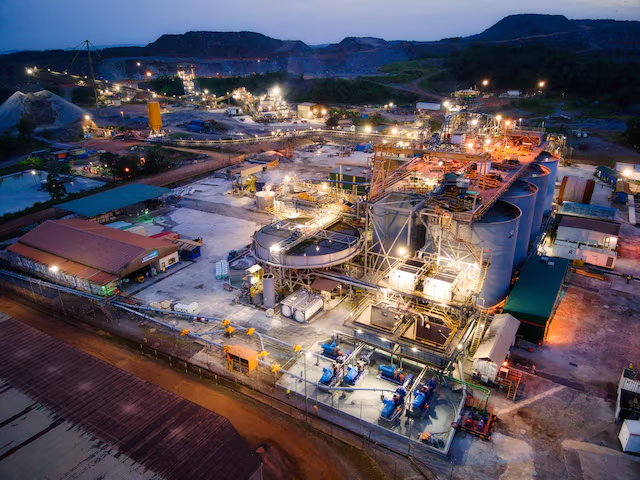

Gold accounted for 67.1% of Ghana’s merchandise export earnings in 2025 and remained the country’s dominant export in the first eight months of 2026. As President John Mahama proposes phasing out raw mineral ore exports by 2030, official figures reveal the opportunities and economic challenges facing Ghana’s industrial ambitions.
ACCRA — Ghana earned $20.98 billion from gold exports in 2025, more than double the previous year’s figure, according to the Bank of Ghana’s 2025 Annual Report.
Gold accounted for approximately 67.1% of the country’s $31.25 billion in merchandise export receipts, up from 53.9% in 2024, calculations by Nukunya show.
That represents an increase of 13.3 percentage points in gold’s share of Ghana’s export earnings.
More recent Bank of Ghana figures indicate that the concentration continued into 2026.
Between January and August, Ghana earned $14.86 billion from gold exports out of total merchandise export receipts of $22.41 billion. Gold therefore represented approximately 66.3% of exports during the eight-month period.
Gold earnings were also approximately 32.9% higher than the $11.18 billion recorded during the corresponding period in 2025.
The figures provide an economic backdrop to President John Dramani Mahama’s announcement at the Mining in Motion Summit in Accra on 19 October.
Mahama outlined a target of 2030 for ending exports of unprocessed mineral ores through phased restrictions, supporting legislation and implementation requirements tailored to individual minerals.
The policy aims to encourage domestic processing, create skilled employment and retain more economic value from Ghana’s natural resources.
However, the trade figures reveal an important distinction.
Higher mineral export earnings do not necessarily mean Ghana is processing more minerals domestically or retaining a greater share of their economic value.
Understanding that difference is essential to assessing whether the government’s proposed reforms can deliver lasting industrial transformation.
Ghana’s mineral economy in numbers
Explore gold export earnings, the changing composition of merchandise exports and the economic challenges behind Ghana’s proposed 2030 mineral-processing strategy.
Explore Ghana’s export data
Full year 2025
Gold versus other merchandise exports
Share of export receipts
Gold’s share of merchandise exports
Percentage of total export receipts
The 2026 observation covers eight months, not a complete calendar year.
Export earnings: 2024 versus 2025
US$ billion · full-year observations
Approximately $10.66 billion more in 2025 than in 2024.
Gold receipts: January–August comparison
Comparable eight-month periods · US$ billion
Approximately $3.68 billion in additional gold export receipts.
What drove Ghana’s gold export boom?
The Bank of Ghana attributes the increase in 2025 gold receipts to higher exported quantities and higher realised prices.
Explore the drivers of export earnings
When international gold prices rise, Ghana can earn more export revenue without an equivalent increase in physical production or domestic processing.
Explore Ghana’s mineral value chains
Select a mineral to see the difference between exporting raw materials and developing commercially viable domestic processing.
Bauxite to aluminium
Processing bauxite into alumina and aluminium requires substantial investment, technical capability and reliable electricity. Commercial competitiveness cannot be assumed from mineral availability alone.
Ghana’s proposed 2030 processing policy
President John Dramani Mahama outlined plans on 19 October 2026 for phased restrictions on exports of unprocessed mineral ores, supported by legislation and mineral-specific implementation schedules.
What should Ghana measure before 2030?
1. Operational processing capacity
Measure facilities financed, built, commissioned and operating commercially — not simply those announced.
2. Domestic value added
Measure economic value generated locally after accounting for intermediate inputs, rather than using gross export earnings as a substitute.
3. Industrial competitiveness
Monitor electricity costs, transport, access to capital, operating costs and market demand.
4. Jobs and local participation
Separate temporary construction jobs from permanent operational employment, and assess wages, skills and local procurement.
5. Export diversification
Track mineral-specific processing rates and exports of higher-value products, while assessing concentration and price risks.
The real test is value created, not ore exports prevented
Ghana’s $20.98 billion in gold export receipts demonstrates the importance of mineral resources to the country’s external earnings.
But gross export receipts cannot establish how much additional economic value Ghana could capture through domestic processing.
The 2030 policy should be assessed through commercially viable processing facilities, sustained skilled employment, competitive production and measurable domestic value added.
The central question is not only how much Ghana earns from exporting minerals, but how much lasting economic value it can create from them.
Related posts:
 Ghana plans a phased ban on raw mineral exports by 2030: What it means for mining and investment
 Ghana’s Debt Climbs to GH₵674bn Despite IMF Recovery Gains
 GhIPSS returns GH¢14.58m dividend to Bank of Ghana after profitable year
 Mahama plans mandatory procurement of Ghana-made products in major local-content push
 Ghana Moves to Protect Mining Jobs as Government Prepares New Wage and Tender Rules