Ghana Water Crisis: Parliament Demands Answers Over Central Region Water Quality Complaints
Parliament demands answers over water-quality complaints in Awutu, Gomoa and Effutu. Nukunya examines the evidence gaps, health concerns and data Ghana Water Limited should publish.

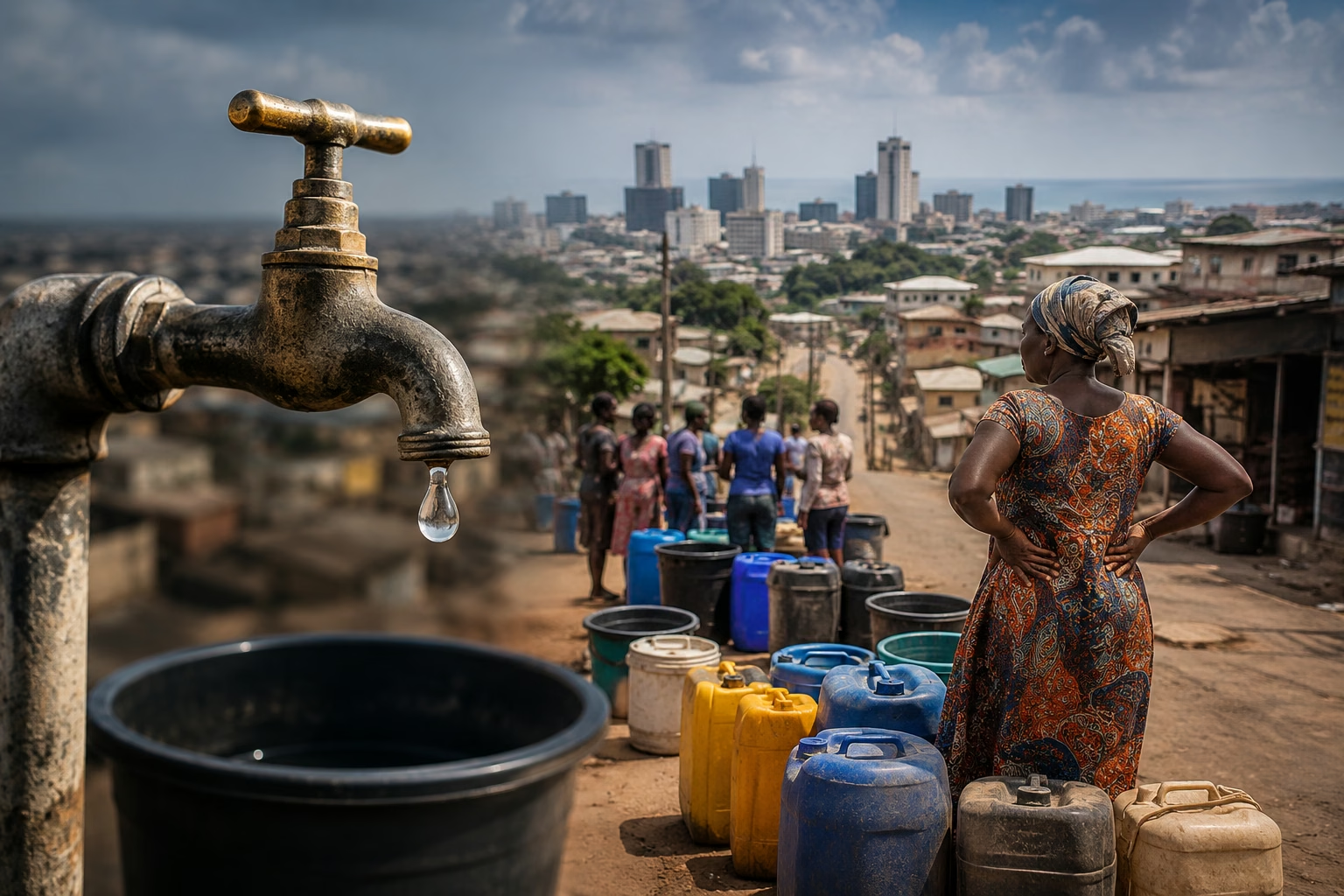

Ghana’s Parliament is demanding answers over complaints about drinking-water quality in Awutu, Gomoa and Effutu. The immediate question is whether the water is safe; the bigger accountability test is whether the utility publishes water-quality measurements, service interruptions and a clear timetable for corrective action.
Accra — Concerns about the quality of drinking water supplied to parts of Ghana’s Central Region have reached Parliament, where Minority Leader Alexander Afenyo-Markin has called on Ghana Water Limited (GWL) to explain complaints from residents of Awutu, Gomoa and Effutu.
Speaking on Friday, 20 November, Afenyo-Markin alleged that communities were receiving unhygienic water and said the situation required urgent attention. Majority Leader James Agalga responded that the responsible minister would be invited to address the concerns.
The allegations are serious, but there is an important distinction between complaints about water quality and laboratory-confirmed contamination. No published sampling results identifying contaminants, affected distribution points or exceedances of drinking-water standards were established in the sources reviewed for this report.
For residents, the question is not simply who answers in Parliament. It is whether independent, timely evidence can establish the safety of the water reaching their taps.

What happened in Parliament?
Afenyo-Markin questioned the whereabouts of GWL Managing Director Adam Mutawakilu while raising the complaints. He said the issue should not be treated as a partisan dispute because communities need safe drinking water regardless of political affiliation.
Agalga said he had met the managing director a few days earlier. He also indicated that the Minister for Works and Housing would be invited to explain the situation.
That exchange establishes that the complaints have reached the national legislature. It does not establish that the water has been independently tested and found unsafe, that specific illnesses were caused by it or that the utility has admitted contamination in the three areas.
Is the water safe? What the evidence shows
Water-quality concerns raised in Parliament about Awutu, Gomoa and Effutu require independently reviewable answers.
What do we know — and what is missing?
Select an issue to distinguish the reported position from evidence still needed.
Awutu, Gomoa and Effutu
These areas were identified during a parliamentary exchange concerning residents’ water supply.
Specific communities, neighbourhoods and distribution zones affected.
Water availability is not water safety
Is water available?
Supply hours, pressure, outages and restoration times indicate whether households can reliably receive water.
Evidence: service recordsIs water safe?
Laboratory sampling and public-health assessment establish whether water meets applicable quality standards.
Evidence: verified test resultsGWL’s public acknowledgement of intermittent supply is not proof of contamination. Reliable supply alone is also not proof of water safety.
Six indicators residents should be able to see
Choose an indicator to understand what a transparent public report should contain.
Microbiological testing
Tests can identify indicators of faecal contamination.
Sampling date, location, laboratory result and applicable standard.
No laboratory values, compliance rates or complaint totals are invented in this feature.
From complaint to verified resolution
- Complaint raised
Concerns about water quality reached Parliament.
- Official explanation sought
The Majority Leader said the responsible minister would be invited.
- Sampling and investigation
Dates, locations and results have not been established in the reporting reviewed.
- Corrective action
Any remedial measures and deadlines require official confirmation.
- Independent follow-up
Repeat testing and service records would help verify improvement.
This is an accountability pathway, not a claim that all stages have occurred.
What residents should know
Changes in colour, smell or clarity warrant investigation, but appearance alone cannot determine whether water is microbiologically safe.
Residents should follow current advice from Ghana Water Limited and competent public-health authorities. Anyone experiencing illness should seek appropriate medical care.
This article does not establish that a boil-water notice has been issued for Awutu, Gomoa or Effutu. It does not provide a substitute for an official local safety advisory.
What needs answering next?
Which specific communities are affected?
Publish the distribution zones, neighbourhoods and service areas relevant to the complaints.
Have water samples been collected?
Disclose the collection dates, sampling points, laboratories and testing methods.
What do the laboratory results show?
Publish actual readings alongside applicable standards and an explanation of any non-compliance.
What corrective measures are planned?
Identify responsible offices, actions, deadlines and interim arrangements where necessary.
When will improvement be verified?
Set a schedule for repeat sampling, reporting and public communication.
Related posts:
 Three Arrested in Police Raid on Illegal Mining Site Along Ghana Water Pipeline
 Galamsey Shuts Down Kyebi Water Treatment Plant, Leaving Thousands Without Reliable Clean Water
 UCC Student Innocentia Avinu Found Dead as Police Continue Investigation
 Two killed, five injured in Assin Fosu crash involving MMT bus
 Four measles cases confirmed at Kpone Kokompe as health authorities intensify surveillance