
Ghana-UAE Energy Ties Deepen as UAE Eyes Petroleum Hub
Ghana-UAE energy cooperation has expanded from talks over petroleum storage, LNG and solar power to Emirati interest in Ghana's planned Petroleum Hub, although major investment details remain undisclosed.

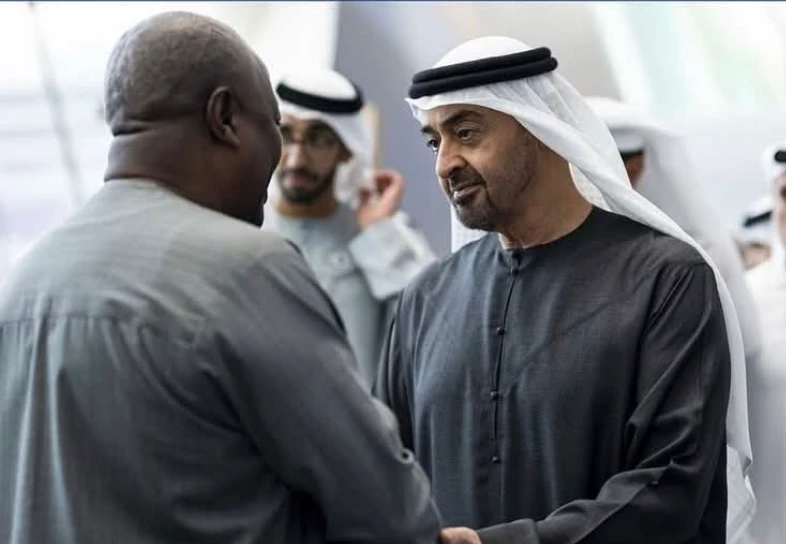

Ghana’s energy engagement with the United Arab Emirates has expanded from presidential talks over oil and gas storage, LNG and solar power to Emirati interest in the country’s planned Petroleum Hub. The discussions point to a broader investment relationship, although key financing and implementation details remain undisclosed.
ABU DHABI, UAE – Ghana’s energy engagement with the United Arab Emirates has expanded from presidential talks over oil and gas storage, liquefied natural gas and solar power to Emirati interest in the country’s planned Petroleum Hub, deepening an investment relationship that Accra hopes will strengthen energy security and regional trade.
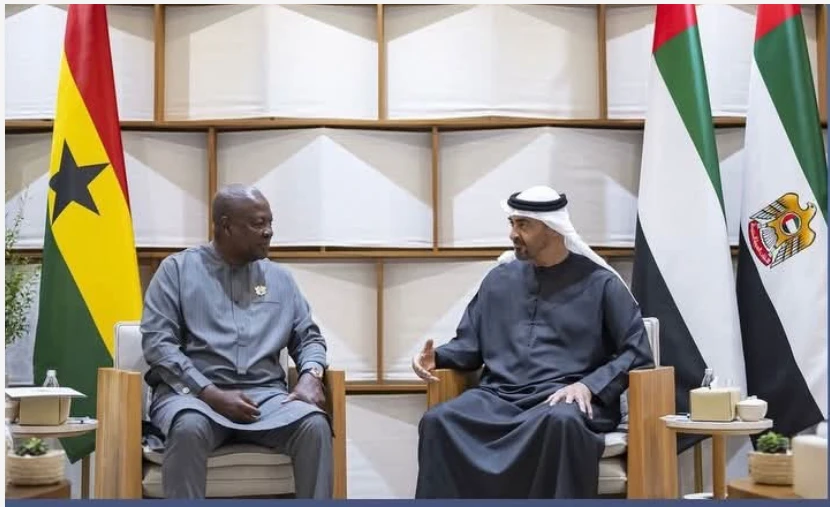
President John Dramani Mahama and UAE President Sheikh Mohamed bin Zayed Al Nahyan agreed in May to strengthen energy cooperation during talks in Abu Dhabi, with both sides discussing potential UAE investment in oil and gas storage facilities in Ghana.
The leaders also discussed LNG and solar power as Ghana seeks to diversify its energy system, alongside wider cooperation in trade, investment, technology, innovation and artificial intelligence. Ghana’s embassy in Abu Dhabi said Sheikh Mohamed expressed particular interest in oil storage infrastructure and renewable energy projects.
The May discussions did not, however, amount to a publicly disclosed final investment agreement. Neither government announced a contract value, financing structure, participating investor or implementation timetable for the proposed storage investment. Subsequent developments have nevertheless strengthened evidence of a broader Ghana-UAE investment push. The UAE formally expressed interest in Ghana’s Petroleum Hub in June, while another high-level Emirati delegation held talks with Mahama in Accra in July covering energy and other priority investment sectors.
Ghana-UAE energy cooperation is set to expand following talks between President John Dramani Mahama and UAE President Sheikh Mohamed bin Zayed Al Nahyan, with both sides targeting investment in oil storage and renewable energy infrastructure. The discussions, held during the Make it in the Emirates 2026 summit in Abu Dhabi, focused on strengthening strategic ties in energy security, diversification and long-term investment. Officials said the partnership will combine traditional hydrocarbon infrastructure with emerging renewable energy solutions.
What Ghana and the UAE discussed
The May talks took place during Mahama’s visit to the UAE and focused on strengthening economic relations between the two countries. According to Ghana’s embassy in Abu Dhabi, Sheikh Mohamed highlighted the UAE’s experience in energy and logistics and Ghana’s potential position as a gateway to West Africa.
Mahama, in turn, presented Ghana’s political stability, investment environment and energy-sector reforms as reasons for increased Emirati participation in the economy.
Energy formed a central part of those discussions.
Potential UAE investment in Ghana’s oil and gas storage infrastructure was considered alongside renewable energy projects. The two leaders also explored LNG and solar power as part of Ghana’s efforts to diversify energy sources and strengthen supply security.
UAE interest expands to Ghana’s Petroleum Hub.
A further development followed the presidential talks.
In June, UAE Ambassador to Ghana Abdulla Al Mandoos met a delegation from the Petroleum Hub Development Corporation, led by chief executive Toni Aubynn.
The UAE subsequently said it had expressed strong interest in the Petroleum Hub and considered the project aligned with its broader interest in energy security, industrial development and sustainable economic growth in emerging markets.
The engagement was separate from the May presidential discussions and should not be interpreted as evidence that the UAE has committed to financing the entire Petroleum Hub.
It does, however, broaden the potential scope of Ghana-UAE energy cooperation.
The Petroleum Hub is planned for Jomoro in Ghana’s Western Region and is intended to create an integrated refining, storage and petrochemical complex.
According to the Petroleum Hub Development Corporation and the UAE government’s account of the June discussions, plans envisage three refineries with combined capacity of 900,000 barrels per stream day, five petrochemical plants, storage tanks with cumulative capacity of 10 million cubic metres and at least two jetties supporting imports and exports.
Those figures describe the planned project, not infrastructure already built or capacity currently available. That distinction is important when assessing the economic significance of the development.
What has been confirmed and what remains unclear?
Several elements of the developing relationship can now be established from official sources.
- Ghana and the UAE have agreed to deepen energy cooperation.
- Potential UAE investment in oil and gas storage has been discussed.
- LNG and solar power have been identified as areas for cooperation.
- The UAE has separately expressed interest in Ghana’s Petroleum Hub.
- High-level bilateral discussions have continued since the May presidential meeting.
- The value of any petroleum-storage investment.
- The identity of the investors that would undertake the projects.
- The financing structure.
- Ownership arrangements.
- The precise capacity of proposed bilateral storage projects.
- The construction timetable.
- Any final investment decision.
Expressions of diplomatic and investor interest are not the same as financed projects ready for construction.
For Ghana, the next significant milestone would be movement from political commitment and investor discussions towards specific agreements containing financing, ownership, regulatory and implementation details.
Why petroleum storage matters to Ghana
Ghana’s interest in storage infrastructure has implications beyond the bilateral relationship.
Petroleum storage forms part of the infrastructure connecting imports, refining, transportation and distribution.
More storage does not necessarily translate into cheaper petrol, diesel or electricity.
Consumer energy prices depend on several factors, including international petroleum prices, the cedi’s exchange rate, taxes and levies, transportation and distribution costs and domestic market conditions.
The more immediate policy significance is therefore potential supply resilience and industrial capacity rather than a guaranteed reduction in household energy bills.
LNG and solar widen the relationship
The bilateral discussions also extend beyond conventional petroleum infrastructure.
Ghana and the UAE have identified LNG and solar energy as potential areas for cooperation.
Energy security
LNG could provide another energy source for industry and power generation.
Energy transition
Solar investment could support greater renewable generation capacity.
Ghana is therefore seeking investment in petroleum and gas infrastructure while simultaneously attempting to diversify its energy mix and expand lower-carbon generation.
The effectiveness of either strategy will ultimately depend on investment moving beyond diplomatic discussions into financed and operational projects.
July talks deepen the investment relationship
The diplomatic engagement continued after the May meeting and June Petroleum Hub discussions.
UAE Minister of State Sheikh Shakhboot bin Nahyan Al Nahyan met Mahama in Accra in July during an official visit.
According to the UAE Ministry of Foreign Affairs, the two sides discussed strengthening cooperation across the economy, trade, investment, artificial intelligence, energy, mining, agriculture and logistics.
Sheikh Shakhboot described Ghana as a key UAE partner in West Africa and said there were opportunities to strengthen cooperation in support of sustainable development and shared interests.
The visit provides stronger evidence that the May presidential meeting was part of continuing diplomatic and investment engagement rather than an isolated encounter.
There has also been movement at institutional level.
In July, Ghana’s Energy Commission signed a memorandum of understanding with Abu Dhabi-based Global South Utilities to explore technical cooperation, knowledge exchange and investment partnerships supporting Ghana’s energy transition.
That agreement is distinct from the proposed oil and gas storage investment discussed by Mahama and Sheikh Mohamed.
Energy security meets Ghana’s transition challenge
Ghana is trying to reconcile immediate energy-security requirements with longer-term diversification.
Reliable conventional energy
Petroleum and gas remain economically important, with implications for electricity generation and industrial activity.
Greater renewable investment
Ghana is simultaneously seeking additional renewable-energy capacity.
The UAE’s relevance is therefore broader than its status as a major petroleum producer. The country has developed international interests spanning conventional energy, renewable generation, logistics and infrastructure.
How can foreign investment be structured to strengthen domestic infrastructure while generating sustainable economic value?
That requires scrutiny of financing terms, local participation, environmental obligations, regulatory oversight and the distribution of benefits.
Those issues will become more important if current discussions progress into binding investment agreements.
What the Petroleum Hub could change
Ghana’s Petroleum Hub is intended to create a major integrated petroleum and petrochemical centre capable of serving domestic and regional markets.
The scale of that ambition makes foreign capital important.
PHDC has been courting international investors, with discussions extending beyond the UAE to companies and investors from other markets. Its own updates show continuing efforts during 2026 to attract strategic partners.
The project is also still confronting fundamental implementation requirements.
In March, Aubynn said land acquisition remained its biggest challenge and that preparatory work was expected to begin after progress on that process.
UAE interest may be significant, but it does not mean the Petroleum Hub has been fully financed or that all proposed infrastructure is about to be constructed.
What it could mean for Ghana
If commercially viable investment ultimately follows, deeper UAE participation could support several Ghanaian objectives.
Supply resilience
Additional petroleum storage could expand infrastructure supporting domestic and regional trade.
Energy options
LNG investment could provide another option for Ghana’s energy system.
Renewable capacity
Solar investment could contribute to the expansion of renewable generation.
Jobs and skills
Major infrastructure development could generate construction activity, technical employment and skills transfer.
For Ghanaian consumers, the appropriate test will not be how many investment discussions take place. It will be whether projects reach financial close, are constructed under credible regulatory arrangements and ultimately contribute to reliable and economically sustainable energy supply.
Why this story matters
Ghana’s developing relationship with the UAE illustrates a wider shift in the country’s economic diplomacy.
Accra is seeking international capital and technical expertise for infrastructure while positioning Ghana as an investment gateway into West Africa.
Ghana offers political stability, Atlantic access and potential opportunities across energy, logistics and other strategic sectors.
The relationship therefore has credible economic logic on both sides.
How much of that diplomatic momentum will become actual investment?
Announcements of cooperation can signal political intent. Signed financing arrangements, final investment decisions and completed infrastructure provide much stronger evidence of economic impact.
The next phase of the Ghana-UAE relationship will be judged increasingly by the latter.
Related posts:
 Ghana’s Debt Climbs to GH₵674bn Despite IMF Recovery Gains
  Bank of Ghana suspends proposed 0.75% mobile money transfer fee
  Bel Aqua apologises over 500ml bottle filling issue and says problem resolved
  GhIPSS returns GH¢14.58m dividend to Bank of Ghana after profitable year
  Community Banking Assets Hit GHS26bn as Eight-Million Customers Drive Growth in Ghana