
IMF PCI to Strengthen Bank of Ghana’s Balance Sheet


Follow Nukunya
Get the latest breaking news and updates from Nukunya.
Bank of Ghana Governor Dr Johnson Pandit Asiama says the proposed IMF policy coordination instrument will support inflation control, strengthen investor confidence and reinforce Ghana’s economic recovery.
ACCRA, Ghana –
Bank of Ghana Governor Dr Johnson Pandit Asiama says the proposed International Monetary Fund Policy Coordination Instrument (PCI) programme will strengthen the Bank of Ghana balance sheet, reinforce inflation control and support investor confidence as the country attempts to consolidate its recovery after years of financial instability.
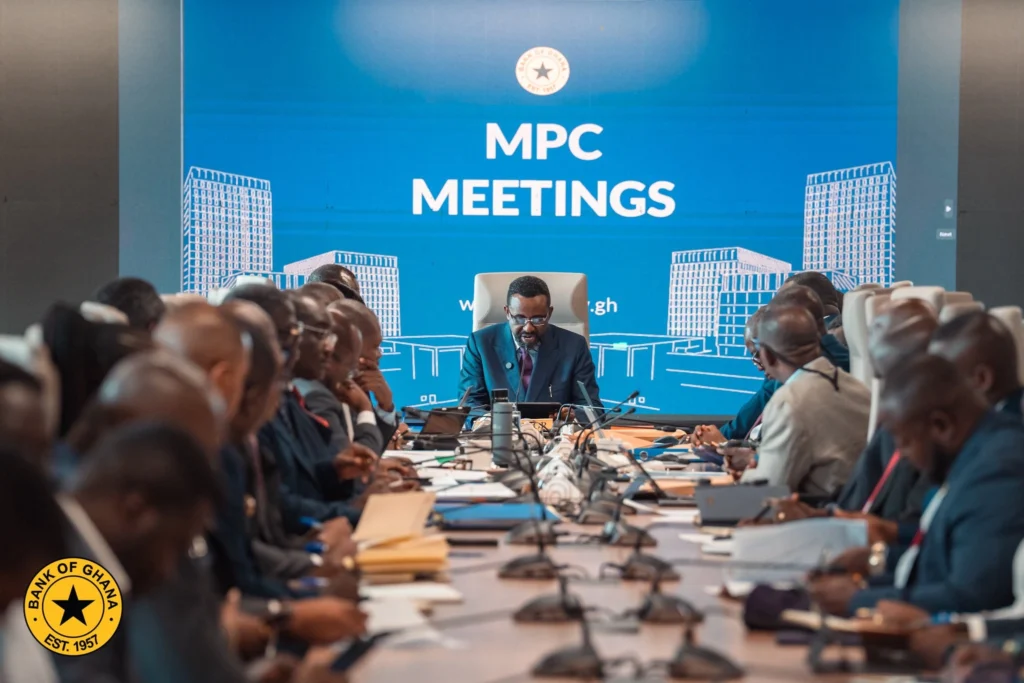
Opening the Bank of Ghana’s 130th Monetary Policy Committee (MPC) meeting in Accra, Dr Asiama said the IMF PCI arrangement would form part of Ghana’s post-bailout economic strategy following the completion of the country’s IMF-backed Extended Credit Facility (ECF) programme.
“The PCI represents a considered and credible next step in Ghana’s engagement with the international financial system,” Dr Asiama said.
He said Ghana’s economy had improved “meaningfully” since the previous MPC meeting in March, pointing to stronger foreign exchange reserves, improving investor sentiment and progress in debt sustainability despite growing uncertainty in the global economy.
The remarks come as Ghana continues rebuilding confidence after a debt restructuring programme, sharp inflation surge and currency pressures that pushed the country into a US$3 billion IMF bail-out programme in 2023.
Unlike the ECF arrangement, which provided direct financing support, the proposed PCI is designed mainly to help countries maintain policy discipline and economic reform credibility without additional IMF lending.
Ghana’s inflation and markets remain under pressure
Dr Asiama said inflation expectations and financial stability remained key concerns for policymakers even as some economic indicators improved.
Ghana’s inflation rate slowed to 18.4% in April 2026 from more than 54% at the peak of the crisis in late 2022, according to Ghana Statistical Service data.
The cedi has also recovered part of its earlier losses. The currency traded near GH₵13.2 to the US dollar this week after depreciating beyond GH₵15 during the height of the debt crisis last year, according to Bank of Ghana interbank market data.
Investor sentiment has also shown signs of improvement in recent months. Ghana’s 2030 Eurobond traded above 71 cents on the dollar this month, compared with below 40 cents during the country’s debt default period in 2023, according to market pricing data compiled by Bloomberg.
Still, the governor warned that rising geopolitical tensions and volatility in global energy markets could complicate the inflation outlook.
“Tensions around the Strait of Hormuz continue to contribute to pressure on global energy prices,” he said, adding that the IMF had revised its 2026 global growth projection downward to 3.1% from 3.3%.
Higher crude oil prices could increase fuel and transport costs in Ghana and place renewed pressure on inflation if global supply disruptions worsen, he added.
The Bank of Ghana is expected to announce its latest monetary policy rate decision after the MPC meeting concludes later this week. The benchmark policy rate currently stands at 14%.
IMF PCI expected to support central bank recovery
Dr Asiama said the IMF PCI programme would help improve monetary policy implementation, strengthen liquidity management and reinforce the central bank’s inflation-targeting system.
He added that the arrangement would also support efforts to strengthen the Bank of Ghana’s balance sheet by reducing quasi-fiscal operations and improving oversight of the Domestic Gold Purchase Programme.
Analysts say restoring central bank credibility remains critical after the Bank of Ghana recorded major losses during the economic crisis and domestic debt restructuring exercise.
“This is really about rebuilding confidence in macroeconomic management after an exceptionally difficult adjustment period,” said Courage Martey, economist at IC Research.
“If inflation continues easing and fiscal discipline is maintained, the PCI could reassure investors that Ghana intends to stay on a stable policy path,” he added.
Razia Khan, Chief Economist for Africa and the Middle East at Standard Chartered, said Ghana’s recovery remained encouraging but fragile.
“The direction of travel is positive, but Ghana still remains exposed to external financing conditions and commodity price shocks,” she said in a recent regional market briefing.
Some economists have also cautioned that election-year spending pressures and slower-than-expected fiscal reforms could weaken investor confidence if discipline slips.
Professor Godfred Bokpin of the University of Ghana Business School has previously argued that long-term economic stability would depend more on domestic productivity growth, revenue mobilisation and fiscal restraint than IMF oversight alone.
Cocoa financing strategy shifts towards local borrowing
Dr Asiama also disclosed that the government planned to raise US$1 billion through local-currency bonds to finance cocoa purchases for the 2026/27 crop season.
He said the strategy would reduce reliance on foreign lenders and dollar-denominated borrowing while helping deepen Ghana’s domestic debt market.
The financing structure is expected to rely largely on commercial paper and local liquidity mobilisation.
For cocoa exporters and traders, the shift towards local-currency financing could reduce foreign exchange exposure at a time when global commodity markets remain volatile.
At the Cocoa Marketing Company depot in Kumasi, some purchasing agents said exchange-rate stability remained essential for pricing and transport planning during the cocoa season.
“When the cedi becomes unstable, almost every cost in the cocoa chain rises,” said Kwesi Mensah, a licensed cocoa purchasing clerk in Kumasi.
Commercial banks and investors are also watching the MPC meeting closely for signals on liquidity conditions, borrowing costs and future inflation trends.
Recent economic indicators suggest Ghana’s economy remains more stable than a year ago, though policymakers continue to face a difficult balancing act between inflation control, growth and debt sustainability.
Sources: Ghana News Agency · Bank of Ghana · Ghana Statistical Service · Bloomberg.
Additional reporting and analysis by Kofi Foli
Related posts:
 Ghana’s inflation slows for third consecutive month as food prices ease
  Ghana’s Debt Climbs to GH₵674bn Despite IMF Recovery Gains
  Ghana Nears First Non-Interest Banking Licence as BoG Warns on Fintech Trust
  Ghana exits IMF programme as government shifts focus to jobs and growth
  Appeal Court reverses GN Savings licence revocation in major BoG setback