Stonebwoy donates GH¢100,000 to Ghana’s amputee football team ahead of the World Cup.
Stonebwoy has announced GH¢100,000 in support of Ghana's amputee football team as the Black Challenge prepare for the 2026 World Cup in Mexico.

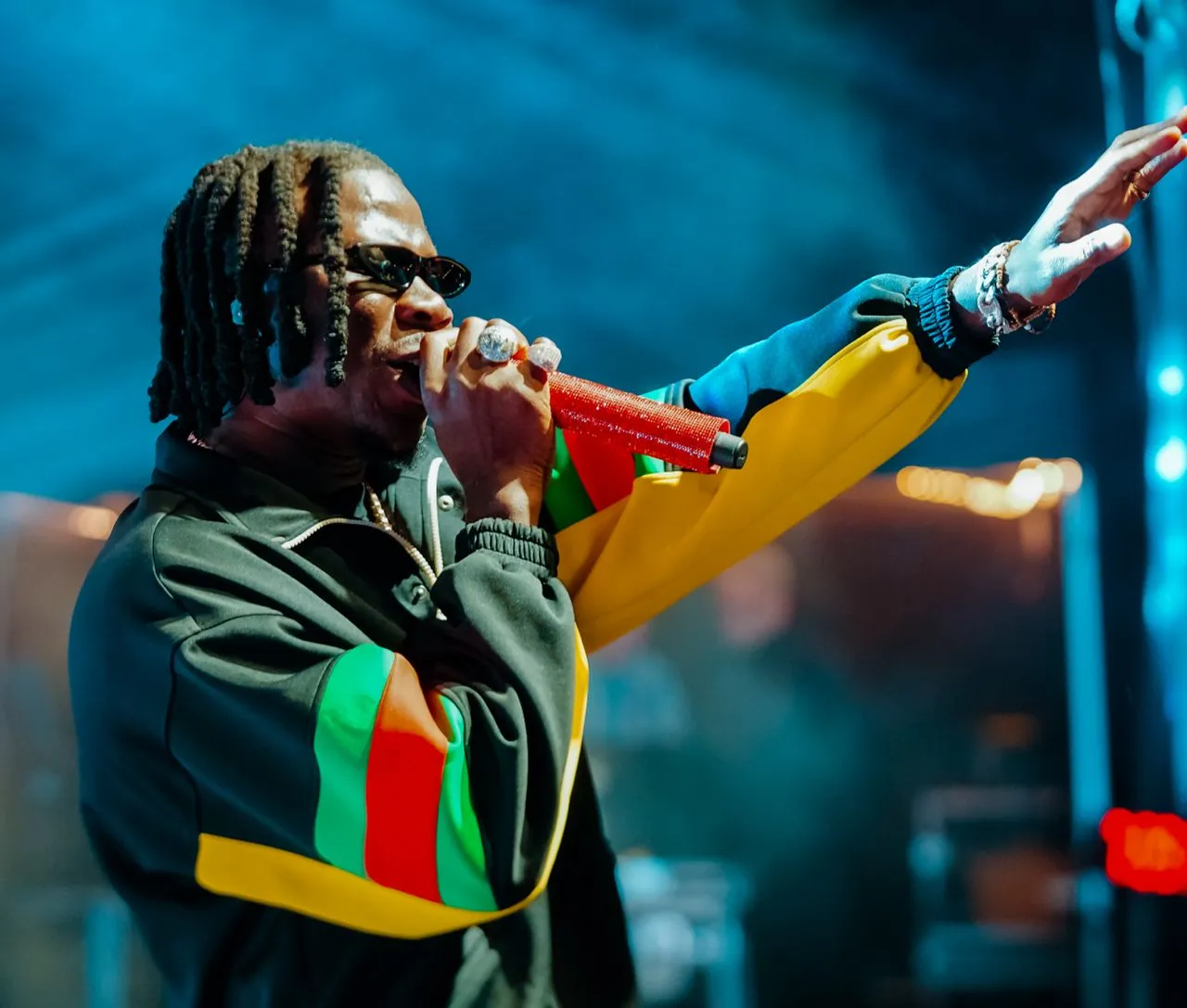

Ghanaian musician Stonebwoy has announced a GH¢100,000 contribution to the Black Challenge as the national amputee football team prepares for the 2026 Amputee Football World Cup in Mexico. The donation has renewed attention on the financial support available to athletes representing Ghana internationally.
ACCRA — Ghanaian dancehall musician Stonebwoy has announced a GH¢100,000 donation to Ghana’s national amputee football team, the Black Challenge, ahead of their participation in the 2026 Amputee Football World Cup in Mexico. The musician visited the team’s training session at Mensah Sarbah Park on the University of Ghana campus, where he encouraged the players and called for greater financial support.
Stonebwoy said the support was being provided by himself and the Burna Boy Music Group. The announcement comes as the Black Challenge prepare to travel to Mexico for the international tournament.
Stonebwoy calls for greater support
During the visit, Stonebwoy praised the players’ commitment and encouraged individuals and institutions to contribute to the team’s preparations.
He described the GH¢100,000 contribution as a gesture of support and urged others to help the team meet its needs.
The musician also acknowledged Samson Deen, president of Ghana’s National Paralympic Committee, for his work supporting disability sport.
The visit brought together Ghana’s entertainment and sporting communities at a time when the national team is preparing for international competition.
How much is Stonebwoy contributing?
The announced donation is GH¢100,000.
It is a specific financial pledge, but the reporting reviewed by Nukunya does not establish the team’s complete tournament budget or provide documentary confirmation of when the funds were transferred.
The contribution should therefore not be described as covering the team’s entire World Cup expenditure.
| Indicator | Reported figure |
|---|---|
| Announced contribution | GH¢100,000 |
| World Cup host country | Mexico |
| Ghana’s group | Group D |
| Group opponents | Angola, Iraq and Colombia |
| Total verified tournament budget | Not established |
| Amount still required | Not established |
Source: MyJoyOnline, 24 October 2026. The contribution is attributed to Stonebwoy’s public announcement.
Without a verified team budget, it is not possible to calculate what percentage of the total costs the donation would cover.
For example, if a team required GH¢500,000 for a competition, a GH¢100,000 contribution would represent 20% of that amount.
That is a hypothetical illustration, not an estimate of the Black Challenge’s actual financial requirements.
Interactive: donation and tournament budget calculator
Explore a hypothetical funding scenario. The budget entered below is not the Black Challenge’s verified tournament budget.
GH¢100,000 ÷ GH¢500,000 × 100 = 20.0%
This calculator does not confirm funds received, expenditure approved or any actual fundraising shortfall.
Ghana’s World Cup opponents
The Black Challenge have been drawn in Group D alongside Angola, Iraq and Colombia.
The draw presents Ghana with three group-stage opponents from Africa, Asia and South America.
The team are expected to depart Ghana for Mexico in the coming days, according to the 24 October report.
The exact departure date, match schedule and final travelling squad were not independently established in the sources reviewed for this article.
Those details should be confirmed with the relevant football authorities before being published as definitive.
Why funding matters for international competition
International tournaments involve expenditure beyond the cost of travelling to the host country.
Depending on the arrangements made by organisers and national federations, teams may need funding for accommodation, equipment, medical support, training, insurance and other logistics.
For amputee football, appropriate equipment and athlete support are particularly important to safe participation.
However, Nukunya has not obtained a detailed budget from the Black Challenge or the National Paralympic Committee.
It would therefore be inappropriate to assign specific costs to the team’s participation without supporting documentation.
Interactive: tournament support requirements
Select a category to see what transparent tournament planning could cover. No actual costs are implied.
International travel
Flight bookings, baggage arrangements and any required transfers for the travelling delegation.
Entertainment and disability sport
Stonebwoy’s involvement illustrates how prominent musicians can use their public platforms to draw attention to sporting programmes that may receive less mainstream coverage.
The donation also creates an opportunity to examine how disability sport is financed in Ghana.
The key questions include how much funding teams receive, whether it arrives before major competitions and how athletes are supported between tournaments.
Such questions extend beyond individual donations.
A sustainable funding framework would allow teams to plan training, travel and athlete development without relying exclusively on last-minute fundraising.
What happens next?
The immediate priority for the Black Challenge is completing their preparations for the World Cup.
The financial impact of Stonebwoy’s contribution will depend on the team’s outstanding requirements and how the funds are allocated.
The National Paralympic Committee and team management could provide greater transparency by publishing an expenditure summary covering travel, accommodation, equipment and other approved costs.
This would also help prospective sponsors understand where additional support is needed.
A donation that raises a wider question
Stonebwoy’s GH¢100,000 contribution is a significant show of public support for Ghana’s amputee football team.
It also brings visibility to athletes preparing to represent Ghana internationally.
But the broader issue is whether disability sport receives predictable, adequate and transparent funding.
One-off contributions can help meet immediate needs. They cannot, by themselves, establish a sustainable national sporting programme.
The real measure of progress will be whether the Black Challenge and other disability sports teams can access reliable support before, during and after major competitions.
Related posts:
 Lasmid Meets Okomfour Kwadee After Revealing ‘Biggest Nathaniel’ Was Inspired by Him
 Dr Likee’s London Success Draws Corporate Backing as Ghanaian Comedy Expands Abroad
 Kwesi Arthur Postpones North American Tour: 7 Things to Know About His Health Update
 Nana Ama McBrown Says Self-Worth Should Not Depend on Public Approval
 Gyakie Begins New Chapter as Independent Artist With Warner Music Africa Deal