Ghana Prisons Service questioned over GH¢277,625 in inmates’ wages used for other expenses
Parliament's Public Accounts Committee has questioned the use of GH¢277,625 in prison inmates' wages. Although the money has been transferred to the Auditor-General's recoveries account, former inmates are reportedly still seeking payment.

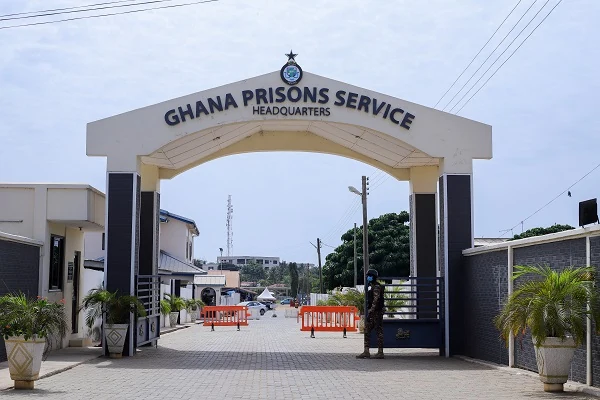

Ghana’s Interior Minister says GH¢277,625 linked to inmates’ wages has been transferred to the Auditor-General’s recoveries account following scrutiny by Parliament’s Public Accounts Committee. Questions remain about how the money was used and whether affected prisoners and former prisoners will receive their earnings.
ACCRA – Ghana’s handling of money owed to prison inmates has come under parliamentary scrutiny after GH¢277,625 intended for prisoners’ wages was reportedly used for other expenses. The issue was raised during proceedings of Parliament’s Public Accounts Committee (PAC), which examines the use of public funds and findings contained in the Auditor-General’s reports.
The Interior Minister told the committee that the GH¢277,625 had been transferred to the Auditor-General’s recoveries account. The reported transfer addresses an aspect of the financial irregularity identified through the audit process.
However, it does not establish that the inmates whose wages were involved have received payment. That distinction raises a broader accountability question about the treatment of earnings owed to people in prison, particularly where some beneficiaries may already have been released.
The Interior Minister has reportedly confirmed the transfer of GH¢277,625 to the Auditor-General’s recoveries account. Whether any outstanding individual wage entitlements have been settled remains unconfirmed.
What happened to the GH¢277,625?
The parliamentary scrutiny concerns money identified as inmates’ wages that was reportedly used to meet other expenses.
The available report indicates that the amount involved was GH¢277,625.
The Interior Minister said the money had subsequently been transferred to the Auditor-General’s recoveries account.
These figures and actions are attributed to the available reporting. Nukunya has not independently examined the underlying financial records.
Several important details remain unclear, including the precise expenses for which the money was used, when the expenditure occurred and how many inmates were affected.
It is also unclear whether the full amount represents unpaid individual earnings or includes other accounting components.
Has the money been recovered?
The Interior Minister’s reported statement indicates that GH¢277,625 has been transferred to the Auditor-General’s recoveries account.
However, identifying a financial irregularity, recovering money and settling obligations to intended beneficiaries are separate matters.
Explore the accountability process
Select a stage to understand what it establishes.
The audit process identifies a financial issue requiring explanation or correction. The underlying finding must establish what happened to the money.
This is an explanatory framework, not confirmation that every stage has been completed.
A transfer to a recoveries account may address financial reporting or recovery requirements, but it does not automatically establish that individual inmates have been paid.
Nor does it confirm whether former prisoners who may have outstanding entitlements have been identified.
Nukunya has not independently verified the transfer record, audit schedule or subsequent payments.
Why does the Auditor-General’s recoveries account matter?
The Auditor-General scrutinises Ghana’s public finances and reports irregularities to Parliament.
Where public funds have been improperly applied or remain unaccounted for, recovery processes may seek to restore the money and document corrective action.
But recovering funds and discharging an underlying payment obligation are not necessarily the same thing.
If the money was intended for identifiable individuals, officials may need to reconcile financial records, inmate earnings and payments already made.
Without those records, it would be premature to conclude either that every affected inmate has been paid or that none has received their earnings.
Are prisoners in Ghana entitled to wages?
Ghana’s prison system includes work, vocational training and rehabilitation activities intended to develop skills and support reintegration.
However, participation in prison work does not automatically establish entitlement to the same wage arrangements that apply to ordinary employment outside prison.
The applicable entitlement depends on the relevant legal and administrative framework, remuneration arrangements and records of amounts earned or credited to individual prisoners.
What needs to be established legally?
The relevant audit findings, prison service payment rules and individual earnings records would need examination.
The reported GH¢277,625 does not establish that every Ghanaian prisoner is owed wages or that all prison work is remunerated under one uniform system.
What about inmates who have already been released?
Former prisoners present an important administrative question if money was credited during imprisonment but remained unpaid upon release.
Potential complications include incomplete records, changes of address, identity verification and uncertainty over which institution is responsible for payment.
These are possible challenges, not evidence that a particular former inmate has been denied payment.
The available information does not provide a verified breakdown of current and former prisoners affected, or a timetable for settling any outstanding balances.
What should Parliament’s Public Accounts Committee establish?
Parliament’s Public Accounts Committee has an opportunity to examine the original audit finding, financial authorisations, evidence of the reported transfer and records of inmates’ earnings.
Key questions for parliamentary scrutiny
- What expenses were paid using the funds?
- Was the expenditure properly authorised?
- When did the transactions occur?
- How many inmates were affected?
- Was the reported transfer completed and verified?
- Do any individual earnings remain payable?
- What corrective financial controls have been introduced?
The central issue is whether the financial records establish that the money was used and subsequently dealt with in accordance with applicable law and any obligations to intended beneficiaries.
Why this matters for prisoners’ rights
People in prison retain protections afforded by applicable law, including safeguards against unlawful treatment and improper handling of money belonging to them.
The United Nations Standard Minimum Rules for the Treatment of Prisoners, known as the Nelson Mandela Rules, provide an international benchmark for prisoner treatment.
They address prison work and equitable remuneration.
These international standards provide context but do not establish that the Ghana Prisons Service has breached a specific domestic legal provision in this case.
Such a conclusion would require examination of the applicable law and evidence.
Recovering the money is not the end of accountability
The GH¢277,625 issue illustrates why financial recovery and individual redress must be examined separately.
The Interior Minister’s reported confirmation of a transfer to the Auditor-General’s recoveries account is relevant to public financial management.
But an important question remains: what happened to the people whose earnings were involved?
If all affected inmates have already been paid, the Ghana Prisons Service should be able to demonstrate that through reconciled payment records.
If balances remain outstanding, authorities should establish who is owed money, how much is payable and how payment will be made.
This may be particularly important for people who have already left prison.
An audit finding identifies a financial problem. A recovery transaction can help correct it. But complete accountability also requires establishing whether underlying obligations have been discharged.
The public should not have to choose between accepting the recovery figure as proof that the matter is settled and assuming every affected prisoner remains unpaid.
Neither conclusion is currently established.
The strongest test of accountability is whether authorities can account for the GH¢277,625 and demonstrate that any lawful entitlements arising from those wages have been properly settled.
Related posts:
 Alban Bagbin Urges Africa to Resist External Pressure on Laws and Values
 Avenor Building Collapse Kills Two as Officials Demand Tougher Enforcement of Building Regulations
 Government Disputes House Arrest Reports on Ex-MASLOC Chief Sedina Tamakloe Sedina Tamakloe Custody Dispute Deepens as Government and Critics Clash Over Transparency Reports say Sedina Tamakloe-Attionu begins prison sentence at Nsawam