
Government Disputes House Arrest Reports on Ex-MASLOC Chief Sedina Tamakloe
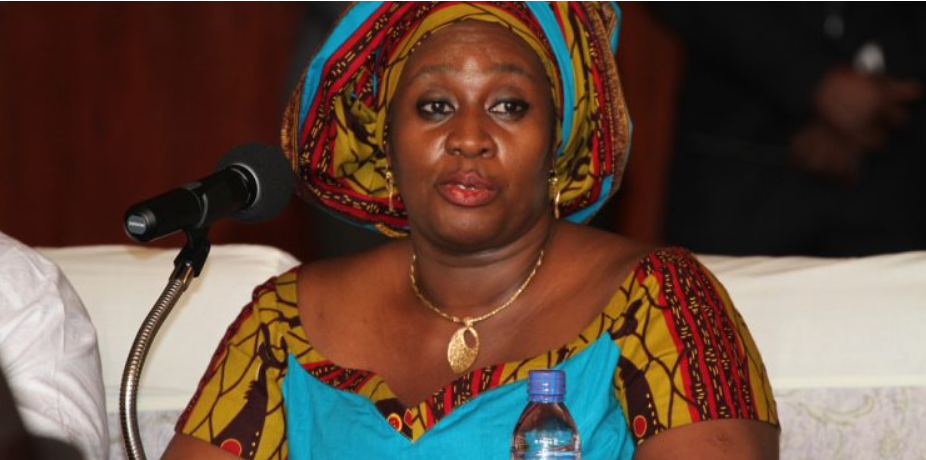
Government officials have disputed reports that former MASLOC CEO Sedina Tamakloe-Attionu is under house arrest, saying she remains in the custody of the Ghana Prisons Service after her extradition.



Government officials have rejected claims that former MASLOC Chief Executive Sedina Tamakloe is under house arrest, insisting she remains in the custody of the Ghana Prisons Service following her extradition from the United States.
ACCRA, Ghana — Government officials have publicly disputed claims that former Microfinance and Small Loans Centre (MASLOC) Chief Executive Sedina Tamakloe-Attionu is under house arrest following her extradition from the United States, setting off a public debate over her current custody status.
The controversy emerged after IMANI Africa founder Franklin Cudjoe stated that Tamakloe-Attionu was unwell and under house arrest, prompting questions about her health and the conditions under which she is serving her sentence.
However, senior government figures have strongly rejected that account. Minister of State in charge of Government Communications Felix Kwakye Ofosu said Tamakloe-Attionu remains in the lawful custody of the Ghana Prisons Service and is serving her sentence in accordance with established procedures.
Victor Adawudu, a member of the National Democratic Congress legal team, has also stated publicly that the former MASLOC chief executive remains in the custody of prison authorities following her return to Ghana.
As of publication, no official documentation has been made public confirming that Tamakloe-Attionu has been placed under house arrest. The Ghana Prisons Service had not issued a public statement directly addressing the competing claims at the time of publication. Nukunya News was unable to independently obtain a response from the Service before publication.
Background to the Case
Tamakloe-Attionu, a former chief executive of the state-backed Microfinance and Small Loans Centre, was convicted by a Ghanaian court on multiple criminal counts linked to her management of the institution.
According to the United States Department of Justice, she was extradited to Ghana on 8 June 2026 after a lengthy legal process involving authorities in both countries. The department said she was returned to serve a 10-year prison sentence imposed by a Ghanaian court.
U.S. authorities stated that the conviction involved more than 70 criminal counts connected to the misappropriation of funds and procurement-related offences during her tenure at MASLOC. Court proceedings cited losses amounting to approximately US$6 million.
The extradition followed years of legal proceedings after Ghana requested her return from the United States, where she had travelled for medical treatment while criminal proceedings were ongoing. The case involved cooperation between Ghanaian authorities, the U.S. Marshals Service, the Federal Bureau of Investigation and other law enforcement agencies.
What We Know
✓ Confirmed Facts
- Sedina Tamakloe-Attionu was extradited from the United States to Ghana on 8 June 2026.
- She is serving a 10-year prison sentence imposed by a Ghanaian court.
- Franklin Cudjoe publicly claimed she was unwell and under house arrest.
- Government officials have disputed that claim.
- No publicly available official document confirming house arrest has been released.
? What Remains Unclear
- Whether any temporary medical arrangements have been authorised by prison authorities.
- The nature and severity of any reported health concerns.
- Whether the Ghana Prisons Service intends to issue a formal statement clarifying her current status.
Why the Story Matters
The case remains politically and institutionally significant because it has become a test of Ghana’s anti-corruption enforcement framework and its ability to secure the return of convicted persons from overseas jurisdictions.
The successful extradition was viewed by many legal observers as a landmark example of international cooperation between Ghana and the United States in the enforcement of criminal judgments.
The latest dispute over Tamakloe-Attionu’s custody arrangements has also highlighted the importance of transparency and official communication in high-profile criminal cases, particularly where public speculation can quickly gain traction.
For government officials, the issue touches on public confidence in the equal application of the law. For critics and civil society groups, it raises broader questions about prisoner welfare, access to medical care and transparency within the correctional system.
Until an official statement is issued by the Ghana Prisons Service or supporting documentation becomes available, the competing claims are likely to remain a subject of public and political debate.
Related posts:
 Former MASLOC CEO Sedina Tamakloe-Attionu Returned to Ghana to Begin 10-Year Prison Sentence After US Extradition
  Mahama Bans Ministers, State CEOs From Accepting Private Awards Without Approval
  Bossman Asare Resigns as Ghana’s Electoral Commission Begins Leadership Transition
  Mahama Calls for Renewed Pan-African Unity and Reparations Agenda During UK Visit
  Bawumia Pledges Closer Partnership with New Christian Council Leadership