Obuasi SHTS investigation raises questions over safeguarding and accountability in Ghana’s schools
Ghana Education Service has directed two senior officials to step aside as investigations continue into allegations involving the Obuasi SHTS headmaster. The case has intensified scrutiny of pupil protection and institutional oversight.

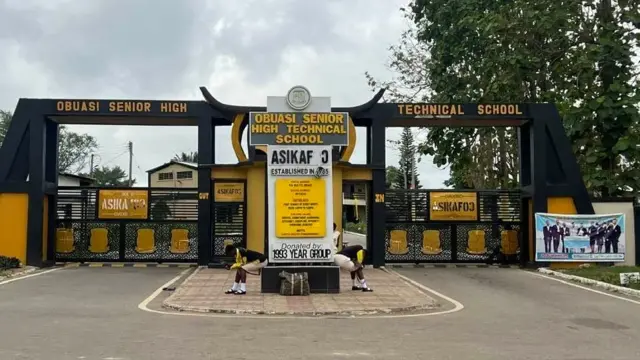

Ghana Education Service has directed two senior education officials to step aside as investigations continue into allegations of sexual misconduct involving the headmaster of Obuasi Senior High Technical School. The case has intensified scrutiny of how schools protect pupils, handle complaints and hold senior officials accountable.
ACCRA – Ghana’s education authorities are facing renewed questions over child protection, institutional oversight and the handling of complaints following allegations of sexual misconduct involving the headmaster of Obuasi Senior High Technical School (SHTS) in the Ashanti Region.
The Ghana Education Service (GES) on Tuesday, 20 October, directed two senior education officials to step aside while investigations continue into allegations against the school’s headmaster, Zakaria Abdulai. The directive follows an investigative documentary by journalist Manasseh Azure Awuni and subsequent intervention by the Ministry of Education.
The allegations have not been established in court. The ongoing investigations must determine what happened, whether any offences were committed and whether officials fulfilled their responsibilities.
Beyond the allegations themselves, the case raises a wider public-interest question: Do Ghana’s schools have sufficiently independent and confidential systems for pupils to report concerns involving senior members of staff without fear of retaliation or further harm?
GES directs two senior education officials to step aside
In a statement issued on 20 October, GES directed Ashanti Regional Director of Education Dr William Amankrah Appiah and Obuasi Municipal Director of Education Kwamena Owusu-Nketiah to step aside with immediate effect.
The service said the decision was intended to allow investigations to proceed without interference or the appearance of interference.
Both officials were instructed to hand over their responsibilities and state property to Deputy Ashanti Regional Director of Education Thomas Kwame Boateng.
GES also confirmed that Mr Abdulai remained interdicted and rejected reports suggesting that he had been cleared of the current allegations.
The decision to require the directors to step aside is an administrative measure. It does not establish misconduct or wrongdoing by either official.
Similarly, the headmaster’s interdiction is not a finding of criminal guilt.
GES has not announced a public completion date for its investigation.
Allegations are under investigation. An arrest or administrative suspension is not proof of guilt. The rights and privacy of pupils must be protected.
Explore this report
Reported developments
Earlier GES committee considers allegations. Its findings are limited to the evidence reviewed.
Education Minister directs suspension pending investigation and requests police involvement.
Interior Minister reportedly confirms arrest and transfer of the police investigation to Accra.
Safeguarding concerns receive renewed public scrutiny.
Chronology reflects reported accounts. Primary records and dates should be verified before publication.
What prompted the Obuasi SHTS investigation?
The latest scrutiny followed the publication of Inside the Dreaded Headmaster’s Bungalow, an investigative documentary by journalist Manasseh Azure Awuni examining allegations of sexual misconduct involving female students at Obuasi SHTS.
On 14 October, Education Minister Haruna Iddrisu directed GES to suspend the headmaster pending investigations.
The minister also requested an investigation by the Criminal Investigations Department (CID) of the Ghana Police Service.
According to reporting on 20 October, Interior Minister Muntaka Mohammed-Mubarak subsequently disclosed that Mr Abdulai had been arrested and that the police investigation had been transferred to headquarters in Accra.
These developments represent separate but related processes.
The GES investigation concerns administrative responsibilities, professional conduct and the handling of complaints within the education system.
The police investigation concerns whether the available evidence establishes any criminal offence.
An arrest is an investigative step, not proof of guilt. Any criminal allegations must be assessed through the applicable legal process, including the presumption of innocence.
What did the earlier GES investigation find?
An important distinction has emerged between an earlier GES inquiry and the investigations now underway.
A nine-member committee examining disturbances at Obuasi SHTS in August 2026 concluded that sexual harassment allegations presented during that inquiry had not been substantiated by the evidence available to it.
According to reporting on the committee’s findings, 16 girls were invited to appear before the panel, but only four attended.
That finding relates to the earlier inquiry and the evidence considered at that time.
It should not be presented as a determination of the separate allegations that prompted the latest investigations.
Equally, the existence of new allegations does not, by itself, establish that the earlier committee acted improperly.
The difference between the two processes raises questions about how schools and education authorities obtain, preserve and assess evidence when complaints involve senior officials.
For example, the reported participation of four out of 16 invited students warrants further examination.
It does not prove that witnesses were intimidated or prevented from attending.
However, understanding why some students did not participate, whether confidential reporting arrangements were available and what support was offered could help assess the effectiveness of the earlier process.
Safeguarding expert raises concerns about reporting environment
The case has also prompted scrutiny of the relationship between pupils and adults responsible for their welfare.
Speaking on Joy News’ PM Express on Tuesday, Ashesi University’s safeguarding lead, Dr Millicent Adjei, questioned whether the environment at Obuasi SHTS enabled students to report concerns safely.
Her comments, reported on 21 October, focused on professional boundaries between staff and pupils and the responsibility of schools to provide trusted channels for reporting abuse.
Dr Adjei raised particular concerns about accounts of pupils being asked to perform personal errands for school authorities.
The issue extends beyond whether a particular task appears harmless in isolation.
In a school environment, adults exercise considerable authority over students’ education, discipline and welfare.
That power imbalance can make it difficult for pupils to challenge inappropriate requests or report conduct they believe is wrong.
A credible safeguarding system must therefore do more than tell students to report misconduct.
It must ensure that complaints can be raised confidentially, assessed independently and escalated without exposing complainants to retaliation.
Fear of disbelief, embarrassment, disciplinary consequences or disruption to education may discourage students from reporting concerns.
These are recognised safeguarding risks, not findings that any particular official obstructed a complaint in the Obuasi case.
Why institutional accountability matters
Safeguarding is not limited to responding after allegations become public.
Schools need arrangements that prevent inappropriate conduct, identify concerns early and provide reliable mechanisms for addressing complaints.
An effective framework should include clear professional boundaries, accessible reporting channels, appropriate record-keeping, procedures for preserving evidence and arrangements for referring suspected criminal conduct to the relevant authorities.
It should also provide appropriate welfare support for students who report concerns.
The independence of those processes becomes particularly important when an allegation involves a headmaster or another senior official.
Students should not have to depend exclusively on the authority of the person about whom they wish to complain.
Nor should administrative investigations be treated as substitutes for criminal investigations where suspected offences require police attention.
The two processes have different purposes and standards.
Administrative measures may be necessary to protect pupils, preserve evidence or maintain public confidence while investigations proceed.
But they must remain consistent with fair procedures and should not be presented as proof of wrongdoing.
Civil society groups call for stronger safeguards
On 20 October, two civil society organisations, the Network of Peace and Security Women in the ECOWAS Space and the Working Group on Women, Youth, Peace and Security, called for a comprehensive investigation and stronger institutional accountability.
In a joint statement reported by the Ghana News Agency, the organisations urged authorities to examine how complaints are handled and whether existing safeguards adequately protect children.
They also called for confidential, child-friendly reporting mechanisms and appropriate support for those affected.
The intervention broadens the debate beyond the conduct alleged at one school.
It raises questions about whether education authorities have consistent procedures for responding to serious complaints, particularly those involving people in positions of authority.
It also highlights the need to protect the welfare and privacy of students throughout investigations.
Public accountability and child protection should reinforce one another.
Investigations should be sufficiently transparent to maintain confidence in the process without exposing children to unnecessary publicity or compromising evidence.
What is the police investigating?
Police have faced questions about the scope of the criminal investigation.
Speaking to Joy News on 20 October, Bekwai Police Public Relations Officer ASP Lloyd Baidoo explained that investigators had been examining a formally reported complaint and could pursue additional allegations where further reports or relevant evidence were provided.
That distinction matters.
Allegations raised in investigative journalism, complaints made to education authorities and formal criminal complaints do not necessarily involve identical evidence or the same individuals.
Police must assess information lawfully and independently, including whether additional allegations warrant investigation.
The rights of complainants, witnesses and accused persons must all be protected.
The public should also avoid treating allegations circulated on social media as established findings.
Until investigators or a court establish the relevant facts, the case remains one involving allegations and ongoing inquiries.
What questions must the investigations answer?
Beyond determining the facts of the allegations, the case raises questions about the effectiveness of school safeguarding and oversight.
Several issues deserve examination:
- Reporting channels: What confidential and independent mechanisms were available to students who wished to raise concerns about senior staff?
- Earlier complaints: How were allegations documented, assessed and escalated before the latest investigation?
- Witness participation: What explains the reported attendance of four out of 16 invited students at the earlier inquiry, and what support was available?
- Student protection: What measures are in place to protect pupils and potential witnesses from intimidation, retaliation or unwanted publicity?
- Institutional oversight: Did relevant officials follow applicable procedures, and were responsibilities between the school, municipal directorate and regional directorate sufficiently clear?
- Transparency: Will GES publish an appropriately redacted account of its findings and any corrective measures?
- Wider safeguards: Will education authorities review complaint-handling arrangements across other schools, particularly boarding institutions?
These are questions for investigation, not conclusions that failures have already been established.
Answering them could help determine whether the Obuasi case exposes weaknesses in existing arrangements or whether procedures were followed appropriately.
What happens next?
The immediate priorities are the continuing police investigation, the GES administrative process and the protection of students’ welfare and education.
Investigators must be allowed to examine the evidence without improper interference.
Students who may have experienced abuse or witnessed inappropriate conduct should have access to appropriate support and confidential reporting arrangements.
They should not be subjected to public identification, intimidation or unnecessary repetition of potentially traumatic accounts.
Any criminal allegations must proceed through due process, with the presumption of innocence maintained.
For GES and the Ministry of Education, the longer-term challenge is to demonstrate that safeguarding systems can operate independently and consistently, including when complaints involve senior officials.
The outcome of the investigations remains uncertain.
What is already clear is that the case has brought renewed attention to the responsibility of Ghana’s education institutions to maintain safe learning environments and credible mechanisms for addressing serious complaints.
Safeguarding must work before allegations become public
The Obuasi SHTS case raises a question that extends beyond the conduct alleged against one individual.
Can a student report serious concerns about a powerful school official and trust that the complaint will be handled safely, fairly and independently?
That question goes to the heart of institutional safeguarding.
Schools are responsible not only for academic instruction but also for the safety and welfare of the children placed in their care.
Where authority is concentrated in senior staff, reporting systems must provide safeguards against conflicts of interest.
Students need to know whom they can approach, how information will be handled and what protection is available if they raise concerns.
Education authorities also need procedures for assessing complaints without prematurely dismissing allegations or presuming the guilt of those accused.
The earlier inquiry at Obuasi SHTS and the subsequent investigations illustrate why those distinctions matter.
An allegation not substantiated by one inquiry is not automatically proven false.
New allegations do not automatically establish that an earlier inquiry was defective.
And administrative decisions requiring officials to step aside do not amount to findings of guilt.
Each process must be assessed against its purpose, evidence and applicable standards.
The broader opportunity for Ghana’s education system is to examine whether existing safeguarding arrangements are sufficiently independent, accessible and trusted by students.
That examination should consider professional boundaries, confidential reporting, witness support, evidence preservation and the referral of suspected criminal conduct.
The most meaningful outcome would not simply be a decision about the individuals currently under investigation.
It would be evidence that lessons from the case have been examined and, where necessary, translated into stronger protections for pupils.
A credible safeguarding system should not depend on an investigative documentary becoming public before serious concerns receive appropriate attention.
For Ghana’s schools, the ultimate test is whether children can raise concerns safely, whether those concerns are handled fairly and whether institutions can demonstrate accountability without compromising the rights of anyone involved.
Related posts:
 Ghana Suspends SHS Graduation Ceremonies Amid Backlash Over Wealth Displays
 Ahafo Ano South-East tops Ashanti in 2026 BECE, education director says
 Teacher Arrested After Viral Assault Video Sparks Safeguarding Concerns at Nyinahin Catholic SHS
 Obuasi SHTS Headmaster Hospitalised After Student Attack Over Infanticide Allegations
 Education Minister Warns SHS Heads Against CSSPS Bypass