
Ahafo Ano South-East tops Ashanti in 2026 BECE, education director says
Ahafo Ano South-East's Education Director says the district ranked first in Ashanti in the 2026 BECE, with more than a third of its 1,752 candidates recording aggregates between six and nine.



Ahafo Ano South-East has been ranked the best-performing district in the Ashanti Region in the 2026 BECE, according to its Education Directorate, with more than 600 of 1,752 candidates recording aggregates between six and nine. The achievement comes despite documented pressures involving classrooms, teacher accommodation and educational resources.
ADUGYAMA, Ghana – Ahafo Ano South-East has emerged as the best-performing district in the Ashanti Region in the 2026 Basic Education Certificate Examination, according to the district’s Education Director, an achievement that puts new attention on how a largely rural education system is performing despite persistent infrastructure and teacher-retention challenges.
District Director of Education Hamid Kramo said Ahafo Ano South-East placed first among the Ashanti Region’s 43 districts in this year’s examination.
Of the 1,752 candidates who sat the BECE in the district, more than 600 obtained aggregates between six and nine, he said. Using 600 as the minimum, that means at least 34.2% of the district’s candidates fell within the high-performing aggregate range highlighted by the Education Directorate.
The actual proportion would be slightly higher because the director gave the figure as “more than 600”, rather than an exact total.
Kramo disclosed the results during the commissioning of a new three-unit classroom block for Banahenekrom Junior High School, where he also drew attention to shortages in educational resources and accommodation for newly posted teachers.
The combination makes Ahafo Ano South-East’s result more than a league-table story. It raises a broader education question: what is driving the district’s performance, and can strong examination outcomes be sustained while some communities continue to face basic infrastructure and teacher-retention problems?
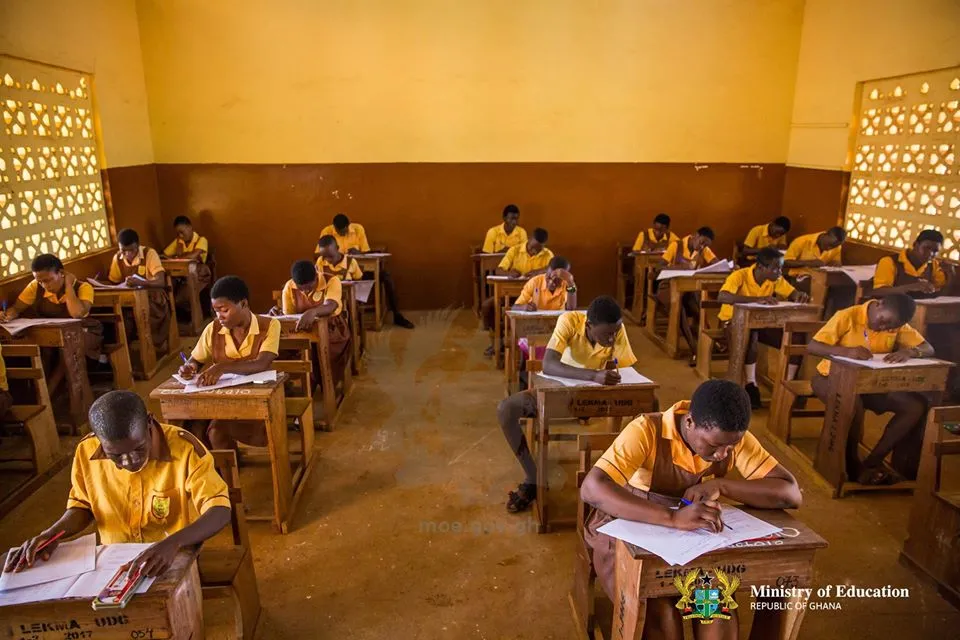
What exactly has Ahafo Ano South-East achieved?
The district’s Education Director says Ahafo Ano South-East ranked first in the Ashanti Region in the 2026 BECE.
The first-place ranking is attributed to the District Education Director. Nukunya has independently confirmed that WAEC released the provisional 2026 BECE results, but has not located a publicly available district-by-district WAEC or Ghana Education Service league table confirming the regional ranking.
More than 600 candidates recorded aggregates between six and nine
Kramo said 1,752 candidates sat the examination and more than 600 obtained aggregate scores between six and nine.
“More than 600” is not an exact number. Without the precise figure, a more exact percentage would create false precision.
- the district’s complete result distribution;
- the overall pass or placement rate;
- how individual schools performed;
- whether results were broadly shared across the district.
The district was not reported third nationally in the BECE
One detail in the government account requires particularly careful reading.
This is the ranking attributed to the District Education Director.
A separate achievement associated with the National Schools Inspectorate Authority.
Teachers, pupils and local support were credited
The District Education Director attributed the result to teachers, learners, parents, school authorities and local institutional support.
These are plausible explanations, but they remain the Education Director’s assessment. The available evidence does not isolate which factors actually caused the improvement.
Strong results can coexist with weak infrastructure
Independent reporting from communities in the district shows that educational conditions are not uniformly strong.
Unsafe and overcrowded facilities
Residents raised concerns about deteriorating classrooms and difficult learning conditions.
Retention pressure
Poor accommodation has been linked to difficulties keeping teachers in some communities.
Posting is not the same as retention
Teachers may be assigned to a community without necessarily remaining there.
Banahenekrom receives a new classroom block
A new three-unit classroom block was commissioned at Banahenekrom JHS, adding classrooms and associated facilities.
- office
- toilets
- urinals
- associated facilities
The Education Director’s request for additional furniture and teaching and learning materials shows that construction alone does not eliminate every resource constraint.
80 newly posted teachers create a second challenge: keeping them
A teacher is officially posted to a community.
The teacher needs workable living conditions.
Pupils benefit only if the teacher remains at post.
Government planning documents show the problem is not new
District planning documents identify staffing, logistics and infrastructure among the constraints affecting education and other public services.
Number one does not tell us how every school performed
A district-wide position compresses the results of many schools and pupils into a single ranking.
Can the result be sustained?
Examination rankings capture performance at a particular point in time. Educational improvement is better demonstrated across several years.
A significant achievement.
Evidence begins to strengthen.
Much stronger evidence of educational progress.
What we know and what we still need to know
What we know
- WAEC released the provisional 2026 BECE results.
- 1,752 candidates reportedly sat the examination.
- More than 600 reportedly obtained aggregates between six and nine.
- The Education Director says the district ranked first in Ashanti.
- 80 newly posted teachers have been assigned to the district.
- Infrastructure and accommodation problems are independently documented.
What we still need
- the underlying district league table;
- school-by-school performance;
- the exact number achieving aggregates six to nine;
- a full distribution of candidate results;
- comparable historical district rankings;
- data showing whether gains are broad-based.
Four questions readers may still have
01 Is Ahafo Ano South-East definitely number one in Ashanti?
The District Education Director says so. Nukunya has not located a publicly available WAEC or GES district league table independently confirming the ranking, so the claim should remain attributed.
02 Does 600+ candidates mean exactly 34.2%?
No. 34.2% is the minimum implied share if exactly 600 candidates achieved aggregates between six and nine. Because the reported figure is “more than 600”, the true share is higher.
03 Does first place mean every school is performing strongly?
Not necessarily. A district ranking does not reveal whether results are evenly distributed between schools, communities, genders or school types.
04 What would prove that improvement is sustainable?
Strong results across several BECE cycles, combined with better teacher retention, improved infrastructure and evidence that gains are shared across schools.
The more important test begins after the ranking
Ahafo Ano South-East’s reported first-place finish is an achievement worth recognising.
The district is reporting strong examination outcomes while communities such as Amokrom have experienced poor school infrastructure and difficulties retaining teachers.
Banahenekrom has received a new classroom block, yet furniture and teaching materials are still being requested.
Eighty teachers have been posted to the district, but accommodation may determine whether some remain in the communities where they are needed most.
That means maintaining strong BECE results over successive years while retaining teachers in harder-to-reach communities and addressing the infrastructure constraints already documented.
Publicly accessible district and school-level performance data, presented with appropriate safeguards, would allow parents, researchers and policymakers to distinguish sustained improvement from ordinary year-to-year movement in rankings.
Related posts:
 Ghana Suspends SHS Graduation Ceremonies Amid Backlash Over Wealth Displays
  Teacher Arrested After Viral Assault Video Sparks Safeguarding Concerns at Nyinahin Catholic SHS
  Three Former Hohoe E.P. SHS Students Arrested Over Alleged School Vandalism Ghana to Review School Discipline Rules as Education Minister Signals Tougher Measures
  Obuasi SHTS Headmaster Hospitalised After Student Attack Over Infanticide Allegations