Ghana to Review School Discipline Rules as Education Minister Signals Tougher Measures


Follow Nukunya
Get the latest breaking news and updates from Nukunya.
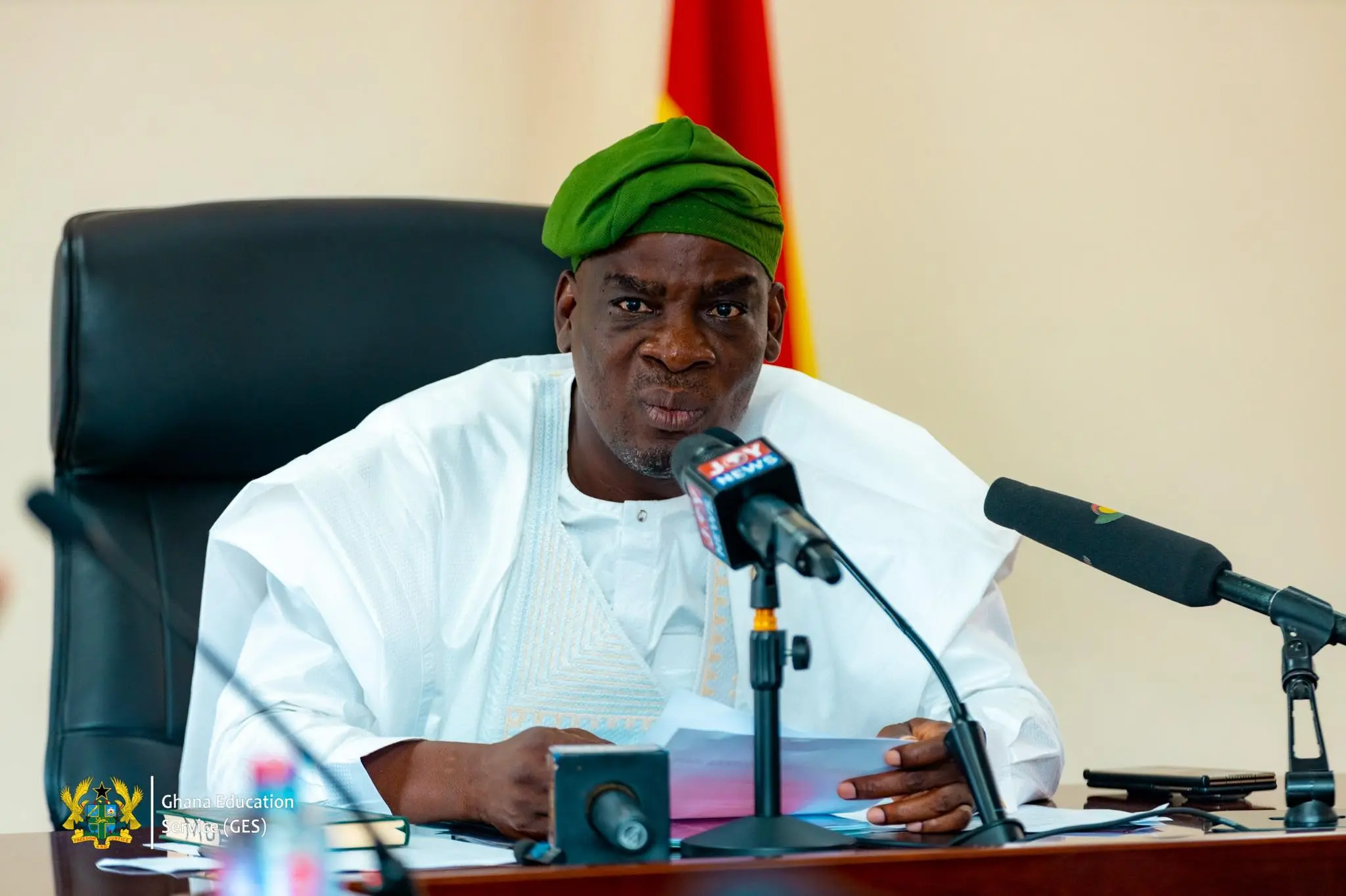
The government is preparing to review disciplinary measures in Ghana’s secondary schools following growing concerns over student misconduct, including violence, drug abuse and attacks on teachers. Education Minister Haruna Iddrisu says a national stakeholders’ conference will help shape reforms aimed at strengthening discipline while protecting students’ rights.
ACCRA, Ghana — Ghana’s government is preparing to review disciplinary measures in the country’s secondary schools following a rise in reported cases of student misconduct, with Education Minister Haruna Iddrisu signalling that the Ghana Education Service (GES) could be given stronger powers to deal with persistent indiscipline.
Addressing Parliament, Mr Iddrisu said the Ministry of Education intends to reassess the current punishment regime in senior high schools and will convene a national stakeholders’ conference before the end of July to gather views on possible reforms.
The conference is expected to bring together education officials, teachers, school administrators, parents and other stakeholders to consider practical strategies for improving discipline while maintaining safe and effective learning environments.
The proposed review comes amid growing public concern over incidents of violence, drug abuse and misconduct reported in some Ghanaian schools in recent years. Although such cases involve only a minority of students, they have raised wider questions about discipline, student welfare and school safety.
Speaking in Parliament, the minister cited reported cases involving students selling marijuana and other narcotic substances on school campuses. He also referred to incidents in which students allegedly assaulted teachers supervising examinations after being prevented from cheating.
Mr Iddrisu further highlighted instances where surveillance cameras installed by school authorities had reportedly been removed or vandalised to avoid misconduct being recorded.
He said such incidents undermine academic integrity and weaken discipline within schools, adding that the review aims to ensure the Ghana Education Service has adequate authority to respond effectively when serious disciplinary offences occur.
The minister did not outline the specific disciplinary measures that could be introduced or amended. Instead, he said the forthcoming national consultation would help shape any recommendations before the government reaches final decisions.
Balancing Discipline and Student Rights
Discipline in Ghana’s schools has remained a subject of national debate for several years, particularly following the abolition of corporal punishment in educational institutions and growing emphasis on child protection and students’ rights.
The Ghana Education Service has, over the years, introduced measures including guidance and counselling programmes, strengthened collaboration with parents and communities, and installed CCTV systems in some schools to improve security and student behaviour.
Despite those interventions, concerns have persisted among teachers and school administrators about increasing cases of violence, substance abuse, examination malpractice and damage to school property.
Education experts have frequently argued that effective discipline depends not only on sanctions but also on stronger pastoral care, mental health support, parental involvement and early intervention for students displaying behavioural challenges.
Many schools have also expanded counselling services and peer-support initiatives to address underlying social and emotional factors contributing to misconduct.
National Consultation Expected
The stakeholders’ conference planned for Sunyani in the Bono Region is expected to provide an opportunity for education professionals and policymakers to review the effectiveness of existing disciplinary regulations and recommend possible reforms.
Any significant changes to disciplinary procedures are likely to require careful consideration of Ghana’s education laws, child protection obligations and international commitments relating to children’s rights.
Education observers say achieving the right balance between maintaining order in schools and safeguarding students’ welfare will be central to any successful reforms.
The discussions are also expected to examine the respective roles of parents, teachers, school governing bodies and communities in promoting positive behaviour and creating safer learning environments.
Why This Matters
School discipline sits at the intersection of education, child protection, public safety and academic achievement. While disciplinary measures often receive attention only after high-profile incidents, the long-term effectiveness of Ghana’s education system depends on how schools balance accountability, student welfare and due process.
Schools play a critical role in preparing young people for higher education, employment and civic life. Persistent indiscipline can disrupt teaching, reduce academic performance and undermine the safety of both students and staff.
Many Ghanaian schools continue to maintain strong disciplinary standards. However, education authorities are increasingly seeking responses to emerging challenges including substance abuse, examination malpractice, violence, technology misuse and cyber-related misconduct.
The government’s decision to convene a national stakeholders’ conference signals that policymakers recognise these challenges extend beyond individual schools. Rather than introducing immediate policy changes, authorities appear to be seeking broad consultation before determining whether existing disciplinary frameworks remain fit for purpose.
Why the consultation matters
If implemented effectively, the consultation could influence how discipline is managed across Ghana’s secondary education system for years to come. The discussions may shape future guidance for headteachers, strengthen the powers available to school administrators, clarify students’ rights and help define a more consistent national approach to serious misconduct.
Key Takeaways
The government’s proposal remains at the consultation stage, but several important developments have already emerged.
- National Review: Ghana plans to review disciplinary measures across secondary schools.
- Stakeholder Conference: Education Minister Haruna Iddrisu says a national consultation will take place before the end of July.
- Policy Motivation: Authorities cite increasing concerns over violence, substance abuse, examination malpractice and technology misuse.
- Institutional Reform: The Ghana Education Service could receive stronger disciplinary powers for serious offences, depending on consultation outcomes.
- No Final Decision Yet: Government has indicated reforms will follow stakeholder engagement rather than being imposed immediately.
Nukunya Analysis:
Because the consultation process is ongoing, any potential reforms remain
proposals rather than confirmed policy. Distinguishing confirmed government
positions from future possibilities is essential to responsible reporting.
Related posts:
 Ghana Suspends SHS Graduation Ceremonies Amid Backlash Over Wealth Displays
  Teacher Arrested After Viral Assault Video Sparks Safeguarding Concerns at Nyinahin Catholic SHS
  Drug Networks Increasingly Target Ghana’s Schools, Education Ministry and NACOC Warn
  Dr Ofori Sarpong donates 600-bed dormitory to PRESEC Legon to ease student congestion
  NSMQ Star Prince Debrah Jr Lands Google Engineering Role After MIT Graduation