Amasaman Residents Protest Over Failing Roads as Transport Costs Soar

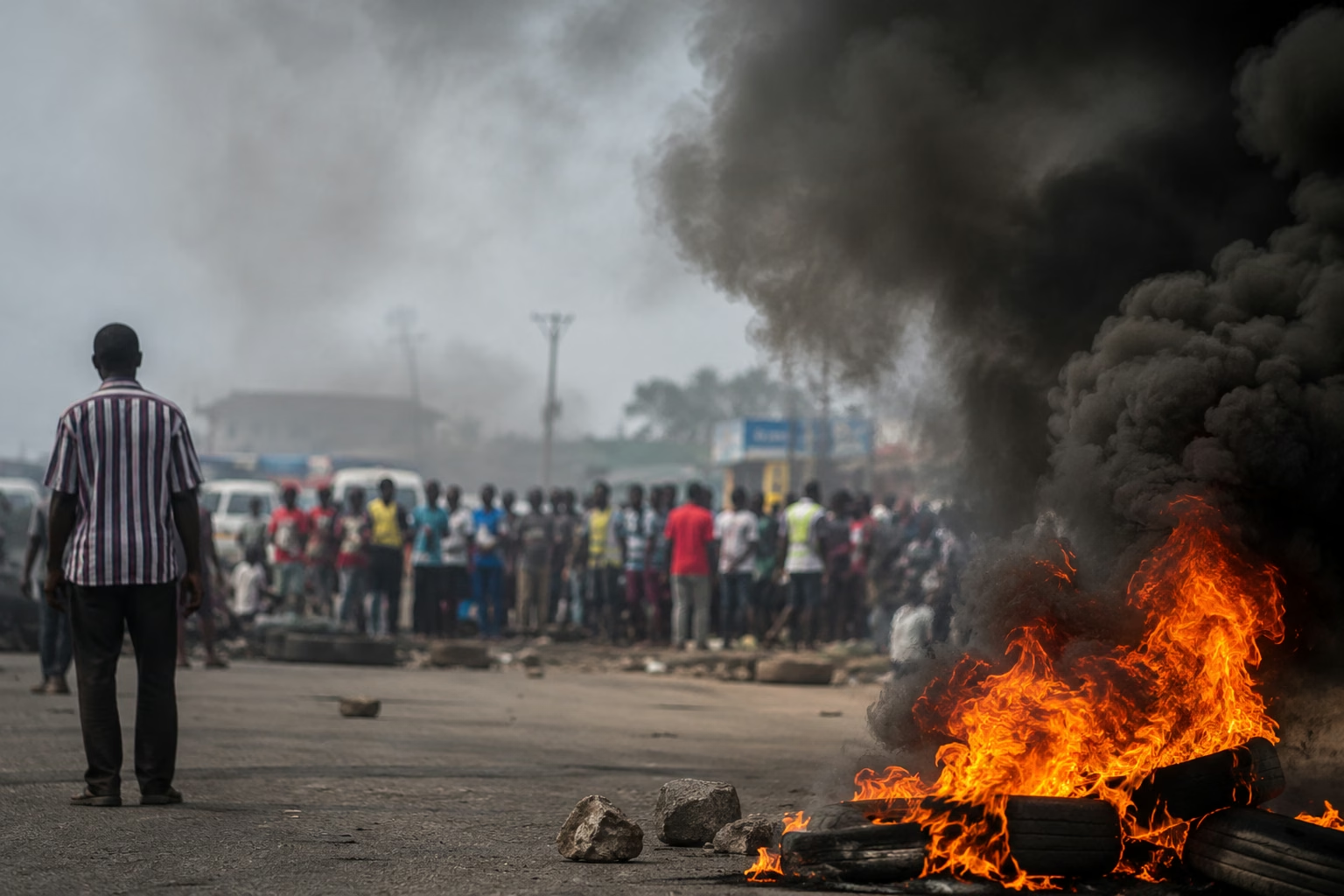

Residents of Amasaman, Obeyeyie and neighbouring communities in the Greater Accra Region have staged protests demanding urgent repairs to deteriorating roads, saying years of neglect are disrupting transport, increasing living costs and affecting access to schools, healthcare and businesses.
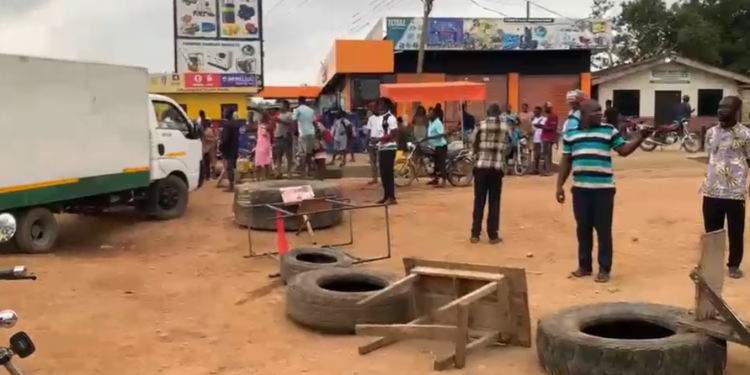
AMASAMAN, Greater Accra — Hundreds of residents from Amasaman, Obeyeyie and surrounding communities in Ghana’s Greater Accra Region staged a peaceful demonstration on Monday, demanding urgent government action to rehabilitate roads they say have deteriorated to the point of disrupting transport, raising travel costs and affecting livelihoods.
Protesters said repeated appeals to public authorities had failed to produce meaningful improvements, prompting residents to take to the streets to draw attention to what they described as years of neglect.
The demonstration centred on deteriorating roads linking communities, including Three Junction and Ashaleja, where residents say heavy damage, particularly during the rainy season, has made travel increasingly difficult for commuters, businesses and public transport operators.
Several demonstrators warned that worsening road conditions are affecting access to schools, healthcare facilities and markets, while increasing the cost of transporting people and goods across the area.
“We have written so many letters to the authorities, but we have not seen anything meaningful from them,” resident Isaac Teye told Citi News. “We will only engage in acts that will draw the attention of the leaders to our roads.”
Mr Teye said a journey that previously took around 10 minutes between Three Junction and Ashaleja can now take more than four hours because of the poor condition of the road, adding that even motorcycles struggle to use some sections safely.

Residents cite rising transport costs
Residents said the deteriorating road network has significantly increased transport fares, placing additional financial pressure on households already facing rising living costs.
Hamid Elias, Unit Committee Member for the Obeyeyie Electoral Area, said the poor roads were affecting nearly every aspect of daily life.
“We have been to the assembly with several petitions, but our needs have not been heeded,” he said, adding that schoolchildren and workers now spend more on transport because many vehicles avoid the damaged roads.
Emmanuel Nii Oi Ashong, Brantuhene of Obeyeyie, said transport fares had risen sharply within weeks because commercial drivers were reluctant to operate on the damaged roads. He said a journey that previously cost around GH¢5 had increased first to GH¢10 and now to approximately GH¢15, reflecting the worsening condition of the route.
Questions over road rehabilitation programme
During the protest, residents also questioned why equipment under the District Road Improvement Programme (DRIP) had not been deployed to rehabilitate the roads despite being available at the local assembly.
Some demonstrators argued that quicker deployment of road maintenance equipment could help restore access while longer-term rehabilitation projects are planned. The protesters appealed to the Ministry of Roads and Highways, the Department of Urban Roads and other relevant authorities to prioritise repairs, warning that continued deterioration could further isolate communities and undermine local economic activity.
Roads remain critical to local economy
The Amasaman-Obeyeyie corridor serves thousands of commuters each day and provides important transport links for residential communities, traders and businesses on the north-western outskirts of Accra.
Road infrastructure has become an increasingly prominent public policy issue across Ghana, particularly during the rainy season when damaged roads can become difficult or impossible to use.
Poor road conditions have frequently been linked to increased vehicle operating costs, longer travel times, reduced productivity and higher transport fares, affecting both households and businesses.
Infrastructure experts have also noted that delayed maintenance often leads to significantly higher rehabilitation costs compared with routine repairs.

What happens next?
As of Monday, there was no immediate official response outlining when rehabilitation works would begin on the affected roads.
Residents say they remain hopeful that the demonstration will prompt authorities to accelerate intervention but indicated that they expect concrete action rather than further assurances.
The protest remained peaceful throughout and reflected growing frustration among residents who say improved transport infrastructure is essential for economic development and access to public services.
Why This Matters
Road infrastructure is more than a transport issue. It affects economic productivity, emergency response, education, healthcare access and the daily cost of living. The protest in Amasaman reflects broader concerns about infrastructure delivery in rapidly expanding urban communities across Ghana.
Road infrastructure plays a central role in Ghana’s economic development. Communities on the outskirts of Accra increasingly depend on reliable transport networks to connect residents with workplaces, schools, markets and health facilities.
When roads deteriorate, the effects extend well beyond motorists. Travel times increase, transport fares often rise, emergency services face delays, businesses incur higher operating costs and commercial activity can slow significantly.
Residents of Amasaman and Obeyeyie argue that repeated appeals have failed to produce lasting improvements. Their peaceful demonstration therefore represents not only frustration over road conditions but also wider public expectations that infrastructure maintenance should keep pace with population growth.
Why this story matters nationally
Although centred on Amasaman, the issues raised mirror infrastructure concerns reported in several fast-growing municipalities throughout Ghana. The outcome of this dispute may therefore influence broader public debate around road maintenance, local government accountability and investment priorities.
Key Takeaways
The following points summarise the confirmed developments reported so far.
- Peaceful protest: Residents of Amasaman and Obeyeyie demonstrated over deteriorating road conditions.
- Repeated petitions: Community members say previous appeals to authorities have not resulted in lasting repairs.
- Economic impact: Residents report longer travel times, higher transport costs and disruption to daily economic activity.
- Questions over DRIP: Community leaders have questioned the deployment and utilisation of equipment provided under the District Road Improvement Programme.
- Primary demand: Protesters are calling for urgent rehabilitation works to restore safe and reliable transport access.
Frequently Asked Questions
Why are residents protesting in Amasaman?
Residents say deteriorating roads have become increasingly difficult to use, resulting in longer travel times, higher transport costs and disruption to daily life.
Which communities are affected?
Residents from Amasaman, Obeyeyie, Three Junction, Ashaleja and nearby communities say they are experiencing the effects of deteriorating road conditions.
What are protesters demanding?
They are calling on government and road authorities to begin urgent rehabilitation works and improve road infrastructure within the affected communities.
What is the District Road Improvement Programme (DRIP)?
The District Road Improvement Programme is a government initiative designed to strengthen local road maintenance by providing road construction and maintenance equipment to metropolitan, municipal and district assemblies.
Source: Citi Newsroom
Related posts:
 Road Contractors Threaten Protest Over Six Years of Unpaid Arrears
  Kasoa–Old Barrier traffic gridlock leaves commuters stranded for hours
  GRIDCo and ECG shut down Mallam and Achimota substations as Accra floods threaten power infrastructure
  Ghana Parliament Passes Human Sexual Rights and Family Values Bill
  Missing Newborn at Salaga Hospital Sparks Police Investigation