Twin Earthquakes Strike Venezuela, Collapsing Buildings in Caracas


Follow Nukunya
Get the latest breaking news and updates from Nukunya.
Two powerful earthquakes struck Venezuela less than a minute apart, collapsing buildings in Caracas, disrupting transport and triggering a major rescue operation. Authorities were still assessing casualties as emergency teams searched damaged neighbourhoods overnight.
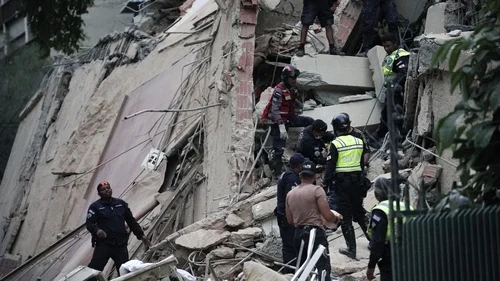
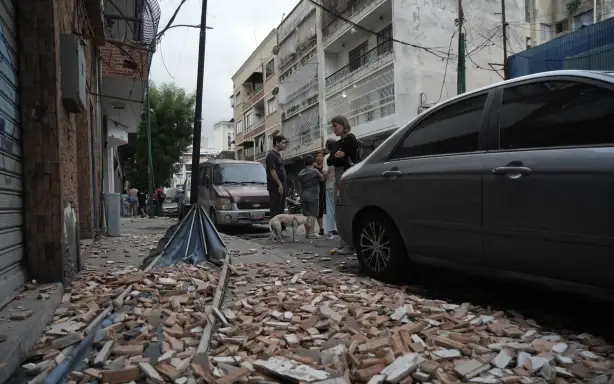
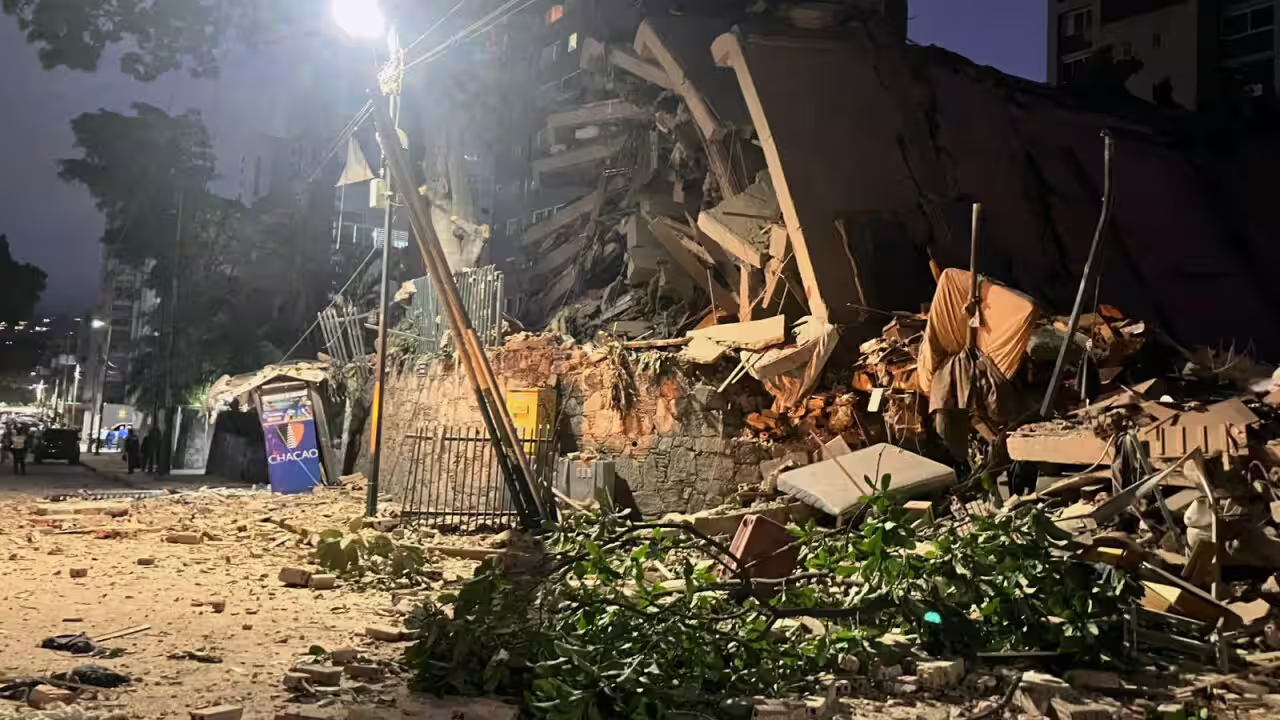
CARACAS, Venezuela — Rescue teams searched damaged buildings across Venezuela’s capital overnight after two powerful earthquakes struck less than a minute apart, collapsing several structures and forcing thousands of residents onto the streets as authorities worked to determine the full extent of casualties and damage.
The United States Geological Survey (USGS) said the first earthquake measured magnitude 7.2 before a second, stronger magnitude 7.5 earthquake struck approximately 39 seconds later. Both earthquakes occurred off Venezuela’s northern coast at relatively shallow depths, producing severe ground shaking across Caracas and neighbouring states.
The tremors were felt across much of Venezuela as well as parts of Colombia and several Caribbean islands. Buildings swayed violently, electricity was disrupted in some areas and residents fled homes, offices and shopping centres fearing further collapses. Emergency services, including firefighters, civil defence teams, police officers, military engineers and volunteers, were deployed across the capital as search-and-rescue operations continued into the night.
Authorities in Chacao municipality said hundreds of emergency personnel were working to locate survivors trapped beneath collapsed buildings while engineers assessed structures at risk of further failure. Rescue teams used heavy machinery, search dogs and thermal imaging equipment in several locations where people were believed to be trapped.
One Caracas resident told local television that “everything started shaking violently and people immediately ran into the streets screaming,” describing scenes of panic as concrete fell from nearby buildings.
Casualties still being assessed
Officials confirmed that people had been killed and injured, but said it was too early to establish a verified nationwide casualty figure. Communications outages, damaged roads and the complexity of rescue operations meant emergency authorities were still gathering information from affected communities several hours after the earthquakes struck. Hospitals across Caracas activated emergency response plans as ambulances transported injured residents from collapsed buildings and damaged neighbourhoods. Medical staff cancelled leave and expanded emergency departments to deal with the growing number of patients.
Airport operations disrupted
Government officials confirmed that Simón Bolívar International Airport at Maiquetía temporarily suspended operations after inspectors identified damage requiring immediate structural assessment. Domestic flights were delayed while authorities inspected runways, terminals and navigation equipment. International airlines were advised to monitor official notices before resuming scheduled services.
Vice-President Delcy Rodríguez later announced that emergency response protocols had been activated nationwide while engineering teams assessed critical infrastructure, including bridges, hospitals, government buildings and schools.
USGS warns of potentially severe losses
Shortly after the earthquakes, the USGS issued an automated PAGER assessment indicating that high casualties and extensive economic losses were possible based on the earthquakes’ magnitude, shallow depth, population exposure and building vulnerability. Disaster experts emphasised that the USGS assessment is not an official death toll.
Instead, it is a computer-generated estimate designed to help emergency agencies prepare resources immediately after major earthquakes. Actual casualty figures are determined only after search-and-rescue operations and detailed field assessments are completed.
Why two earthquakes caused such extensive damage
Seismologists said the earthquakes occurred along the boundary between the Caribbean Plate and the South American Plate, where tectonic forces regularly generate seismic activity. While moderate earthquakes are relatively common in northern Venezuela, two powerful earthquakes occurring within seconds of each other are considerably less frequent.
The second earthquake was both stronger and shallower than the first, allowing seismic energy to reach the surface with greater intensity. Combined with closely spaced shocks, the event significantly increased the likelihood of structural failure in already weakened buildings. Older reinforced-concrete buildings, particularly those constructed before modern seismic standards were introduced, were considered especially vulnerable.
Tsunami warning later withdrawn
The earthquakes initially prompted tsunami warnings for parts of the Caribbean, including Puerto Rico, the US Virgin Islands, Aruba, Curaçao and Bonaire because the epicentre was located offshore. Monitoring agencies later cancelled the warning after additional analysis showed there was no continuing tsunami threat, although coastal communities were advised to remain alert for minor sea-level fluctuations.
Venezuela’s history of major earthquakes
Venezuela lies along one of South America’s most active seismic zones because of the interaction between the Caribbean and South American tectonic plates. The country experienced a devastating earthquake in Caracas in 1967 that killed more than 200 people and destroyed hundreds of buildings. An even more destructive earthquake in 1812 is estimated to have claimed tens of thousands of lives across northern Venezuela. Seismologists said the latest earthquakes rank among the strongest to affect the country in more than a century and are likely to renew scrutiny of building resilience and disaster preparedness.
Rescue efforts continue
Search-and-rescue operations are expected to continue for several days as emergency crews inspect collapsed buildings and search for survivors. Authorities warned that strong aftershocks remain possible and urged residents to stay away from damaged buildings until engineers complete structural safety inspections.
International humanitarian organisations and neighbouring countries said they were monitoring developments closely and stood ready to provide technical assistance if requested. For millions of Venezuelans, the immediate priority remains locating missing relatives, restoring electricity and communications, and ensuring homes and public buildings are safe before residents return.
What This Means
The earthquakes represent one of Venezuela’s most serious natural disasters in decades. Beyond the immediate humanitarian response, the event is expected to trigger renewed debate over earthquake preparedness, building regulations and emergency planning across Venezuela and the wider Caribbean, where densely populated coastal cities remain vulnerable to major seismic events.
 Follow Nukunya News on WhatsApp
 Related posts:
 Iran and Israel Halt Attacks After Trump Intervention, but Ceasefire Remains Fragile
  Tenerife prepares for cruise ship with hantavirus cases amid local concern
  Elon Musk vs Sam Altman: what the jury will decide
  Trump discusses Taiwan arms sale with China’s Xi Jinping
  Police Probe Shooting That Injured Adwoa Safo Amid Kristo Asafo Leadership Dispute