
Cape Verde become smallest nation to reach World Cup knockouts

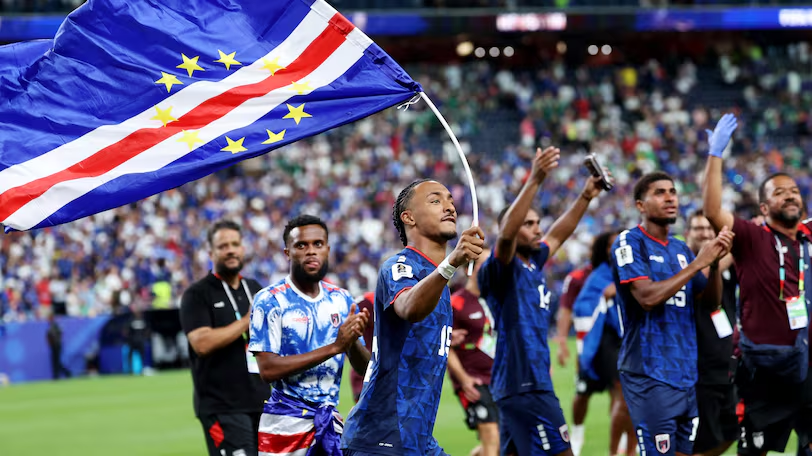

Cape Verde made FIFA World Cup history after holding Saudi Arabia to a goalless draw, becoming the smallest nation by population ever to reach the tournament’s knockout stage. The Blue Sharks will now face defending champions Argentina in the Round of 32.
HOUSTON, United States — Cape Verde became the smallest nation by population ever to reach the FIFA World Cup knockout stage after drawing 0-0 with Saudi Arabia on Friday, securing a last-32 meeting with defending champions Argentina. The result ensured the Blue Sharks finished second in Group H behind Spain, whose 1-0 victory over Uruguay in the group’s other match confirmed Cape Verde’s historic progress on their tournament debut. Uruguay and Saudi Arabia were eliminated.
Representing an Atlantic archipelago of just over 500,000 people, Cape Verde has rewritten the World Cup record books by becoming the smallest country ever to reach the knockout rounds of the men’s tournament. The achievement is all the more remarkable given the team qualified for the World Cup ahead of five-time African champions Cameroon.
Cape Verde entered the tournament ranked 67th in the FIFA world rankings but has remained unbeaten through the group stage, producing disciplined performances against some of the world’s strongest teams. Veteran goalkeeper Vozinha, now 40, once again proved decisive with a series of important saves to preserve another clean sheet. The experienced captain has become one of the tournament’s standout performers after frustrating Spain, Uruguay and Saudi Arabia in successive matches.
Speaking after qualification was confirmed, midfielder Deroy Duarte described the achievement as “living a dream” and urged supporters to continue believing ahead of the meeting with Argentina.
Head coach Bubista credited years of planning and belief for Cape Verde’s remarkable rise.
“We have shown our identity as a team, our strength, our unity and our resilience,” he said after the match.
How Cape Verde made history
Cape Verde’s success has not come by chance.
BBC Sport reports that much of the team’s progress is rooted in long-term planning by the Cape Verdean Football Federation, coaching stability under Bubista and the successful integration of players from the country’s large diaspora communities, particularly across Europe. Fourteen members of the 26-man squad were born outside Cape Verde, reflecting decades of investment in connecting overseas talent with the national team.

The Blue Sharks opened the tournament by holding Spain to a goalless draw before recovering twice to earn a 2-2 draw against Uruguay. Friday’s draw with Saudi Arabia completed an unbeaten group campaign that has become one of the defining stories of the tournament. Supporters celebrated the final whistle in Cape Verde and across diaspora communities in Europe as qualification for the knockout stage became a reality, marking a landmark moment in the country’s sporting history.
Cape Verde’s World Cup journey
Final Group H standings
| Team | Points |
|---|---|
| 1Spain | 7 |
| 2Cape Verde | 3 |
| 3Uruguay | 2 |
| 4Saudi Arabia | 2 |
Defensive resilience
Cape Verde’s disciplined defensive organisation has become one of the stories of the tournament. Led by veteran goalkeeper Vozinha, the Blue Sharks conceded only two goals across three group matches while frustrating three higher-ranked opponents. Their organisation, patience and resilience have drawn praise from football analysts and former players, including Gary Neville, who described Cape Verde’s progress as one of the success stories of the expanded World Cup.

What’s next?
Cape Verde will face defending champions Argentina in Miami in the Round of 32. Spain advances as Group H winners and will meet the runners-up from Group J, while Uruguay and Saudi Arabia have been eliminated from the competition.
Why this matters for African football
Cape Verde’s remarkable campaign highlights the growing competitiveness of African football beyond the continent’s traditional powers. The Blue Sharks have shown that sustained investment in coaching, player development and effective engagement with diaspora talent can enable smaller nations to compete successfully on football’s biggest stage. Their achievement is expected to inspire football development programmes across Africa and among emerging football nations worldwide.
Key Facts
- Cape Verde qualified for the FIFA World Cup knockout stage for the first time.
- The Blue Sharks became the smallest nation by population ever to reach the World Cup’s last 32.
- Cape Verde completed the group stage unbeaten.
- Goalkeeper Vozinha kept his second clean sheet of the tournament.
- Argentina await in the Round of 32.
What this means
Cape Verde’s qualification is one of the defining stories of the 2026 FIFA World Cup. Beyond the sporting achievement, it demonstrates how long-term planning, coaching continuity and successful integration of diaspora talent can allow smaller football nations to compete with — and challenge — the world’s elite.

Related posts:
 Senegal beat Iraq 5-0 to keep World Cup hopes alive
  Mexico Beat South Africa 2-0 in World Cup Opener Marked by Three Red Cards
  Morocco Move Closer to Knockouts After Fastest Goal of World Cup 2026
  ANALYSIS: The USA’s World Cup Statement Win Raises a Bigger Question: Have They Finally Joined Football’s Elite?
  Cape Verde Hold Spain to Historic Draw in World Cup Debut