
Ghana Intensifies Ebola Surveillance Amid Rising Regional Health Concerns

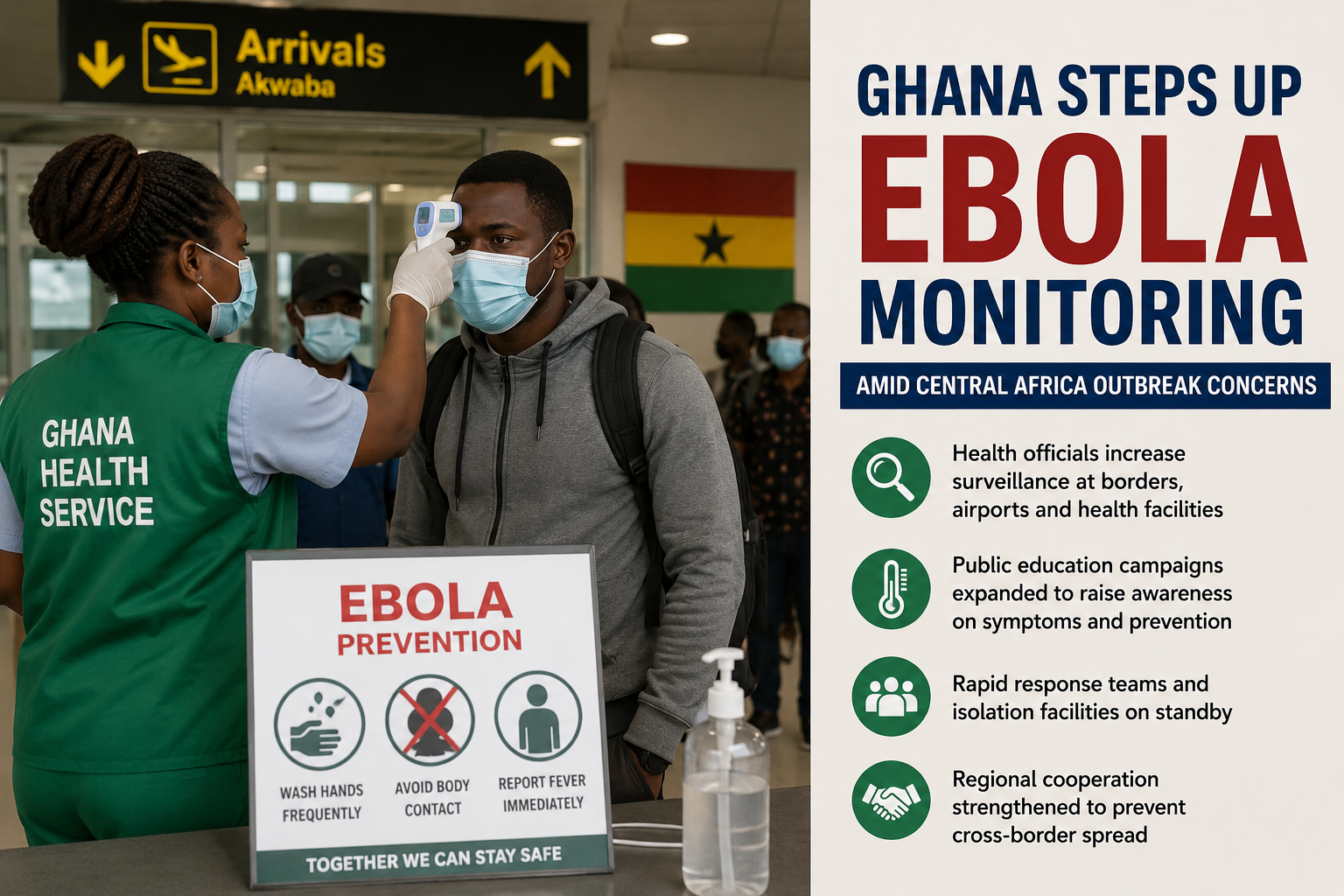

Authorities Increase Monitoring Measures
Ghanaian health authorities have stepped up disease surveillance and emergency preparedness efforts following renewed concerns over Ebola outbreaks reported in parts of Central Africa, officials said on Thursday.
The Ghana Health Service (GHS) said it has heightened monitoring systems across the country as a precautionary measure aimed at preventing any possible spread of the deadly virus into Ghana.
Health officials said surveillance teams stationed at airports, seaports and major land border crossings have been instructed to increase screening and reporting procedures, while regional health directorates have been advised to strengthen rapid response readiness.
The move comes as several African countries continue to monitor outbreaks of Ebola and other viral haemorrhagic fevers in parts of the continent, particularly in Central and East Africa where sporadic cases have raised public health concerns in recent months.
Border Surveillance and Airport Screening Strengthened
Officials familiar with the preparedness measures said Ghana is focusing heavily on early detection systems to ensure any suspected cases are identified quickly and isolated before wider transmission can occur.
At Kotoka International Airport in Accra, health screening units have reportedly intensified passenger monitoring, particularly for travellers arriving from high-risk regions. Similar measures have been reinforced at major border crossings with neighbouring countries.
Healthcare facilities across Ghana have also been reminded to remain vigilant for symptoms commonly associated with Ebola, including fever, vomiting, diarrhoea, muscle pain, unexplained bleeding and severe fatigue. Medical personnel have been advised to immediately report suspected cases through national surveillance systems for further investigation and laboratory testing. Public health officials say the increased monitoring is part of Ghana’s standard epidemic preparedness strategy and does not indicate that any confirmed Ebola case has been detected within the country.
Public Awareness Campaigns Expanded
Authorities have also expanded public education campaigns aimed at reducing misinformation and encouraging early reporting of suspected illnesses. Radio announcements, community outreach programmes and public health advisories are being circulated in several regions to educate citizens about Ebola symptoms, transmission methods and preventive measures.
Health experts say misinformation during infectious disease outbreaks can complicate response efforts and create unnecessary panic among communities.
“Preparedness and public cooperation remain essential in preventing outbreaks from spreading,” a senior health official said.
The World Health Organization (WHO) has repeatedly emphasised the importance of surveillance, rapid testing and regional coordination in managing Ebola outbreaks across Africa.
Lessons Learned From Previous Outbreaks
Ghana has never experienced a large-scale Ebola outbreak, but authorities previously activated emergency response systems during the 2014-2016 West African Ebola epidemic, which killed more than 11,000 people across Guinea, Liberia and Sierra Leone.
At the time, Ghana served as an important regional coordination hub for international health agencies responding to the crisis. Public health analysts say the country’s experience during that period, combined with lessons learned from the COVID-19 pandemic, has significantly improved Ghana’s disease preparedness infrastructure.
Over the past decade, Ghana has expanded laboratory testing capacity, improved emergency communication systems and strengthened coordination between local and national health authorities. The Ministry of Health said isolation centres and rapid response teams remain operational and can be activated immediately if any suspected Ebola cases emerge.
Regional Cooperation Remains Critical
Health experts say regional collaboration will play a key role in preventing cross-border transmission of infectious diseases as movement across African countries continues to increase through trade, tourism and migration. The Africa Centres for Disease Control and Prevention (Africa CDC), alongside the WHO, has continued coordinating information-sharing and preparedness support among member states.
Neighbouring West African countries have also reportedly reviewed emergency preparedness plans in response to ongoing health alerts elsewhere on the continent. Analysts warn that fragile healthcare systems in some African countries remain vulnerable to sudden outbreaks, making early detection and rapid containment critical.
“Strong surveillance systems and cooperation between countries are the first line of defence against regional outbreaks,” a public health researcher based in Accra said.
Government Urges Calm
Government officials have urged the public to remain calm, stressing that the current measures are precautionary and designed to strengthen national readiness rather than respond to any confirmed outbreak within Ghana. The Ghana Health Service said there is currently no confirmed Ebola case in the country but noted that monitoring efforts would continue as regional developments evolve.
Authorities also advised citizens to follow official updates from recognised health institutions and avoid spreading unverified information on social media. Health officials say Ghana’s surveillance systems will remain on heightened alert in the coming weeks as authorities continue assessing developments across Central Africa and other parts of the continent.
Related posts:
 Ghana Pushes Border Cooperation as Sahel Insecurity Raises Regional Security Risks
  Road Contractors Threaten Protest Over Six Years of Unpaid Arrears
  Mahama Meets King Charles III as Ghana Seeks UK Investment
  Avenor Building Collapse Kills Two as Officials Demand Tougher Enforcement of Building Regulations
  Former MASLOC CEO Sedina Tamakloe-Attionu Returned to Ghana to Begin 10-Year Prison Sentence After US Extradition