Canada Refuses Entry to Thomas Partey, Dealing Blow to Ghana’s World Cup Campaign
Thomas Partey will miss Ghana's opening World Cup match after Canadian authorities refused his entry visa, dealing a major blow to the Black Stars.

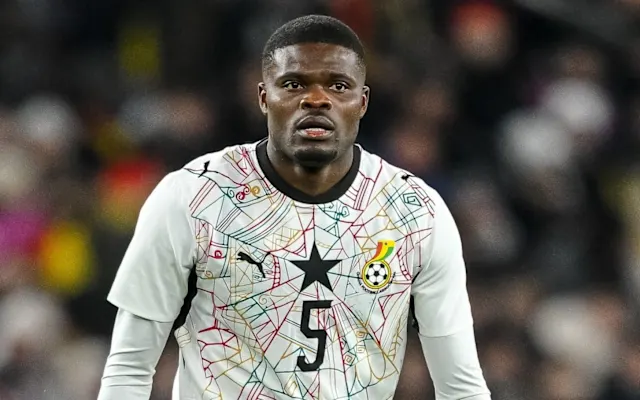

Ghana midfielder Thomas Partey will miss the Black Stars’ opening match of the 2026 FIFA World Cup after Canadian authorities refused his entry visa, FIFA has confirmed. The decision leaves Ghana without one of its most experienced players for a crucial fixture against Panama and raises wider questions about immigration requirements at a tournament being hosted across three countries.
BOSTON, United States – Ghana’s preparations for the 2026 FIFA World Cup have suffered a significant setback after midfielder Thomas Partey was denied entry to Canada, ruling him out of the Black Stars’ opening Group L match against Panama. FIFA confirmed on Friday that Partey would be unable to travel from Ghana’s training base in Boston to Toronto for the fixture after Canadian authorities refused his visa application. The decision means one of Ghana‘s most experienced internationals will miss a match widely viewed as critical to the Black Stars’ hopes of progressing from a challenging group that also includes England and Croatia.
In a statement cited by international media, FIFA said:
“FIFA can confirm that player Thomas Partey will be unable to travel from Ghana’s team base camp in Boston, USA, to Canada for their first match against Panama on Wednesday, 17 June, as his visa application has been refused by the Canadian government.”
The governing body added that visa and immigration decisions remain the responsibility of host governments and fall outside FIFA’s authority.
Major Blow for Ghana
Partey’s absence represents a significant challenge for Ghana ahead of a tournament in which experience is expected to play a crucial role. The 32-year-old midfielder has been a central figure for the Black Stars for more than a decade and remains one of Ghana’s most recognisable footballers on the international stage. Having successfully travelled to the United States with the rest of Ghana’s squad, Partey has been training with the team in Boston and remains eligible for matches played on American soil. However, he cannot cross into Canada for the Panama fixture.
For Ghana, the timing could hardly be worse.
Opening matches often shape the trajectory of a World Cup campaign, and a positive result against Panama could prove decisive before tougher encounters against England and Croatia later in the group stage. The absence of a player of Partey’s experience may force Ghana’s coaching staff to rethink midfield plans at short notice.
Why Was Entry Refused?
Canadian authorities have not publicly disclosed the specific reasons for refusing Partey’s entry application. However, Canada’s immigration department told media organisations that visa and admissibility decisions are assessed under Canadian law and that officials could not comment on individual cases without consent from the person concerned.
The decision comes against the backdrop of ongoing legal proceedings involving Partey in the United Kingdom. The former Arsenal midfielder, who now plays for Spanish club Villarreal, has been charged in England with multiple counts of rape and one count of sexual assault. He denies all allegations and has pleaded not guilty. The criminal proceedings remain ongoing.
No court has found Partey guilty of any offence.
Canadian authorities have not publicly linked their decision to those proceedings, and no official explanation has been released.
FIFA Unable to Intervene
The incident highlights one of the lesser-discussed complexities of the expanded 2026 FIFA World Cup. Although the tournament is jointly hosted by the United States, Canada and Mexico, each country retains sovereign control over its immigration system.
As a result, accreditation by FIFA does not automatically guarantee entry into every host nation. FIFA stressed that while it works closely with host countries on tournament logistics, immigration decisions remain outside its jurisdiction. The case is likely to prompt broader discussion about how immigration rules intersect with international sporting events, particularly tournaments that span multiple countries.
Wider Questions for the Tournament
The development raises wider questions beyond Ghana’s World Cup campaign. The 2026 tournament is the largest in FIFA history and requires thousands of players, officials, media representatives and supporters to move across multiple international borders during the competition.
While host governments routinely facilitate travel for accredited participants, the Partey case demonstrates that national immigration laws continue to take precedence over sporting considerations. Immigration experts note that countries retain the right to refuse entry to foreign nationals even when they are participating in major international events. For FIFA, the situation serves as a reminder that hosting a tournament across three nations introduces logistical and legal complexities that do not arise in a single-country World Cup.
What Happens Next?
Ghana are expected to proceed with preparations for the Panama match without Partey. The midfielder remains with the squad in the United States and could still feature in Ghana’s subsequent group-stage fixtures, which are scheduled to take place on American soil. Whether his absence proves decisive remains to be seen. What is certain is that Ghana’s World Cup campaign will begin without one of its most experienced players, while a visa decision made thousands of miles from the pitch becomes one of the tournament’s first major off-field stories.
ANALYSIS: Why the Partey Decision Matters Beyond Football
Most football stories begin and end on the pitch.
This one does not.
The refusal of entry to Thomas Partey highlights the growing intersection between sport, immigration policy and international law. For Ghanaian supporters, the immediate concern is football. The Black Stars will be without a key midfielder for a crucial World Cup match.
But the broader issue is that FIFA, despite organising the world’s biggest sporting event, has no authority over the immigration decisions of sovereign states. The case demonstrates how global tournaments increasingly operate at the intersection of sport, politics, border security and legal systems.
It also illustrates the unique challenges facing a World Cup hosted across three countries. For Ghana, the practical challenge is replacing an experienced midfielder. For FIFA, the challenge is ensuring that future tournaments minimise similar disruptions. For football fans, the episode serves as a reminder that even the world’s biggest sporting competition remains subject to the realities of national laws and border controls.
Related posts:
 Ghana Coach Queiroz Stands By Partey’s Inclusion Ahead of World Cup
  Ghana Name Final World Cup Squad as Kudus and Dede Ayew Miss Out
  FIFA World Cup 2026 Visa Dispute Raises Questions Over Access, Fairness and the Future of Global Football
  Somali Referee Omar Artan Denied Entry to United States Days Before 2026 World Cup
  Iran Says World Cup Ticket Allocation Revoked Days Before Tournament Opens