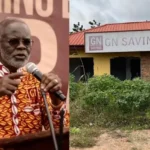
President Mahama Ahafo Tour: New Factory and Clinics
President Mahama Ahafo Tour hits Tano North to inspect the Bechem Meat Processing Factory and commission new CHPS health compounds for rural residents.



President Mahama Ahafo Tour: Boosting Food Security in Bechem
As part of a strategic effort to bolster national self-sufficiency, the President Mahama Ahafo Tour recently highlighted critical investments in the agricultural sector. During his visit to the Tano North Municipality, President John Dramani Mahama inspected the progress of the Bechem Meat Processing Factory, a cornerstone project designed to transform the region into a hub for Ghana poultry production. This facility serves as a vital component of the NkokoNketenkete programme, a government initiative aimed at revitalizing the livestock sub-sector and reducing the country’s heavy reliance on imported meat products.
The inspection underscores a broader commitment to the Ahafo Region development agenda, focusing on industrialization that directly benefits rural smallholders. By integrating a feed mill with a large-scale processing plant, the administration aims to create a closed-loop system where local grain farmers supply the feed mill, which in turn supports poultry farmers, eventually feeding into the Bechem facility. This visit marks a significant milestone in the “Resetting Ghana” campaign, signaling a shift toward production-led economic growth.
The Impact of the Bechem Factory on Local Poultry Production
The Bechem Meat Processing Factory is engineered for high-volume output, boasting a capacity to process 6,000 birds per hour. This throughput is split across two specialized production lines dedicated to broilers and layers. Such industrial scale is intended to solve the long-standing bottleneck of processing infrastructure that has previously hindered local farmers from competing with cheaper, low-quality imports. With the implementation of the NkokoNketenkete programme, there has already been a measurable shift in the market; domestic poultry production has surged from a mere 4.6% to an impressive 22% as of mid-2026.
For the local farmers in the Ahafo Region, the factory represents a guaranteed market and a reduction in post-harvest losses. By providing a reliable outlet for their birds, the government expects to encourage more youth to enter the poultry business. Furthermore, the accompanying feed mill addresses the high cost of inputs, which has historically been the greatest barrier to entry in the sector. The synergy between these facilities is expected to stabilize prices for consumers while increasing the profit margins for indigenous producers.
Expanding Healthcare Access in Tano North
Beyond industrialization, the President’s tour addressed the urgent need for localized medical services. President Mahama officially commissioned two CHPS compounds in Ghana, specifically located in the farming communities of Ahyiaem and Nsuapemkrom. These facilities are not merely shells; they have been delivered fully equipped with modern medical supplies and include residential quarters for staff to ensure 24-hour availability. This move is a critical step toward achieving health equity in Ghana, ensuring that geography does not determine a citizen’s access to life-saving care.
The President revealed that the funding for these CHPS compounds came from the District Assemblies Common Fund (DACF). He has instructed all MMDCEs to prioritize constructing two CHPS compounds, two classroom blocks, and a market in their respective districts to improve rural living standards.
“These projects form part of a broader policy to expand universal access to healthcare. I have directed all MMDCEs to construct two CHPS compounds, two classroom blocks, and a market.”
— President John Dramani Mahama during the Ahyiaem durbar
The Ahyiaem and Nsuapemkrom facilities are designed to handle maternal health services, vaccinations, and basic emergency care, reducing the distance residents must travel to reach the municipal hospital in Bechem. By placing healthcare professionals directly within these rural enclaves, the government aims to improve maternal mortality rates and enhance the overall well-being of the agricultural workforce that drives the region’s economy.
Political Strategy: Rural Development and Food Security
The President Mahama Ahafo Tour serves as a practical demonstration of the administration’s decentralized development strategy. Speaking to local chiefs and residents, the President revealed that these projects were funded through the District Assemblies Common Fund (DACF). He noted a standing directive to all Metropolitan, Municipal, and District Chief Executives (MMDCEs) to prioritize a “2-2-1” infrastructure model: the construction of two CHPS compounds, two classroom blocks, and one 24-hour economy market per district.

This directive is central to the “Resetting Ghana” narrative, which posits that sustainable national growth must begin at the grassroots level. By focusing on Ahafo Region development through these specific pillars, the administration is attempting to create “economic anchors” in rural districts. These anchors—health, education, and commerce—are intended to stem rural-urban migration by providing the same quality of life in the hinterlands as is found in the major cities.
Timeline and Future Expectations for Ahafo Residents
While the physical structures of the Bechem Meat Processing Factory are largely complete, the facility is currently undergoing equipment calibration and staffing. Operations are officially projected to commence by the end of the first quarter of 2027. This timeline allows for the full integration of the NkokoNketenkete programme’s latest cohort of farmers, ensuring that when the machines start, there is a steady supply of birds ready for processing.
Residents of the Tano North Municipality can expect a significant socio-economic uplift once the factory is fully operational. Beyond direct employment at the plant, the secondary economy—involving logistics, packaging, and retail—is expected to generate hundreds of indirect jobs. For the ordinary citizen, this means lower costs for fresh, locally produced poultry and improved municipal revenue that can be reinvested into further community projects.
The Broader Political Context of the Ahafo Tour
The tour of the Ahafo Region is part of a larger nationwide circuit intended to showcase the tangible results of government spending. This visit follows the recent commissioning of the BNI regional office, which signaled a commitment to strengthening the security and administrative architecture of the relatively new region. By visiting both industrial sites and small rural clinics, the President is reinforcing a message of balanced growth that touches both the macro-economy and the daily lives of individuals.
As the political calendar advances, these projects in the Ahafo Region will likely serve as benchmarks for the administration’s performance. The success of the meat processing facility, in particular, will be a litmus test for the government’s ability to move Ghana away from an import-dependent economy toward one defined by local production and value addition.
Frequently asked questions
When will the Bechem Meat Processing Factory start operations?
The factory is scheduled to begin full operations by the end of the first quarter of 2027, according to reporting by 3News.
What is the production capacity of the new poultry facility?
According to President Mahama, the facility can process 6,000 birds per hour using two dedicated production lines for broilers and layers.
Related posts:
 President Mahama Ahafo Tour: BNI Office Commissioned
 DVLA Expands from 33 to 63 Offices Across Ghana
 Ghana Space Agency: Cabinet Approves New Tech Body
 How Solar Power in Rural Ghana is Changing Lives
 51,000 Teachers to Be Paid, Mortgage Rates Slash to 8.4%, and NPP Secure Ghana education strike 2026