
Scotland Edge Past Haiti 1-0: McGinn Strike Ends 36-Year World Cup Win Drought

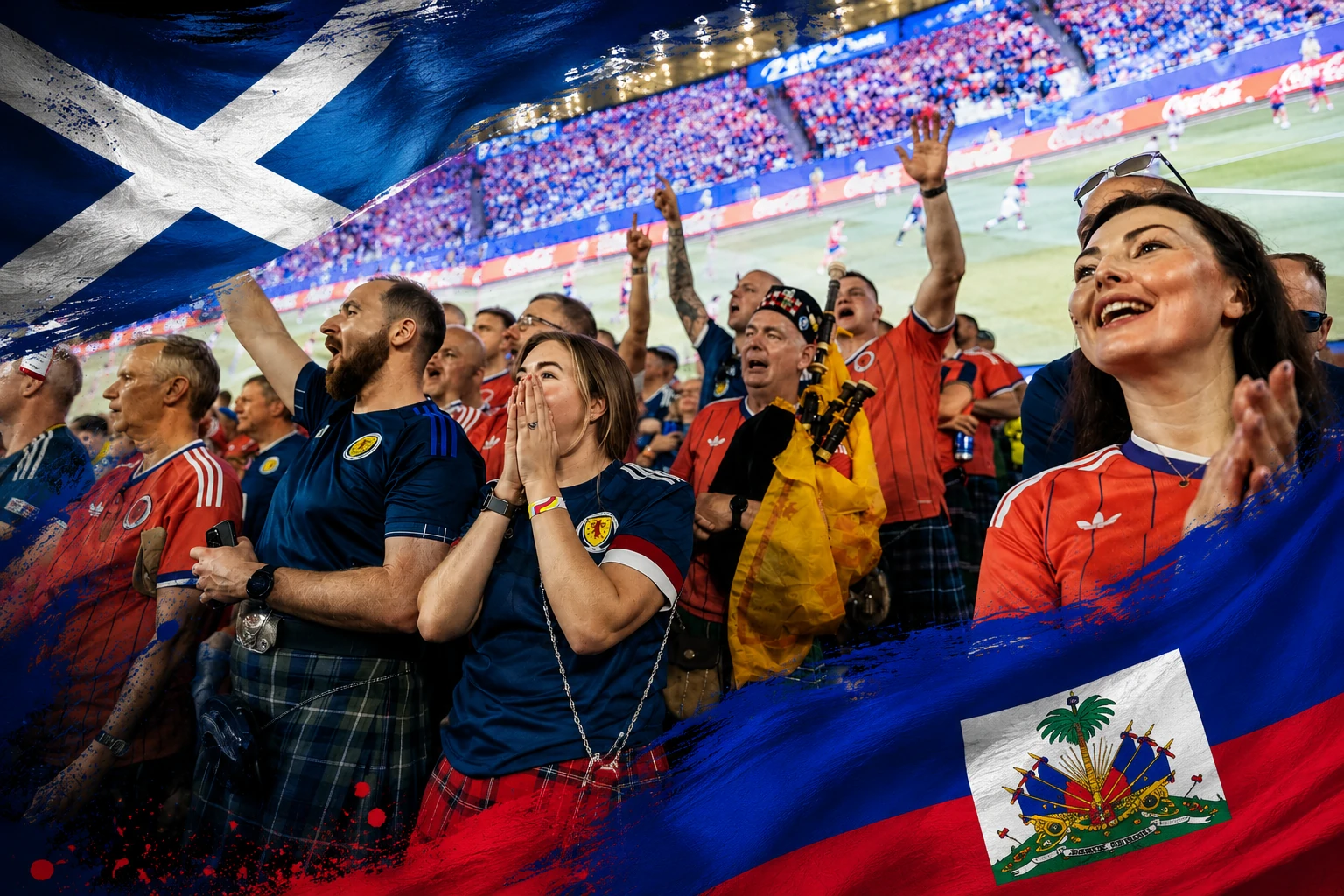

Scotland’s Historic Return to the World Cup Stage
After a 28-year exile from football’s most prestigious stage, Scotland made a triumphant, if tension-filled, return to the FIFA World Cup. On Sunday, June 14, 2026, at the Boston Stadium, the Tartan Army finally tasted victory in a World Cup finals match for the first time in 36 years. The 1-0 win over Haiti ended a drought stretching back to 1990, providing a historic moment for a nation that has waited over 10,000 days to see their team claim three points in this competition.
While the performance was described by some observers as unconvincing, the significance of the result cannot be overstated. Steve Clarke Scotland World Cup preparations were validated by a hard-fought opening win, ensuring that the team did not suffer the “bloody nose” often associated with opening fixtures against perceived lesser nations. For a side that last appeared in the tournament at France 98, the victory represents a monumental step toward the goal of progressing beyond the group stages for the first time in Scottish history.
Match Report: John McGinn the Hero in Boston
The decisive moment of the Scotland vs Haiti World Cup 2026 opener arrived in the 28th minute. The John McGinn goal Haiti will go down in history as the strike that broke the deadlock and secured the points, though it was a goal born of persistence rather than pure aesthetic beauty. The move began with a “route-one” approach, as Grant Hanley launched a long ball that Che Adams controlled superbly without breaking his stride. Adams found Ben Gannon-Doak, whose direct run and subsequent cross back into the box forced Haitian goalkeeper Jonny Placide into an error.
Under pressure, the ball broke to John McGinn, whose shot took a significant deflection off Jean-Ricner Bellegarde on its way into the net. It was Scotland’s first World Cup goal in 28 years, sparking “limbs” and wild celebrations among the travelling support. Earlier in the half, Scott McTominay—who started the match despite battling a pre-match stomach upset—had come agonizingly close to scoring when his effort rattled the woodwork following another driving run from the inspired Gannon-Doak. Despite these flashes of quality, Scotland’s attacking play remained largely functional, relying on the Physicality of Adams and the pace of Gannon-Doak to bypass the Haitian midfield.
Haiti’s Spirited Challenge and Missed Opportunities
Haiti, making their own emotional return to the World Cup for the first time since 1974, proved to be far more than mere spectators. Despite being labeled as “dynamic” by Steve Clarke and “erratic” by others, they caused the Scottish defense persistent problems with their speed and athleticism. After the interval, Haiti dominated large spells of the game, taking advantage of a Scotland side that appeared to be tiring or perhaps overawed by the occasion.
The Caribbean nation had several opportunities to level the score. Frantzdy Pierrot missed a significant second-half chance, and goalkeeper Angus Gunn was forced into a nervy moment when he spilled a shot from Carlens Arcus, only for the ball to be scrambled clear by a frantic Scottish backline. While Haiti lacked the clinical composure in the final third to punish Scotland, their second-half performance left the Tartan Army praying for the final whistle as waves of Haitian attacks focused on an equalizer that never came.
The Tartan Army Takes Over Boston
The atmosphere inside the Boston Stadium was a testament to the enduring passion of the Scottish supporters. An official attendance of 64,146 witnessed the match, and while the local Haitian population in Boston is substantial, it was the sea of pink away shirts that dominated the stands. Reports suggest that many local ticket holders may have sold their seats to the swarms of Scottish fans who had taken over the streets of central Boston in the days leading up to the game.
The “Tartan Army” provided a vibrant backdrop, singing “Yes Sir, I Can Boogie” and filling the arena with noise that echoed the erupting celebrations back home in Glasgow. Former international James McFadden was among those caught on camera unable to hide his delight as the goal went in. For the fans who traveled across the Atlantic, the nervy nature of the final minutes only served to make the post-match celebrations more euphoric.
Tactical Analysis: Steve Clarke’s Selection and Strategy
Steve Clarke’s tactical approach was characterized by pragmatism. Facing a “must-win” scenario, Clarke opted for a direct style that utilized the strength of Che Adams and the youthful energy of Ben Gannon-Doak. The inclusion of Scott McTominay was a calculated risk; despite the Manchester United midfielder missing training sessions due to illness, Clarke viewed his presence in the engine room as vital for stability.
However, the Haiti vs Scotland Match Report highlights a performance that was, at times, disjointed. Scotland looked impressive moving forward in transition but frequently left gaps in transition that a more clinical opponent might have exploited. The “unconvincing” nature of the second half, where Scotland was largely neutralized and forced to sit deep, suggests that there is still much work to be done if the team is to compete with the world’s elite. Clarke’s warning to “not get humped” in the opener was heeded, but the lack of control in the middle of the park remains a concern for the coaching staff.
Group C Standings and What’s Next for Scotland
The 1-0 result, combined with a 1-1 draw between Brazil and Morocco in the other opening fixture, leaves Scotland in an enviable position at the top of the World Cup 2026 Group C standings. With three points on the board, Scotland has a genuine platform to seek qualification for the knockout rounds.
- Scotland: 3 Points (+1 GD)
- Brazil: 1 Point (0 GD)
- Morocco: 1 Point (0 GD)
- Haiti: 0 Points (-1 GD)
The road ahead, however, becomes significantly steeper. Scotland will travel to Miami to face the Seleção on June 19. While the victory over Haiti has provided the necessary momentum and ended decades of World Cup disappointment, facing a wounded Brazil will require a higher level of performance if Steve Clarke’s men are to maintain their lead at the top of the group.
Ultimately, John McGinn’s strike has given a nation hope. For a generation of fans who had never seen their team win a World Cup match, the three points in Boston represent a historic milestone in Scottish football history.
Related posts:
 Mexico Beat South Africa 2-0 in World Cup Opener Marked by Three Red Cards
  Asamoah Gyan appointed Ghana football ambassador ahead of 2026 World Cup push
  Tottenham’s Mohammed Kudus ruled out of 2026 World Cup with injury
  PSG Retain Champions League Title After Penalty Shootout Victory Over Arsenal
  Ghana Releases Over GH¢76 Million for Black Stars’ World Cup Campaign as Government Backs Tournament Push