Ghana Presidential Jet: Nitiwul Alleges Extra $9m as Procurement Questions Grow
Former Defence Minister Dominic Nitiwul alleges an extra $9m was spent customising Ghana's $60.68m Falcon 6X. Nukunya checks the evidence and unanswered procurement questions.



Former Defence Minister Dominic Nitiwul has alleged that Ghana spent an additional US$9 million customising its new Falcon 6X presidential aircraft. The approved purchase agreement was US$60.68 million, but no documents have been produced publicly to establish whether the alleged sum was additional, included or incurred at all. Nukunya examines the figures and the procurement evidence needed to settle the dispute.
Accra — A fresh allegation about the cost of Ghana’s newly delivered presidential aircraft has sharpened scrutiny of the government’s procurement of a Dassault Falcon 6X, after former Defence Minister Dominic Nitiwul claimed that an additional US$9 million was spent on customisation.
Nitiwul made the claim on TV3’s The KeyPoints on Saturday, 21 November. He did not present supporting invoices, contractual variations or payment records during the programme.
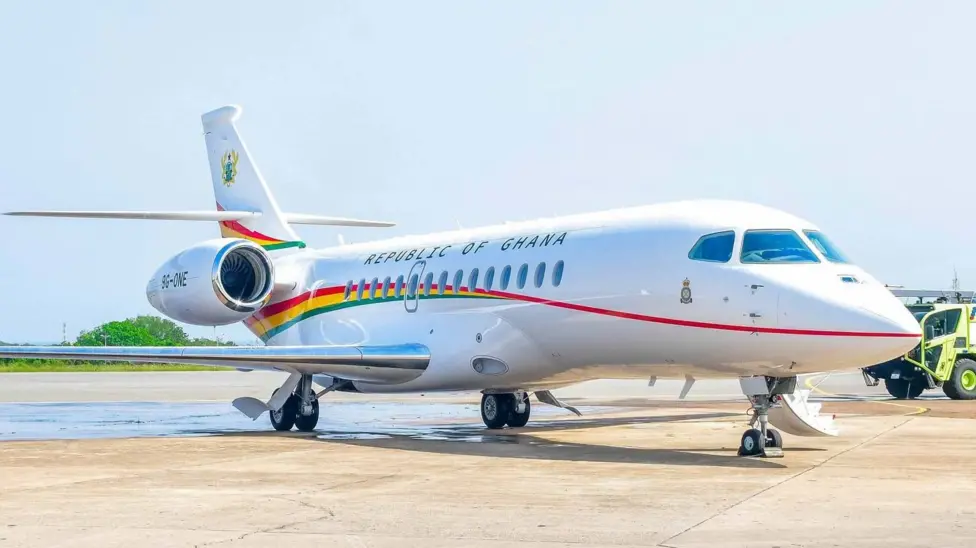
The allegation concerns an aircraft whose US$60.68 million procurement agreement was approved by Parliament on 4 December 2025. The Ghana Air Force took delivery of the Falcon 6X on 16 November 2026, replacing an ageing Falcon 900EX that officials say suffered repeated maintenance problems.
The critical distinction is between an approved contract price and an alleged additional expense. Until the procurement file and payment records are available, the public cannot know whether the US$9 million was paid, merely proposed, included in the agreed price or related to another item.
Ghana’s Falcon 6X: follow the money
Separate the approved aircraft agreement from the disputed customisation allegation.
What is documented — and what is alleged?
US$60.68m purchase agreement
The parliamentary committee report identifies an agreement with Dassault Aviation for one Falcon 6X valued at US$60,680,000.
The full contract and included equipment specification would establish precisely what the approved amount covers.
What if US$9m were additional?
Switch between the documented agreement and a hypothetical scenario that assumes the entire alleged amount was an extra charge.
The value stated in the parliamentary committee report. This is not a verified final life-cycle expenditure total.
The chart uses US$69.68m as a common reference scale. No verified additional invoice or payment is established by this calculation.
The procurement evidence checklist
Explore the records needed to establish what was contracted, authorised, delivered and paid.
Original signed purchase agreement
Would establish the agreed price, payment terms, scope of supply and included equipment. Narrow security-related redactions may be appropriate.
Aircraft specifications and contract variations
Would show whether any optional equipment or bespoke modifications were added after approval and how they were priced.
Invoices and payment certificates
Would distinguish a quotation, an authorised commitment, an invoice and an actual payment.
Procurement approval trail
Would identify the responsible decision-makers, dates and legal authorisation for any amendments.
Delivery acceptance documentation
Would establish what was accepted at handover, subject to appropriate protection of sensitive technical details.
Life-cycle cost and options assessment
Would permit comparison of continued operation of the Falcon 900EX, replacement, and charter or leasing alternatives.
This is Nukunya’s proposed disclosure checklist. It does not establish that documents were unlawfully withheld or that a contract variation exists.
Was buying the aircraft the best option?
Continue operating the Falcon 900EX
Evaluate repair costs, technical reliability, downtime, expected remaining life and operational suitability.
No independently verified full-cost comparison is provided in the reporting reviewed.
Related posts:
 Mahama Orders State-Owned Enterprises to Submit Audited Accounts or Face Sanctions
 Mahama Bans Ministers, State CEOs From Accepting Private Awards Without Approval
 Sedina Tamakloe Custody Dispute Deepens as Government and Critics Clash Over Transparency
 EOCO Investigation Renews Focus on Delayed Opening of Ghana’s US$10.15m Weija Children’s Hospital
 John Darko SIC Investigation: Suame MP Denies Role in GH¢27m Loss