Mahama Orders State-Owned Enterprises to Submit Audited Accounts or Face Sanctions


Follow Nukunya
Get the latest breaking news and updates from Nukunya.
Ghana’s president says years of non-compliance have weakened transparency and accountability, setting an April 2026 deadline for audited reports
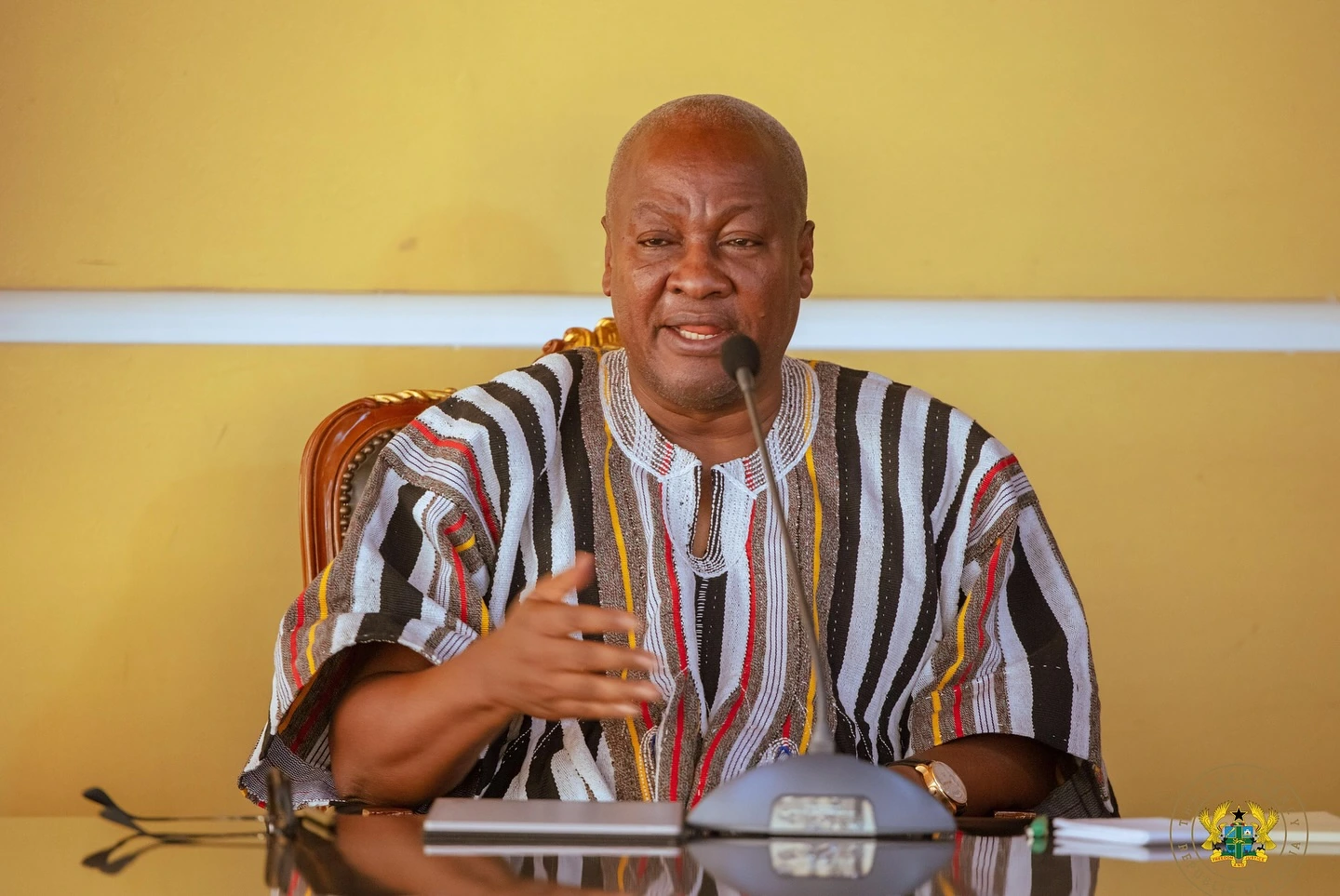
President John Mahama has ordered Ghana’s state-owned enterprises to submit audited accounts and annual reports by April 2026, warning that chief executives who fail to comply could face sanctions as part of a wider push for accountability and transparency.
ACCRA, Ghana — President John Dramani Mahama has directed the heads of Ghana’s state-owned enterprises (SOEs) to submit audited accounts and annual reports by the end of April 2026, warning that chief executives who fail to comply could face sanctions.
The directive forms part of the government’s efforts to strengthen accountability, improve corporate governance and restore confidence in the management of public institutions after years of reporting lapses across parts of the state-owned sector.
Speaking during an engagement with members of the Ghanaian community in Zambia, Mahama expressed concern that several state-owned enterprises had failed to meet their statutory reporting obligations for years, despite legal requirements to produce annual reports and audited financial statements.
“There are many state-owned enterprises that for seven to eight years have never produced an annual report, even though it is mandatory for them to do so,” the president said.
Deadline Set for April 2026
Mahama said his administration would no longer tolerate prolonged failures to meet reporting obligations and had instructed officials to enforce compliance.
According to the president, chief executives who fail to submit audited accounts and annual reports by the deadline risk disciplinary action, although he did not specify what sanctions could be applied.
Speaking separately at a diaspora town hall meeting, Mahama said the State Interests and Governance Authority (SIGA) had been directed to make compliance with auditing and reporting requirements a key performance indicator for the heads of state-owned enterprises.
“We have made the submission of audited accounts and annual reports part of their key performance indicators,” Mahama said. “If by the middle of this year you have not presented your audited accounts and annual report, your face is going home.”
Focus on Transparency and Public Finances
The president argued that failures in governance and financial reporting can ultimately impose costs on taxpayers and weaken efforts to improve economic management.
He said losses incurred by poorly managed state-owned enterprises often become liabilities for the state, placing additional pressure on public finances and undermining broader economic reforms.
Governance experts have long argued that timely publication of audited accounts is essential for ensuring transparency, strengthening oversight and enabling Parliament, regulators and the public to assess the performance of state-owned institutions. The government’s latest directive appears aimed at addressing concerns over delayed reporting and improving accountability within entities that play significant roles in sectors ranging from energy and transport to finance and infrastructure.
Signs of Improvement
Despite his criticism of non-compliant institutions, Mahama said some state-owned enterprises were beginning to show signs of improvement following increased monitoring and reforms introduced by the government. The administration has repeatedly identified stronger governance of public institutions as a key component of its economic recovery and fiscal management agenda.
The effectiveness of the new directive is likely to be judged by whether state-owned enterprises meet the reporting deadline and whether regulators follow through on enforcement measures against institutions that fail to comply. For now, the president’s warning sends one of the clearest signals yet that financial accountability within Ghana’s state-owned sector is set to face greater scrutiny.
Reporting by Edem Hodasi
Related posts:
 Ghana’s inflation slows for third consecutive month as food prices ease
  MTN Ghana to Start Charging Customers for MoMo-to-Bank Transfers From June 1
  Ghana exits IMF programme as government shifts focus to jobs and growth
  Ghana’s Debt Climbs to GH₵674bn Despite IMF Recovery Gains
  Ghana floods displace families as heavy rains hit Cape Coast