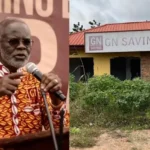
Four Eastern Region mining cooperatives face a test of environmental accountability
Ghana commissioned four mining cooperatives at Akyem Abodom on 25 November. Monthly oversight is planned, but community benefits and environmental outcomes remain the real test.



Four small-scale mining cooperatives commissioned in Ghana’s Eastern Region on 25 November 2026 will face monthly oversight under a government programme intended to bring mining livelihoods within a regulated system.
The ceremony at Akyem Abodom adds another group of miners to the country’s cooperative approach. For residents of mining communities, however, the important question is whether formal recognition will translate into safer operations, cleaner water and lasting economic benefits.
In a statement distributed on behalf of the Ministry of Lands and Natural Resources, Deputy Minister Yusif Sulemana warned participants against crossing the boundaries of authorised mining areas. The societies represent Asamankese, Asuom, Kade and Kuano No. 1. The ministry also outlined plans for continuing training and inspections.

Beyond formalisation
Can Ghana’s small-scale mining cooperatives deliver responsible mining, sustainable livelihoods and measurable community benefits?
Society counts are drawn from the accompanying article. The six accountability dimensions are an editorial assessment framework, not official inspection findings.
Formalisation is a beginning, not an environmental outcome
Bringing miners into identifiable organisations can support regulatory oversight, training, financial management and shared investment in equipment. It does not independently establish environmentally sustainable mining.
-
Formalisation
Establish identifiable organisations and documented responsibilities.
-
Operational compliance
Establish whether activities meet applicable licensing, boundary, environmental and safety requirements.
-
Environmental monitoring
Collect evidence on water quality, disturbed land, rehabilitation and worker protection.
-
Accountability and enforcement
Publish appropriate findings, investigate complaints and address identified deficiencies or breaches.
-
Verified outcomes
Assess environmental conditions, livelihood benefits and community experiences over time.
Six dimensions of responsible mining
The performance of mining cooperatives could be assessed through complementary environmental, occupational, financial and community indicators.
Are activities confined to approved areas?
Evidence required
Approved site maps, georeferenced inspections and documented boundary compliance.
Risk being monitored
Mining outside authorised areas and disturbance of land beyond approved boundaries.
Proposed indicator
Percentage of inspected sites complying with approved boundaries.
Are surrounding water resources protected?
Evidence required
Baseline measurements, upstream and downstream sampling, laboratory results and applicable water-quality standards.
Risk being monitored
Water contamination and deterioration affecting communities and ecosystems.
Proposed indicator
Changes in relevant water-quality parameters against baselines and applicable standards.
Is disturbed land being restored?
Evidence required
Rehabilitation plans, measured disturbed areas, site inspections and verified restoration assessments.
Risk being monitored
Abandoned pits, degraded farmland, erosion and inadequate rehabilitation.
Proposed indicator
Verified restored area as a proportion of land requiring rehabilitation.
Are miners adequately protected?
Evidence required
Safety inspections, training records, protective equipment assessments and occupational incident reports.
Risk being monitored
Occupational injuries and hazardous working conditions.
Proposed indicator
Compliance with applicable occupational safety requirements.
Can members understand how revenue is managed?
Evidence required
Cooperative financial statements, revenue records, expenditure documentation and appropriate independent financial oversight.
Risk being monitored
Financial mismanagement and unequal distribution of cooperative benefits.
Proposed indicator
Availability and completeness of required cooperative financial reports.
Can affected residents raise concerns?
Evidence required
Accessible complaints channels, community engagement records, complaint investigations and documented resolutions.
Risk being monitored
Environmental and social costs being transferred to neighbouring communities.
Proposed indicator
Proportion of complaints resolved within a defined service standard.
These dimensions constitute a proposed editorial framework. They are not a validated sustainability index, an official regulatory assessment or measured results for the four sites.
How much disturbed land has been restored?
Land restoration can be assessed partly by comparing the area requiring rehabilitation with the area independently verified as restored under clearly defined criteria.
Illustrative restoration calculator
The calculator uses hypothetical land areas. It does not represent actual measurements from the newly commissioned mining cooperatives.
Illustrative rehabilitation scenarios
| Restored area | Remaining area | Restoration rate |
|---|---|---|
| 0 ha | 20 ha | 0% |
| 5 ha | 15 ha | 25% |
| 10 ha | 10 ha | 50% |
| 15 ha | 5 ha | 75% |
| 20 ha | 0 ha | 100% |
Who benefits and who could bear the costs?
Mining revenue and mining-related environmental costs do not necessarily fall on the same individuals or communities.
Potential economic benefits
- Employment opportunities.
- Cooperative member income.
- Shared training expenditure.
- Access to equipment.
- Local economic activity.
Potential external costs
- Water contamination.
- Agricultural land degradation.
- Occupational and public health risks.
- Loss of agricultural productivity.
- Environmental rehabilitation expenditure.
These are potential mechanisms and risks. They do not establish that any particular benefit or harm has occurred at the four Eastern Region sites.
What different stakeholders need to know
| Stakeholder | Principal concern | Evidence needed |
|---|---|---|
| Cooperative members | Income, working conditions and financial management. | Accounts, safety records and documented distribution of cooperative benefits. |
| Neighbouring farmers | Land productivity and access to suitable water resources. | Land assessments, environmental monitoring and complaint investigations. |
| Local residents | Environmental safety and community accountability. | Accessible monitoring findings and complaints mechanisms. |
| Regulatory institutions | Compliance, environmental protection and enforcement. | Authorisations, inspection records and corrective actions. |
| Local authorities | Community development and local environmental impacts. | Verified local economic and environmental indicators. |
What should regulators and communities measure?
| Indicator | Proposed measurement | Evidence source |
|---|---|---|
| Boundary compliance | Compliant inspected sites divided by all sites inspected against approved boundaries. | Georeferenced inspection records. |
| Water-quality compliance | Parameter-specific results assessed against applicable standards and baseline conditions. | Appropriate laboratory testing and sampling records. |
| Land restoration rate | Verified restored area divided by land requiring rehabilitation, multiplied by 100. | Site measurements and rehabilitation inspections. |
| Worker safety compliance | Compliance with defined applicable safety requirements. | Occupational safety inspections. |
| Occupational injury rate | Recorded injuries relative to a consistently defined exposure measure, such as hours worked. | Incident records and verified working-hour data. |
| Financial reporting | Completeness and timeliness of required financial reports. | Cooperative financial records. |
| Complaint resolution | Complaints in a defined cohort resolved within the applicable service standard. | Complaints and investigation records. |
| Corrective action completion | Required corrective actions independently verified as completed, relative to actions due. | Inspection and enforcement records. |
| Employment outcomes | Verified employment, working conditions and job retention. | Employment records and appropriate worker surveys. |
These are proposed indicators rather than official Ghanaian reporting standards. Implementation requires consistent definitions, denominators, observation periods and independent verification where appropriate. Ratios with zero denominators should be reported as not applicable.
Community evidence tracker
Use this checklist to assess the availability of evidence when future cooperative performance reports are released.
This checklist records reader selections only. It does not automatically retrieve inspection records, certify compliance or calculate an environmental performance score. The script does not transmit or persistently store selections.
What is established and what remains unknown?
| Issue | Evidence status |
|---|---|
| Eastern Region cooperative commissioning | Four societies reported in the article. |
| Earlier Nkroful initiative | Five societies referenced in the ministry announcement cited by the article. |
| Restoration and financial transparency | Reported ministry priorities. |
| Site-level environmental baselines | Not established from the available material. |
| Actual water-quality changes | Not established. |
| Verified restored land area | Not established. |
| Employment projections and realised jobs | Not established. |
| Detailed inspection findings | Not established from the available material. |
| Long-term environmental and social outcomes | Require further evidence and monitoring. |
Absence of evidence in the available documentation should not be interpreted as proof of non-compliance or proof that relevant records do not exist.
Understanding Ghana’s mining cooperative model
Does cooperative registration make mining environmentally sustainable?
No. Formalisation can support oversight and organisation, but environmental sustainability requires evidence of operational practices, compliance and environmental outcomes.
Does cooperative status replace mining and environmental authorisations?
Cooperative status alone should not be treated as proof that all applicable mining and environmental authorisations have been obtained.
How can communities assess whether mining affects water quality?
Appropriate assessment requires baseline measurements, suitable sampling locations, laboratory testing and interpretation against applicable standards. Establishing causation may require investigation of other pollution sources.
Does 100% land restoration mean complete environmental recovery?
Not necessarily. An area-based target does not independently establish soil productivity, biodiversity recovery, water safety or long-term site stability.
How many jobs will the four Eastern Region cooperatives create?
The available announcement does not establish projected employment figures. Employment benefits should be assessed using verified evidence over time.
Have the four cooperatives demonstrated environmental compliance?
The available material does not establish detailed site-level inspection findings or environmental outcomes. It is therefore too early to make a comprehensive assessment.
Measure outcomes, not inauguration ceremonies
Ghana’s cooperative model presents an opportunity to improve the organisation and oversight of small-scale mining.
Its lasting value will depend on whether lawful mining supports livelihoods without transferring unacceptable environmental costs to neighbouring communities.
Nukunya — Beyond the headlines. Evidence, context and perspective.Sources and interpretation
This interactive explainer accompanies Nukunya’s reporting on Ghana’s newly commissioned mining cooperatives.
The six accountability dimensions, stakeholder assessment, performance indicators and evidence checklist are editorial proposals. They are not official regulatory standards or independently measured site-level outcomes.
Calculator methodology
The illustrative restoration rate is calculated by dividing verified restored area by land requiring rehabilitation and multiplying the result by 100.
Remaining area equals the land requiring rehabilitation minus the verified restored area.
The calculator assumes both areas relate to the same defined site and assessment period, with no double counting. It does not measure restoration quality.
Source and further reading
Related posts:
 Ghana targets Atewa Forest in new anti-galamsey operation: Will Green Shield deliver lasting protection?
 Bank of Ghana suspends proposed 0.75% mobile money transfer fee
 Eastern Region: 12 injured after Sprinter bus crashes on notorious Asitey Mountain stretch
 Ghana’s youth jobs agency reaches 100,628 beneficiaries — but how many secure lasting work?
 Ghana’s 21,000-Tonne Wa Grain Hub: Financing Discrepancy Persists as 2027 Deadline Looms