Ghana’s GH¢48bn education budget faces questions over disability inclusion
Disability advocates are calling for dedicated funding to support learners with disabilities in mainstream Ghanaian schools, ahead of International Day of Persons with Disabilities.

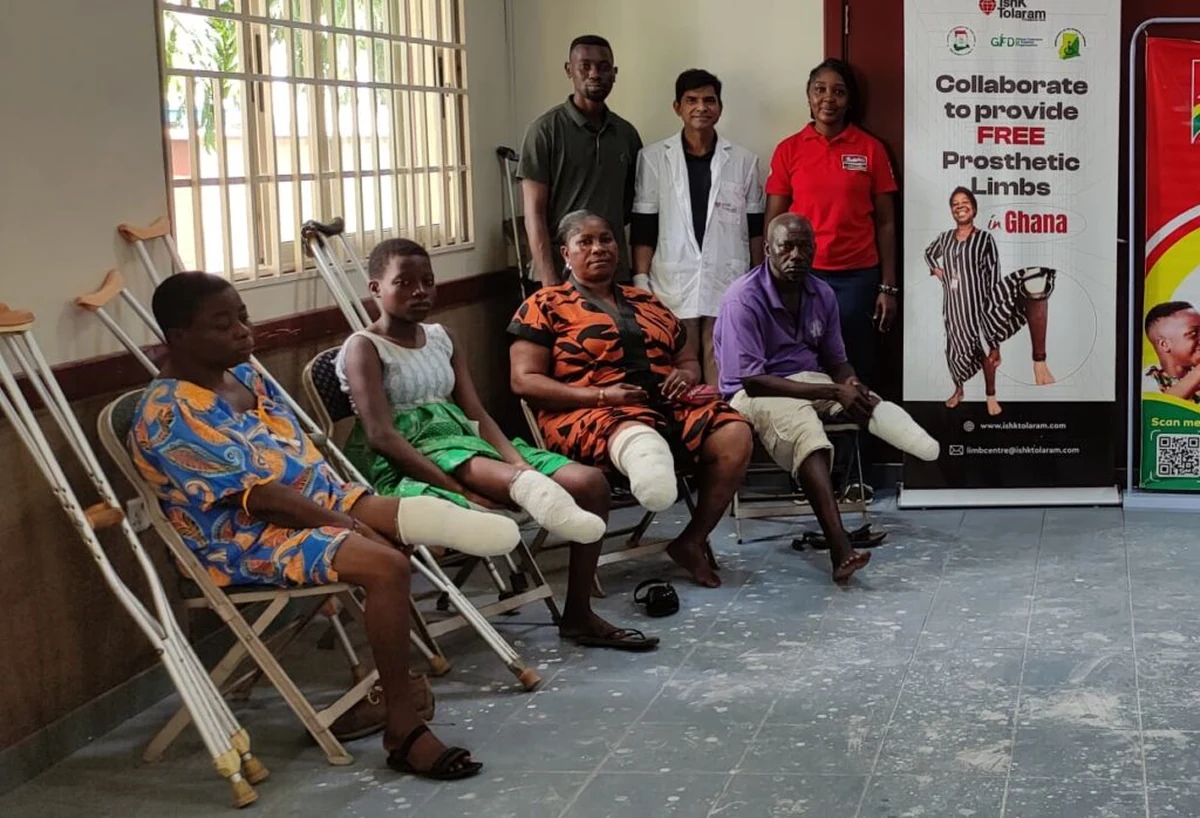

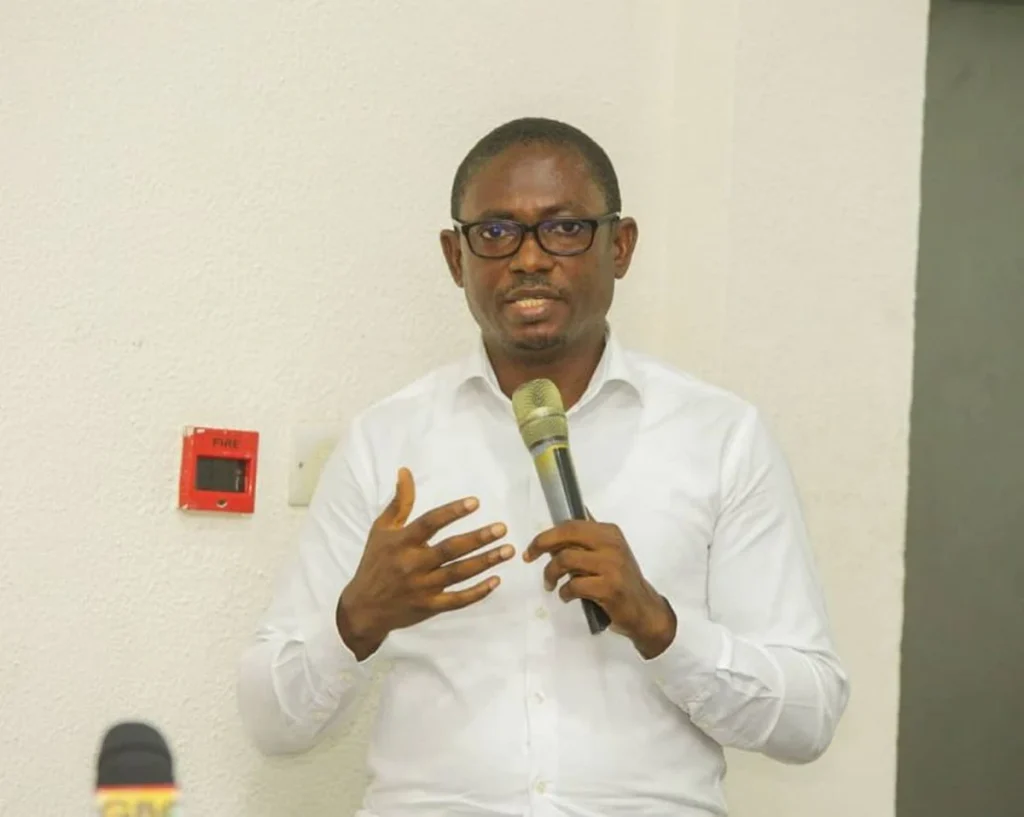
Ghana’s proposed GH¢48 billion education budget for 2027 has prompted renewed scrutiny of how public spending supports children with disabilities in ordinary classrooms. Moses Fordjour, deputy executive director of the Ghana Federation of Disability Organisations (GFD), said the organisation had identified no separately designated inclusive education budget line across the 2023–2027 budgets. This is the federation’s assessment, not an independently completed five-year expenditure audit by Nukunya.
Beyond the Education Budget
Understanding Ghana’s education allocations, disability inclusion and the relationship between public funding and meaningful classroom participation.
These figures represent reported allocations, not verified expenditure or total funding benefiting disabled learners.
What Ghana’s 2027 education budget tells us
The finance minister announced GH¢48 billion for education in the 2027 budget, including GH¢50 million for special schools.
Calculation: GH¢50 million divided by GH¢48,000 million, multiplied by 100, equals approximately 0.104%.
Comparing the reported education budgets
The comparison is based on reported allocations. It is not adjusted for inflation and does not establish actual expenditure.
Identified disability-specific allocations
| Measure | 2026 | 2027 |
|---|---|---|
| Total education allocation | GH¢39.23bn | GH¢48bn |
| Identified disability-specific allocation | GH¢75m | GH¢50m |
| Share of education allocation | 0.191% | 0.104% |
| Allocation scope | Two disability-specific allocations identified by the federation | Special schools |
| Actual expenditure | Not established | Not established |
| Total expenditure benefiting disabled learners | Not established | Not established |
Inclusive education funding calculator
Explore how an identified allocation relates to the overall education budget.
2027 reported special-school allocation.
Formula: identified allocation in millions divided by the total budget in billions multiplied by 1,000, then multiplied by 100. More precisely, percentage share = allocation ÷ (budget × 1,000) × 100.
Illustrative funding scenarios
Holding the announced GH¢48 billion education budget constant, different hypothetical allocation shares would represent the following amounts.
| Allocation share | Amount | Status |
|---|---|---|
| 0.104% (rounded) | GH¢50m | Reported special-school allocation |
| 0.25% | GH¢120m | Hypothetical |
| 0.50% | GH¢240m | Hypothetical |
| 1.00% | GH¢480m | Hypothetical |
| 2.00% | GH¢960m | Hypothetical |
Why mainstream inclusion needs separate scrutiny
Specialist schools and inclusive mainstream education are not interchangeable. Disabled learners attending mainstream schools may require individually appropriate accessibility and learning support.
Physical and digital accessibility
Accessible classrooms, sanitation facilities, transport arrangements and digital learning resources can help remove barriers.
Evidence to examineAccessibility audits, completed adjustments and learner experiences.
Learning materials and assessment
Adapted textbooks, assistive technology, accessible examinations and appropriate communication formats may be required.
Evidence to examineAvailability, suitability and actual use of accessible learning resources.
Specialist support and trained staff
Teachers and support staff need appropriate training, resources and access to specialist expertise.
Evidence to examineStaff competence, availability of support and implementation of appropriate classroom adjustments.
Participation and accountability
Disabled learners and their families should have meaningful opportunities to shape educational provision and report barriers.
Evidence to examineLearner participation, accessible consultation and complaint resolution.
These are examples of inclusive provision, not verified findings about individual schools.
From budget announcements to educational outcomes
Budget allocation
Identify resources intended to support disabled learners, including expenditure within general education programmes.
Disbursement and expenditure
Establish whether approved resources reach implementing institutions and are spent for their intended purposes.
School-level provision
Deliver accessible infrastructure, learning materials, appropriate support and trained staff.
Meaningful participation
Assess whether disabled learners can attend and participate in education without avoidable barriers.
Educational outcomes
Evaluate learning, progression, wellbeing and educational experiences.
Nukunya’s proposed accountability pathway. It is not a validated causal model or an assessment of current government performance.
What education authorities should measure
| Dimension | Proposed indicator | Purpose |
|---|---|---|
| Funding transparency | Identifiable disability-related allocations across education programmes. | Establish the scope of public commitments. |
| Budget execution | Actual eligible expenditure divided by the corresponding approved allocation. | Establish whether approved resources are being spent. |
| School coverage | Number and proportion of eligible schools receiving specified accessibility support. | Assess the distribution of resources. |
| Learning support | Proportion of assessed learners receiving identified adjustments. | Examine whether support matches needs. |
| Staff capacity | Staff demonstrating relevant inclusive education competence. | Assess implementation capacity. |
| Participation | Attendance, retention and learner-reported participation, appropriately disaggregated. | Identify persistent educational barriers. |
| Learning outcomes | Accessible assessment results, individual progression and wellbeing. | Examine educational outcomes beyond enrolment. |
| Household burden | Out-of-pocket costs for required accessibility and learning support. | Assess financial barriers to participation. |
| Accountability | Accessible complaints mechanisms and documented resolution outcomes. | Establish whether concerns can be raised and addressed. |
These are proposed indicators, not measured national results. Comparable definitions, reporting periods and appropriate denominators are required. Expenditure must be reconciled to avoid double counting across programmes.
What citizens should be able to establish
This is a reader-controlled evidence checklist, not an official assessment or government performance rating. The tool does not transmit or persistently store checklist responses.
Ghana’s disability rights events
From rights commitments to implementation
The federation has announced activities focusing on implementation of disability rights commitments and reform of Ghana’s disability legislation.
The events provide an opportunity to examine how national education commitments translate into accessible learning environments, meaningful participation and accountability.
Specific venues, participation arrangements and the full event programme are not established in the supplied article.
Ghana’s inclusive education funding explained
How much has Ghana announced for education in 2027?
The reported 2027 education allocation is GH¢48 billion, including GH¢50 million for special schools.
What percentage is allocated to special schools?
GH¢50 million represents approximately 0.104% of the announced GH¢48 billion education budget.
Does this represent all funding for disabled learners?
No. Other education programmes may also contain expenditure benefiting disabled learners. The total has not been established.
Has disability education funding decreased since 2026?
The reported figures cannot establish that. The GH¢75 million identified in 2026 combines two disability-specific allocations, while the GH¢50 million identified in 2027 concerns special schools.
What is the difference between specialist schools and mainstream inclusion?
Specialist schools provide specialised educational provision. Mainstream inclusion requires ordinary educational settings to remove barriers and provide appropriate support for disabled learners.
Would ring-fenced funding guarantee better outcomes?
No. Identifiable funding can improve transparency, but outcomes also depend on implementation, staff competence, procurement, accessibility and learner participation.
What should Ghana publish to improve accountability?
Authorities could publish allocations, actual expenditure, schools reached, accessibility provision, learner participation and educational outcomes, while protecting individual privacy.
Educational inclusion should not depend on a family’s ability to pay
The size of the education budget matters, but the public value of that investment depends on whether learners can access appropriate support and participate meaningfully in education.
Identifiable funding, transparent expenditure, appropriate classroom provision and meaningful learner participation are important components of educational accountability.
Nukunya — Beyond the headlines. Evidence, context and perspective.Data sources and editorial limitations
The reported figures are drawn from the accompanying article’s account of Ghana’s 2027 education budget and the federation’s identification of two disability-specific allocations in 2026.
Official budget documentation should be consulted through Ghana’s Ministry of Finance .
Calculation methodology
The 2027 special-school allocation share is calculated as 50 divided by 48,000 multiplied by 100, giving approximately 0.104%.
The 2026 identified allocation share is calculated as 75 divided by 39,230 multiplied by 100, giving approximately 0.191%.
The nominal education budget increase is GH¢48 billion minus GH¢39.23 billion, equivalent to GH¢8.77 billion or approximately 22.36%.
Limitations
The figures describe reported allocations, not verified expenditure. The identified disability-specific allocations have different scopes and are not directly comparable. No national funding adequacy assessment, learner-level expenditure analysis or educational impact evaluation is established by these figures.
The hypothetical funding scenarios, accountability pathway and proposed indicators are editorial additions, not government commitments or recorded outcomes.
Related posts:
 GES warns schools against unauthorised fees and reaffirms the Free SHS policy.
 Three Former Hohoe E.P. SHS Students Arrested Over Alleged School Vandalism
 Obuasi school allegations: Calls grow for independent investigation as education officials step aside.
 Ghana’s youth jobs agency reaches 100,628 beneficiaries — but how many secure lasting work?
 KNUST Student Dies After Diving Incident: Pool Closed