
The Hidden Power of Sleep: 4 Essential Reasons It Supports Health, Wellbeing and Long-Term Survival



Sleep is often treated as a luxury in modern life, but scientists and health experts increasingly warn that it is one of the most important pillars of human health. From protecting the heart and brain to supporting immunity, emotional wellbeing and memory, restorative rest plays a vital role in nearly every system of the body.
In a culture that celebrates productivity and long working hours, sleep is frequently sacrificed. Yet growing evidence suggests that regularly missing out on quality sleep can have serious consequences for physical and mental health.
Sleep is more than just rest
Nightly rest is not simply a period of inactivity. During this period, the body undergoes a series of essential biological processes that help repair tissues, regulate hormones, consolidate memories and restore energy. Research published through the U.S. National Library of Medicine indicates that adults who consistently obtain around seven to eight hours of sleep each night tend to experience the most favourable health outcomes. Both insufficient and excessive sleep have been associated with increased risks of illness and premature death.
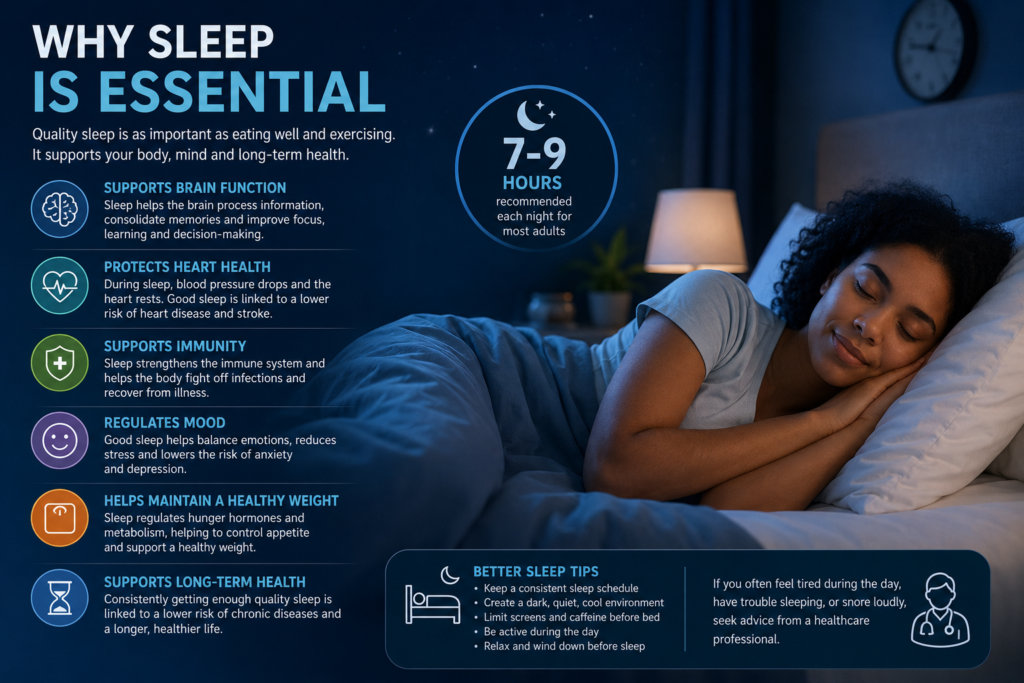
The National Sleep Foundation recommends that most adults aged 18 to 64 aim for seven to nine hours of sleep per night, although individual needs may vary.
Protecting the Brain
One of sleep’s most important functions is supporting brain health. During sleep, the brain processes information gathered throughout the day, strengthening important memories while discarding unnecessary information. Studies show that adequate sleep improves concentration, learning, problem-solving abilities and decision-making.
Insufficient sleep, meanwhile, can impair attention, slow reaction times and reduce cognitive performance. Researchers have also linked chronic sleep deprivation to an increased risk of neurodegenerative diseases and cognitive decline later in life.
Sleep also appears to help clear metabolic waste products from the brain, a process experts believe may be important in maintaining long-term neurological health.
A Stronger Heart and Healthier Body
The benefits of sleep extend well beyond the brain. During healthy sleep, heart rate and blood pressure naturally decline, allowing the cardiovascular system to recover from the demands of the day. Sleep also helps regulate inflammation, a factor linked to many chronic diseases.
Studies have found that insufficient sleep can contribute to high blood pressure, metabolic disorders and an increased risk of cardiovascular disease. Even relatively small improvements in sleep duration have been associated with measurable reductions in heart-related health risks.
Sleep and Weight Management
For people trying to maintain a healthy weight, sleep may be just as important as diet and exercise. Sleep influences hormones that regulate hunger and fullness. When people do not get enough sleep, levels of hormones associated with appetite can become disrupted, leading to increased cravings and overeating. Sleep deprivation has also been linked to changes in metabolism and a higher risk of obesity.
Researchers increasingly view sleep as a key component of weight management strategies, alongside balanced nutrition and regular physical activity.
Mental Health and Emotional Wellbeing
Sleep and mental health are closely interconnected. A poor night’s sleep can affect mood, increase irritability and make it more difficult to cope with stress. Long-term sleep problems have been associated with higher rates of anxiety, depression and emotional instability.
Conversely, healthy sleep supports emotional regulation and resilience, helping individuals manage daily challenges more effectively. Many mental health professionals now regard good sleep habits as a fundamental component of psychological wellbeing.
Quality Matters as Much as Quantity
Experts stress that sleep quality is just as important as the number of hours spent in bed. Healthy sleep involves moving through multiple sleep cycles each night, including deep sleep and rapid eye movement (REM) sleep. Interruptions to these cycles can leave individuals feeling tired even after spending sufficient time in bed.
Research also suggests that maintaining a consistent sleep schedule may be as important as sleep duration. People who go to bed and wake up at regular times tend to experience better health outcomes than those with highly irregular sleep patterns.
How to Improve Sleep
Health organisations recommend several evidence-based strategies for improving sleep:
- Maintain a consistent bedtime and wake-up time.
- Reduce exposure to screens before bed.
- Create a dark, cool and quiet sleep environment.
- Limit caffeine and heavy meals late in the evening.
- Engage in regular physical activity during the day.
- Develop a relaxing bedtime routine.
Individuals who experience persistent sleep difficulties, excessive daytime tiredness or symptoms of sleep disorders should seek advice from a healthcare professional.
The Bottom Line
Sleep is not wasted time. It is a biological necessity that underpins physical health, mental wellbeing and daily functioning. As scientific understanding of sleep continues to evolve, one message remains clear: consistently obtaining high-quality sleep is one of the most effective steps people can take to protect their long-term health. In an age of constant connectivity and increasing demands on attention, prioritising sleep may be one of the most valuable investments a person can make in their future wellbeing.
Related posts:
 Extreme Heat: 5 Effective Ways to Protect Yourself During High Temperatures
  6 Prostate Cancer Symptoms: Why Every Man Should Get Their Prostate Checked
  Social media linked to higher loneliness, as study highlights limits of online friendships
  The Silent Struggle of PCOS: How Women Are Learning to Take Back Control
  Hirsutism: The 5 Reasons That Causes Excess Hair Growth and Emotional Stress