Kenya’s Ex-Chief Justice David Maraga Arrested During Nairobi National Park Protest


Follow Nukunya
Get the latest breaking news and updates from Nukunya.
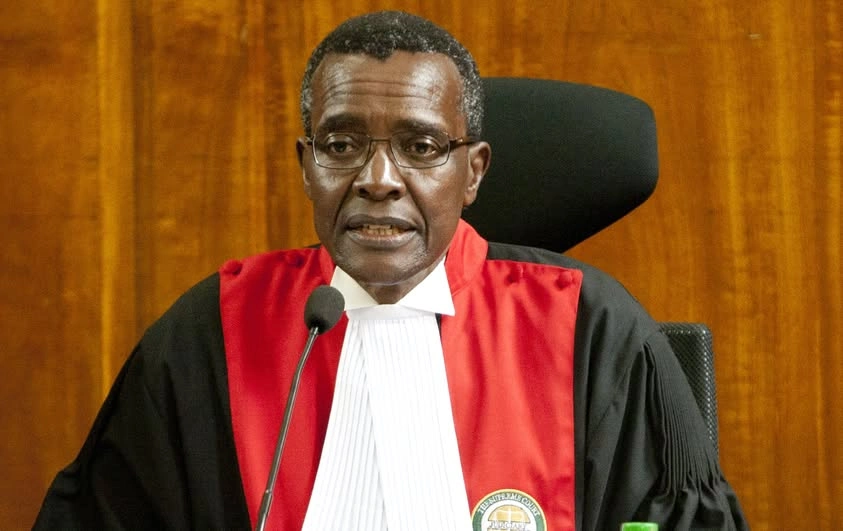
Kenya’s former Chief Justice and 2027 presidential hopeful David Maraga was briefly arrested alongside environmental activists protesting against proposed construction projects within Nairobi National Park. The incident has reignited debate over conservation, public participation and the future of one of Africa’s most iconic urban wildlife reserves.

NAIROBI — Kenya’s former Chief Justice David Maraga was arrested and later released on Monday after joining environmental activists protesting against proposed development projects inside Nairobi National Park, a move that has intensified a growing national debate over conservation and land use in the East African country.
Police fired tear gas to disperse demonstrators gathered outside the park, while several protesters, including Maraga, were detained during a sit-in near the park’s main entrance. Witnesses and local media footage showed tense scenes as activists carrying banners and placards opposed plans they say threaten protected land within the wildlife sanctuary.
The protest centred on plans linked to the relocation and expansion of the Nairobi Animal Orphanage and the construction of associated infrastructure, including a proposed parking facility. Environmental campaigners argue the project would encroach on protected parkland and could set a dangerous precedent for future development inside one of Kenya’s most important conservation areas.
Nairobi National Park occupies a unique place in global conservation. Located just a short distance from Kenya’s capital city centre, it is the only major wildlife reserve situated within a national capital and is home to species including lions, rhinos, buffalo and leopards. Conservation groups warn that continued encroachment could fragment habitats and weaken protections for wildlife.
Maraga’s Protest and Arrest
Maraga, who served as Kenya’s Chief Justice between 2016 and 2021 and has emerged as a potential presidential contender for the 2027 elections, said he was arrested while on his way to present a petition to the Kenya Wildlife Service (KWS).
In a statement posted on social media, Maraga said Kenyans had gathered to defend public land and protect the country’s environmental heritage.
“Our national heritage and environment must be safeguarded from greed and unnecessary destruction without public participation.”
Videos circulating online showed Maraga, dressed in the colours of his United Green Movement political party, being assisted by fellow protesters as police moved to clear the demonstration.
According to multiple reports, Maraga was detained alongside at least nine other activists before later being released. At the time of publication, Kenyan police had not publicly detailed the reasons for the arrests.
Conservation Groups Condemn Crackdown
Human rights and environmental organisations criticised the police response.
Amnesty International Kenya expressed solidarity with the protesters and called for greater public participation in decisions affecting the country’s environmental assets. Environmental groups including Greenpeace Africa, Friends of Nairobi National Park and the Green Belt Movement also voiced concern over the arrests and the use of force against demonstrators.
In a joint statement, campaigners argued that peaceful protest and civic engagement should be protected rather than suppressed.
The images emerging from Nairobi showed demonstrators carrying banners reading “Nature is Not Vacant Land” and “Protected Land Is Not Spare Land”, highlighting fears that conservation areas are increasingly vulnerable to infrastructure development.
Kenya Wildlife Service Defends Project
The Kenya Wildlife Service has rejected accusations of land grabbing and maintains that the project is designed to improve animal welfare, veterinary services and the visitor experience.
Officials say the planned expansion would occupy approximately 89 acres, representing only a small fraction of the park’s overall area. The agency has also argued that public consultations were conducted before the project was approved.
Supporters of the development contend that modernising facilities for orphaned and injured wildlife is necessary to meet increasing conservation demands and improve education and tourism services.
However, critics argue that even limited development within a protected ecosystem risks opening the door to future encroachments that could gradually erode conservation protections.
A Wider Debate About Development and Conservation
The confrontation reflects a broader challenge facing many African cities: balancing economic development, urban growth and conservation.
Nairobi National Park has previously been at the centre of disputes over roads, railways and infrastructure projects. Environmentalists argue that once protected land is reduced or fragmented, the damage can be difficult to reverse.
For many protesters, Monday’s demonstration was not solely about one construction project but about defending the principle that protected conservation land should remain protected.
As Kenya prepares for future urban expansion and increasing development pressures, the debate surrounding Nairobi National Park is likely to become a defining test of how the country balances conservation, public accountability and economic growth.
Why This Story Matters
The dispute goes beyond a local environmental protest. It raises fundamental questions about how African countries manage protected areas, balance conservation with development and ensure public participation in decisions affecting national heritage. The involvement of a former Chief Justice has further elevated the issue into a significant political and governance debate.
Related posts:
 Ghana seeks AU intervention over xenophobic attacks in South Africa
  US Experts Reach Kenyan Ebola Facility Amid High Court Order and Local Protests Ghana Challenges South Africa Over Xenophobic Attacks, Rejects Crime Allegations Against Ghanaians
  Ebola Outbreak Passes 530 Cases as Africa Races to Contain Rare Strain With No Approved Vaccine
  Ghana Pushes Border Cooperation as Sahel Insecurity Raises Regional Security Risks