Ghana Maintains Cocoa Producer Price Despite Global Market Slump: What It Means for Farmers and the Economy
Ghana has maintained its cocoa producer price at GH¢41,392 per tonne for the 2026 light crop season despite falling global cocoa prices. Here is what the decision means for farmers, exports and the wider economy.


Follow Nukunya
Get the latest breaking news and updates from Nukunya.
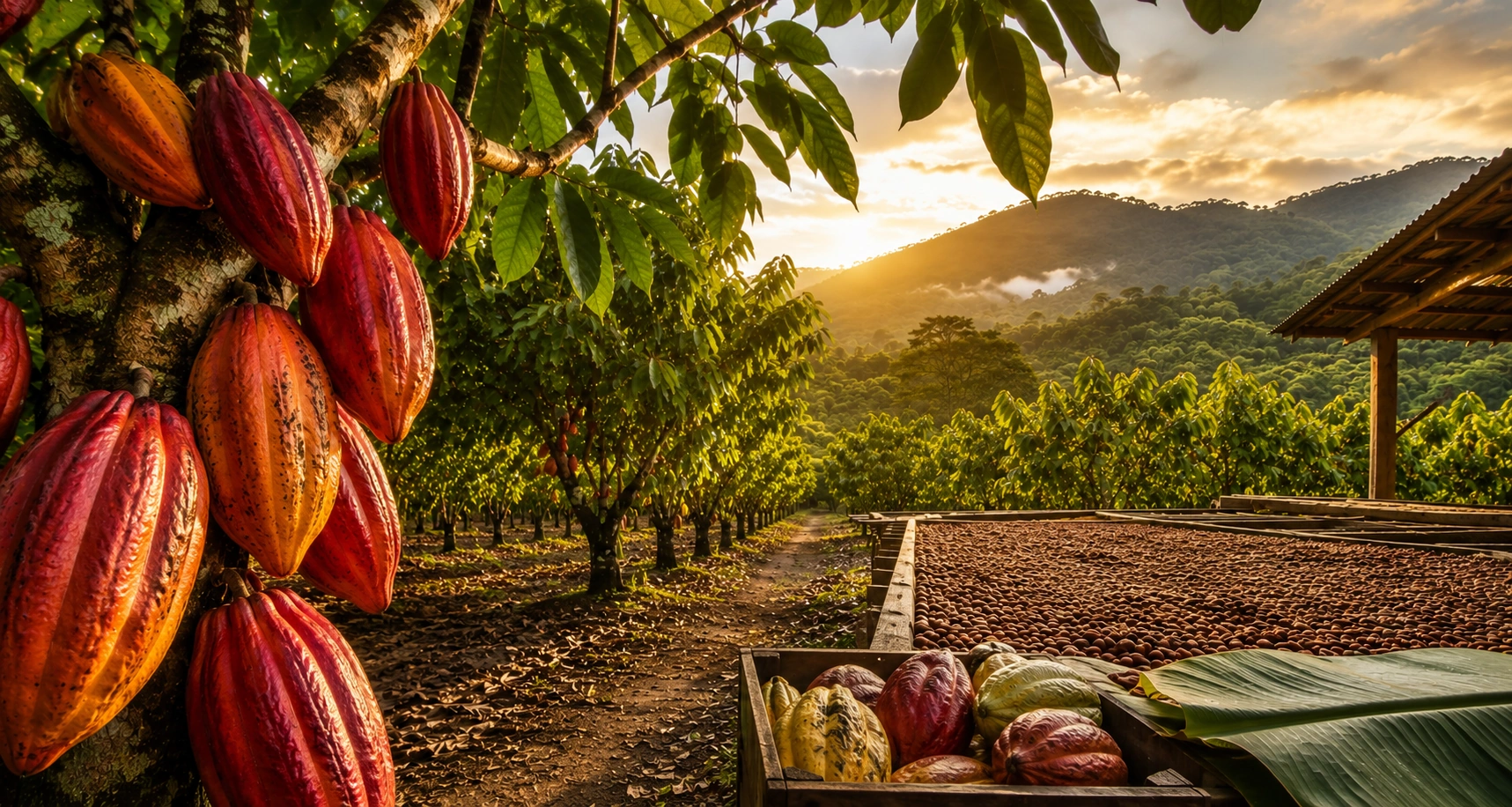
Cocoa farmers across Ghana will continue receiving GH¢41,392 per tonne during the 2026 light crop season after the government decided to keep producer prices unchanged despite a sharp fall in global cocoa prices. The decision protects farmer incomes but raises questions about the long-term financing of one of Ghana’s most important export sectors.
ACCRA, Ghana – Cocoa farmers across Ghana will continue receiving GH¢41,392 per tonne during the 2026 light crop season after the government decided to keep producer prices unchanged despite a significant decline in global cocoa prices. The move is intended to protect farmer incomes, but it also highlights the growing financial pressures facing Ghana’s cocoa sector.
The Ghana Cocoa Board (COCOBOD) announced that purchases for the 2026 light crop season will begin on 18 June, with farmers continuing to receive GH¢2,587 per 64-kilogram bag and GH¢1,241.76 per 30-kilogram load. The producer price remains unchanged from the previous season despite a downturn in international cocoa markets.
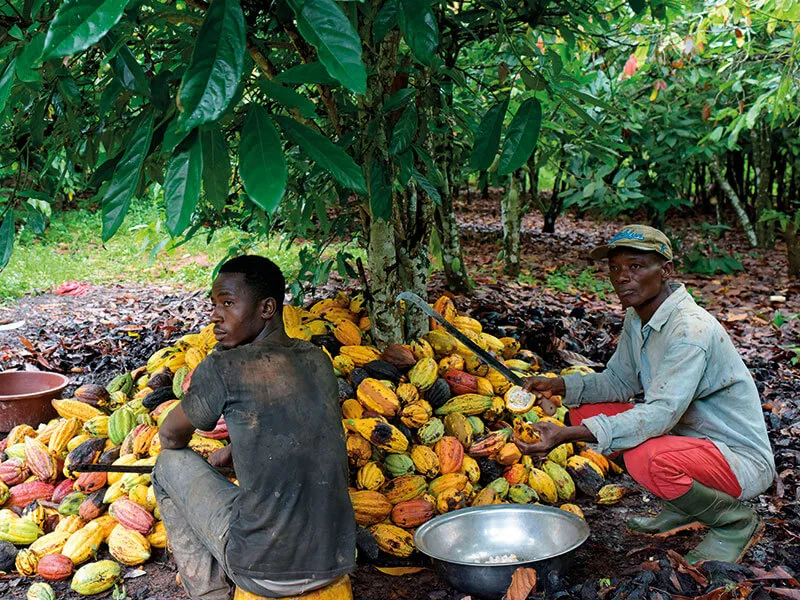
For the roughly 800,000 cocoa farming households that depend on the crop for their livelihoods, the decision provides a degree of certainty at a time of market volatility. Cocoa remains one of Ghana’s most important export commodities and a major source of income across the country’s cocoa-growing regions.
Cocoa Price at a Glance
| Measure | Rate |
|---|---|
| Per tonne | GH¢41,392 |
| Per 64kg bag | GH¢2,587 |
| Per 30kg load | GH¢1,241.76 |
| Effective date | 18 June 2026 |
| Season | 2026 Light Crop |
Why the decision matters
The announcement comes against a dramatically different backdrop from the one that dominated cocoa markets only a year ago. After reaching record highs in 2024 and early 2025 due to poor harvests in West Africa, global cocoa prices have fallen sharply as demand weakened and buyers adjusted to elevated costs. Reuters reported in February that cocoa prices had roughly halved over the previous year, dropping towards two-year lows.
Ordinarily, falling international prices would increase pressure on producer countries to lower the prices paid to farmers. Instead, Ghana has opted to maintain the current rate. COCOBOD says the decision reflects the government’s commitment to protecting farmer incomes from international market fluctuations and ensuring stability as the new light crop season begins.
“The decision underscores the government’s commitment to protecting the incomes and livelihoods of cocoa farmers, even as international cocoa prices experience a downward trend,” the board said in its statement.
The bigger economic picture
The significance of the decision extends beyond cocoa-growing communities.
Ghana is the world’s second-largest cocoa producer after Côte d’Ivoire, and cocoa remains one of the country’s largest export earners. The sector generates billions of dollars in foreign exchange earnings and supports millions of people directly and indirectly through farming, transportation, processing, warehousing and export activities.
Strong cocoa revenues help support the cedi, finance imports and contribute to government revenues. As a result, developments in the cocoa sector can have wider implications for inflation, exchange-rate stability and economic growth. Maintaining producer prices may therefore help sustain rural spending and household incomes, particularly in communities where cocoa remains the dominant economic activity.
A financing challenge emerges
While farmers are likely to welcome the decision, it also raises a critical policy question: can Ghana continue to shield producers from market declines if international prices remain subdued?
That challenge became evident earlier this year when the government unveiled a major restructuring of cocoa sector financing. In February, Finance Minister Cassiel Ato Forson announced a new financing framework designed to address difficulties facing the sector following a collapse in international prices. The reforms include a shift towards domestically issued cocoa bonds to finance purchases, replacing heavy reliance on external borrowing.
The minister also indicated that future pricing mechanisms would be linked more closely to international market conditions while guaranteeing farmers a minimum share of export earnings. The announcement followed concerns over delayed payments to farmers, unsold cocoa stocks and broader financial pressures within the industry. Reuters reported that some farmers had faced payment delays as market conditions deteriorated.
By keeping producer prices unchanged, the government is effectively absorbing part of the market risk rather than passing it directly to farmers.
Push for more local processing
Officials are also seeking to reduce Ghana’s dependence on raw cocoa exports. Currently, Ghana processes between 30% and 40% of its cocoa beans domestically. The government has indicated its intention to increase local processing to at least 50% during the 2026/27 crop season.
Supporters of the strategy argue that greater domestic processing would allow Ghana to capture more value from its cocoa industry, create jobs and reduce exposure to swings in global commodity markets. If successful, the approach could help transform the sector from one focused primarily on exporting raw beans to one generating greater value through manufacturing and processing.
Challenges facing the sector
Despite the producer price decision, significant challenges remain.
Ghana’s cocoa sector continues to grapple with climate-related pressures, crop disease, ageing farms, financing constraints and the impact of illegal mining activities in some cocoa-growing areas. Competition from neighbouring Côte d’Ivoire, which remains the world’s largest cocoa producer, also continues to influence regional market dynamics.
Industry observers say the long-term health of Ghana’s cocoa sector will depend not only on producer prices but also on productivity improvements, farm rehabilitation, access to finance and successful efforts to expand local processing capacity. For now, however, the government’s decision provides cocoa farmers with stability and predictability as the 2026 light crop season begins, even as uncertainty persists in global cocoa markets.
Related posts:
 PBC Workers Renew Appeal to Mahama as Salary Arrears Reach 27 Months, Union Says
  Ghana Holds Cocoa Producer Price Despite Global Market Decline
  Ghana Cocoa Farmers Warn of Harvest Risks as Payment Delays Deepen
  Ghana’s Debt Climbs to GH₵674bn Despite IMF Recovery Gains
  Mahama Courts Investors at London Stock Exchange as Ghana Seeks Fresh Capital