
Ghana Anti-Galamsey Operations Hand Over 141 Seized Firearms for Destruction



The destruction of more than 140 firearms seized during anti-illegal mining operations has highlighted growing concerns about the link between environmental crime, organised criminal networks and public security in Ghana.
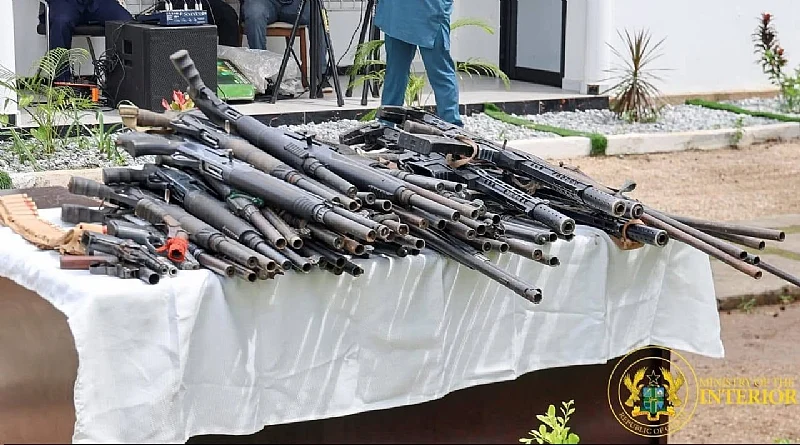
ACCRA, Ghana — Ghana’s National Anti-Illegal Mining Operations Secretariat (NAIMOS) has handed over 141 confiscated firearms and nearly 2,000 rounds of ammunition to the National Commission on Small Arms and Light Weapons for destruction, in what officials describe as part of a broader effort to prevent illegal weapons from returning to circulation.

The weapons, seized during operations targeting illegal mining activities, were formally transferred to the Commission in Accra as authorities intensified efforts to curb both environmental crimes and associated security threats. According to information released by the National Commission on Small Arms and Light Weapons, the consignment included 121 pump-action guns, 12 single-barrel shotguns, one double-barrel shotgun, two locally manufactured pistols, five military-style pistols and 1,864 rounds of ammunition.
Officials said the firearms would undergo marking procedures before being destroyed in accordance with national regulations governing illicit and unserviceable weapons. Speaking during the handover ceremony, Interior Minister Muntaka Mohammed-Mubarak reaffirmed the government’s commitment to strengthening public safety and ensuring that confiscated weapons are managed responsibly.
A technical delegation led by Mohammed Gali Salam, Deputy Executive Secretary of the National Commission on Small Arms and Light Weapons, received the weapons on behalf of the Commission.
Beyond Illegal Mining
While the handover focused on weapons disposal, the seizure highlights a growing concern among security analysts about the increasing overlap between illegal mining operations and armed criminal activity.
Illegal mining, commonly known in Ghana as “galamsey“, has evolved beyond an environmental issue into a broader governance and security challenge. Successive governments have linked some operations to organised criminal networks involved in illegal land occupation, environmental destruction, smuggling and violent confrontations with security personnel.
The presence of military-style firearms among the seized weapons is likely to raise further questions about how armed groups obtain weapons and whether existing controls are sufficient to prevent firearms from entering illegal mining sites.
Security experts have repeatedly warned that weapons associated with environmental crimes can fuel local conflicts, threaten law enforcement operations and undermine state authority in affected communities.
Effort to Keep Weapons Out of Circulation
Officials said the destruction process is intended to ensure confiscated firearms cannot re-enter the black market or be reused in criminal activities. The National Commission on Small Arms and Light Weapons said the exercise demonstrates growing cooperation between security agencies and regulatory institutions tasked with tackling illegal arms proliferation and improving public safety.
Authorities argue that removing seized weapons from circulation is a critical component of national security, particularly as the country seeks to prevent the spread of illicit firearms amid rising regional security concerns in parts of West Africa.
Wider Governance Questions
The latest destruction exercise also raises broader questions about the effectiveness of anti-illegal mining enforcement. Although security agencies continue to seize equipment, arrest suspects and confiscate weapons, illegal mining remains a persistent challenge in several parts of the country, particularly in forest reserves and river basins.
Policy analysts say long-term success will depend not only on enforcement but also on addressing the economic drivers of illegal mining, strengthening prosecution efforts and improving local governance in mining communities. For now, officials say the destruction of the weapons represents another step towards reducing the availability of illegal firearms and reinforcing public confidence in Ghana’s efforts to combat organised environmental crime.
Why This Story Matters
- 141 firearms removed from circulation.
- Nearly 2,000 rounds of ammunition destroyed.
- Direct link between illegal mining and armed activity.
- Public safety and organised crime implications.
- Environmental governance and national security intersect.
Related posts:
 Three Arrested in Police Raid on Illegal Mining Site Along Ghana Water Pipeline
  Four armed suspects arrested in Ghana anti-galamsey raid along Ankobra River
  Ghana Parliament Passes Human Sexual Rights and Family Values Bill
  Mahama Calls for Renewed Pan-African Unity and Reparations Agenda During UK Visit
  Missing Newborn at Salaga Hospital Sparks Police Investigation