South Africa Reach FIFA World Cup Knockout Stage for First Time With Historic Win Over South Korea


Follow Nukunya
Get the latest breaking news and updates from Nukunya.
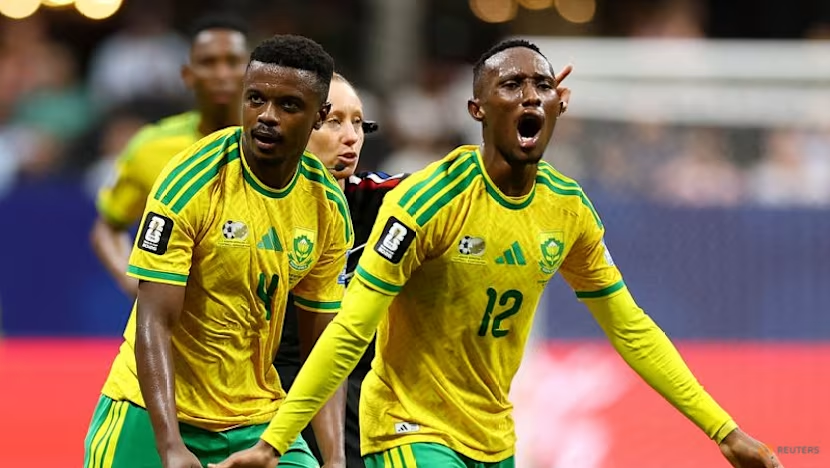
Bafana Bafana secured a landmark place in the FIFA World Cup Round of 32 after defeating South Korea 1-0 in Monterrey, becoming the first South African team to reach the knockout stage since the country hosted the tournament in 2010.
MONTERREY, Mexico — South Africa produced one of the biggest moments in the country’s football history on Wednesday after defeating South Korea 1-0 to qualify for the FIFA World Cup knockout stage for the first time.
Thapelo Maseko’s decisive second-half goal secured Bafana Bafana’s place in the Round of 32, capping an impressive recovery after the team’s opening defeat to Mexico and ensuring South Africa finished second in Group A behind the tournament hosts.
The victory represents South Africa’s best-ever performance at a FIFA World Cup. Although the nation hosted the tournament in 2010, it failed to progress beyond the group stage. This time, Hugo Broos’ side has rewritten that history.
South Africa will now face Canada in Los Angeles in the Round of 32 after completing one of the tournament’s most remarkable turnarounds.
Maseko delivers historic winner
For much of the match, South Africa remained disciplined without dominating possession. South Korea created several early opportunities, but goalkeeper Ronwen Williams and the South African defence remained organised under sustained pressure.
The breakthrough came in the 63rd minute.
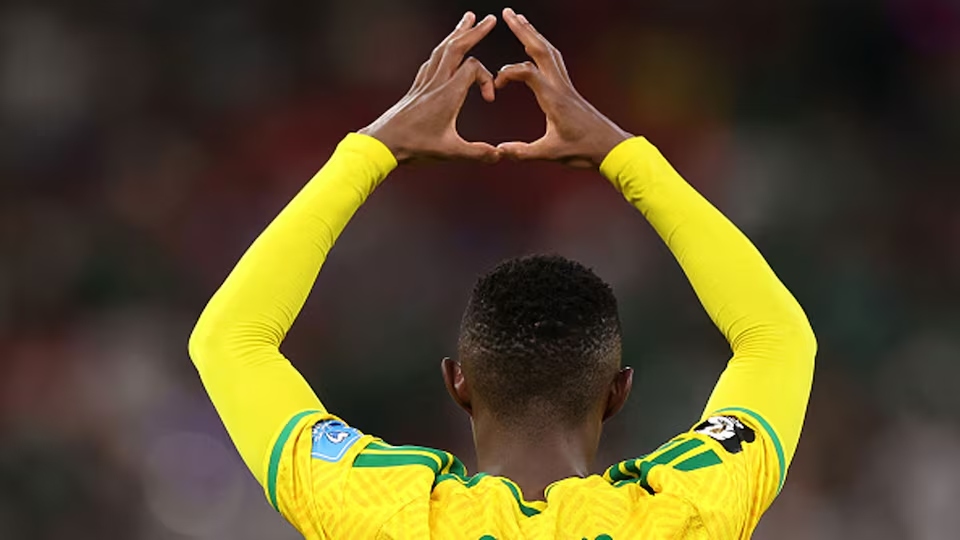
Receiving a cross from Tshepang Moremi, Thapelo Maseko controlled the ball inside the penalty area before calmly finishing beyond the South Korean goalkeeper to send thousands of travelling South African supporters into celebration.
South Korea pushed forward during the closing stages but struggled to create clear-cut chances as South Africa defended resolutely to preserve the narrow advantage until the final whistle.
A remarkable turnaround
The result completed a dramatic turnaround for a team that many observers had written off after losing their opening match against Mexico.
A valuable draw against the Czech Republic kept qualification hopes alive before victory over South Korea secured second place in Group A.
Coach Hugo Broos has consistently emphasised organisation, defensive discipline and teamwork throughout the campaign. Those qualities again proved decisive as South Africa frustrated technically gifted opponents before capitalising on one of their clearest attacking opportunities.
The victory also highlighted the growing maturity of a squad blending experienced international players with younger talent emerging from South Africa’s domestic league.
Why this matters for African football
South Africa’s qualification is significant beyond national pride.
African teams have increasingly demonstrated their ability to compete with traditional football powers, particularly since Morocco’s historic run to the 2022 World Cup semi-finals.
Bafana Bafana’s progress continues that momentum, reinforcing the growing competitiveness of African football on the global stage.
The achievement also provides renewed confidence for nations investing heavily in youth development, coaching and domestic competitions.
With an expanded FIFA World Cup offering more opportunities for African nations, South Africa’s success illustrates how tactical organisation and long-term planning can translate into results against higher-ranked opposition.
Canada’s next challenge
South Africa’s reward is a Round of 32 meeting with co-hosts Canada.
The Canadians will enter the tie with home support and attacking quality, but South Africa have already demonstrated resilience throughout the group stage.
If Bafana Bafana can reproduce the defensive discipline and clinical finishing shown against South Korea, they could become one of the tournament’s surprise packages.
Whatever the outcome, qualification for the knockout rounds already represents one of the defining achievements in South African football history.
What it means for Africa
For African supporters, South Africa’s qualification ensures another continental representative remains in contention as the tournament enters its knockout phase.
The victory reflects broader progress across African football, where investment in coaching, player development and tactical preparation is narrowing the gap with established football nations.
As the World Cup moves into its decisive stages, South Africa now carries not only national expectations but also the hopes of many supporters across the continent eager to see African teams continue making history on football’s biggest stage.

Related posts:
 Omar Artan Handed UEFA Super Cup Final After World Cup Exclusion
  Mexico Beat South Africa 2-0 in World Cup Opener Marked by Three Red Cards
  Amad Diallo’s Late Winner Gives Ivory Coast Crucial World Cup Victory
  Thomas Partey to Miss Ghana’s World Cup Opener After Canada Rejects Visa Appeal
  Morocco Move Closer to Knockouts After Fastest Goal of World Cup 2026