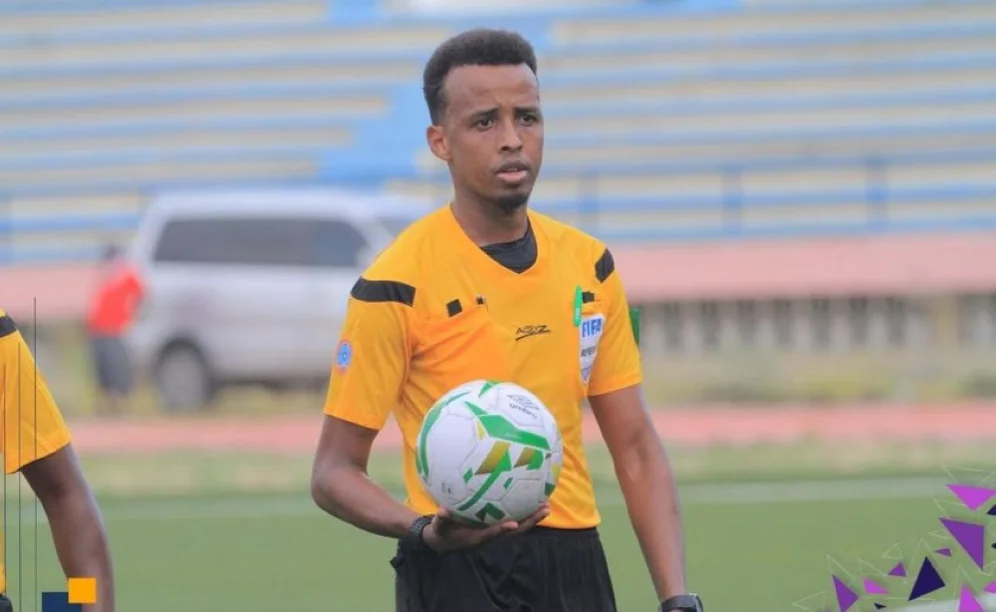
Omar Artan Handed UEFA Super Cup Final After World Cup Exclusion
Weeks after missing the FIFA World Cup, Somali referee Omar Artan has been appointed to officiate the UEFA Super Cup in a major boost for African football.


Follow Nukunya
Get the latest breaking news and updates from Nukunya.
Weeks after being denied entry to the United States and losing his place at the 2026 FIFA World Cup, Somali referee Omar Artan has been appointed to officiate the UEFA Super Cup between Paris Saint-Germain and Aston Villa. The decision has transformed a story of disappointment into one of resilience and recognition, while highlighting the growing influence of African officials on football’s biggest stages.
SALZBURG, Austria – Somali referee Omar Abdulkadir Artan has been appointed to officiate the 2026 UEFA Super Cup, marking a remarkable turnaround for an official who only weeks ago saw his World Cup dream abruptly end. European football governing body UEFA announced that Artan will take charge of the Super Cup clash between UEFA Champions League winners Paris Saint-Germain and UEFA Europa League champions Aston Villa in Salzburg, Austria, on 12 August.
The appointment comes shortly after Artan was denied entry to the United States and removed from FIFA’s officiating roster for the 2026 FIFA World Cup, a decision that sparked debate across football and diplomatic circles. For Artan, the UEFA appointment offers an opportunity to return to the international spotlight. For African football, it represents another milestone in the continent’s growing influence within the global game.
From World Cup Heartbreak to European Showpiece
Artan had been selected among FIFA’s officials for the 2026 World Cup and was set to become the first Somali referee to officiate at football’s biggest tournament. His selection was celebrated across Somalia and among Somali diaspora communities around the world as a landmark achievement for a nation rarely represented on football’s grandest stage.
That opportunity disappeared when US authorities denied him entry upon arrival in Miami, where FIFA had established its training base for referees ahead of the tournament. US officials later said Artan had been deemed inadmissible because of alleged associations with individuals suspected of links to terrorist organisations. No public evidence supporting those allegations has been released. Artan has strongly denied any wrongdoing.
“I had the right papers and everything. I had the right visa,” Artan said after returning to Somalia. FIFA subsequently confirmed that he would be unable to train or officiate at the World Cup because immigration decisions remain the responsibility of host-country authorities. The governing body has not publicly commented on UEFA’s subsequent decision to appoint Artan to the Super Cup.
Why Omar Artan Matters
The significance of Artan’s appointment extends beyond a single match. The 34-year-old has emerged as one of Africa’s most respected officials over the past decade. After becoming a FIFA-listed referee in 2018, he steadily rose through the ranks of continental football, officiating major Confederation of African Football (CAF) competitions and international fixtures.
In 2025, he was named CAF Men’s Referee of the Year, cementing his reputation as one of the continent’s elite officials. His World Cup selection was therefore not symbolic alone; it reflected recognition earned through years of performances at the highest level. UEFA President Aleksander Ceferin described Artan as “an excellent young but already experienced referee” who had demonstrated his quality in CAF competitions.
UEFA and CAF Send a Message
UEFA said the appointment was made in cooperation with CAF as part of wider efforts to strengthen ties between the two confederations. CAF President Patrice Motsepe welcomed the decision, saying Artan’s appointment should make Somalia and the entire African continent proud.
“He has made Somalia and the entire people of the African continent extremely proud,” Motsepe said.
While UEFA has framed the decision as part of its partnership with CAF, the timing has inevitably attracted attention. The appointment comes only weeks after Artan’s exclusion from the World Cup and has been widely viewed as a vote of confidence in both the referee and African officiating standards more broadly. BBC Sport noted that many observers would find it difficult to separate the timing of the appointment from the circumstances surrounding his World Cup absence.
Whether intended as a statement or not, the outcome is clear: one of Africa’s leading officials will still officiate one of football’s most prestigious fixtures this year.
A Bigger Story About Mobility and Opportunity
Artan’s experience has also resonated beyond football. For many Africans and members of the diaspora, the story touches on wider issues of international mobility, visa access and the challenges professionals from some countries face when travelling globally.
His exclusion from the World Cup prompted discussions about whether sporting merit alone is enough in an era where border controls, security policies and geopolitical considerations can affect participation in international events. The UEFA appointment does not erase those questions, but it does provide a different ending to a story that many feared would be defined solely by disappointment.
Why This Matters for Africa
For African football, Artan’s appointment represents more than personal redemption. African referees, coaches and administrators have historically received less visibility than their European and South American counterparts despite the continent’s growing influence within the game.
Artan’s journey—from domestic football in Somalia to the verge of a World Cup and now a major European final—demonstrates that African officials can compete at the highest levels of international football. At a time when African football is seeking greater representation in decision-making, governance and elite competitions, the appointment also sends a powerful signal about the quality of officiating talent emerging from the continent.
What Happens Next?
When Paris Saint-Germain and Aston Villa meet in Salzburg next month, much of the attention will naturally focus on the players and the trophy. Yet for many football fans across Africa, another story will be unfolding.
Just weeks after missing the World Cup, Omar Artan will walk onto the pitch for one of European football’s showcase events.
For Somalia, it is a moment of pride.
For African football, it is recognition.
And for Artan himself, it is an opportunity to ensure that his achievements—not the controversy surrounding his World Cup exclusion—become the defining chapter of his career.
Related posts:
 Somali Referee Omar Artan Denied Entry to United States Days Before 2026 World Cup
  The Senegal Model: How Africa’s Most Consistent Football Nation Became a World Cup Contender
  DR Congo World Cup Preparations Disrupted by Ebola Fears
  FIFA World Cup 2026 Visa Dispute Raises Questions Over Access, Fairness and the Future of Global Football
  Portugal Edge Nigeria 2-1 as Conceição’s Wonder Goal Ends Super Eagles’ Resistance