DR Congo World Cup Preparations Disrupted by Ebola Fears


Follow Nukunya
Get the latest breaking news and updates from Nukunya.
DR Congo’s preparations for the 2026 FIFA World Cup have suffered a setback after Spanish authorities cancelled a planned friendly against Chile over concerns linked to an Ebola outbreak in the central African nation. The decision highlights how public health crises can affect African teams far beyond the football pitch.
KINSHASA, Democratic Republic of Congo — DR Congo’s preparations for the 2026 FIFA World Cup have been disrupted after Spanish authorities cancelled a planned friendly against Chile over health concerns linked to an Ebola outbreak in the country. The decision has added an unexpected challenge to the African nation’s build-up to its first World Cup appearance in more than half a century.
The match, scheduled for 9 June in the southern Spanish city of La Linea de la Concepcion, was cancelled after local health authorities advised against hosting the fixture. Mayor Juan Franco subsequently signed a decree preventing the game from taking place, describing the move as a precautionary measure.
The cancellation comes despite the Congolese squad already relocating preparations away from the outbreak area. The team cancelled a planned training camp in Kinshasa and instead established its pre-tournament base in Belgium. Reports indicate the players themselves have not recently travelled to the affected region.
Congolese football officials have maintained that the national team is complying with all health and travel requirements imposed by tournament organisers and host countries. The federation has continued preparations while monitoring developments surrounding the outbreak.
For head coach Sebastien Desabre, the cancellation removes one of the team’s final opportunities to test tactics and player combinations before the tournament begins. With less than two weeks remaining before DR Congo’s opening match, adjustments to the preparation schedule may now be required.
A Historic World Cup Return
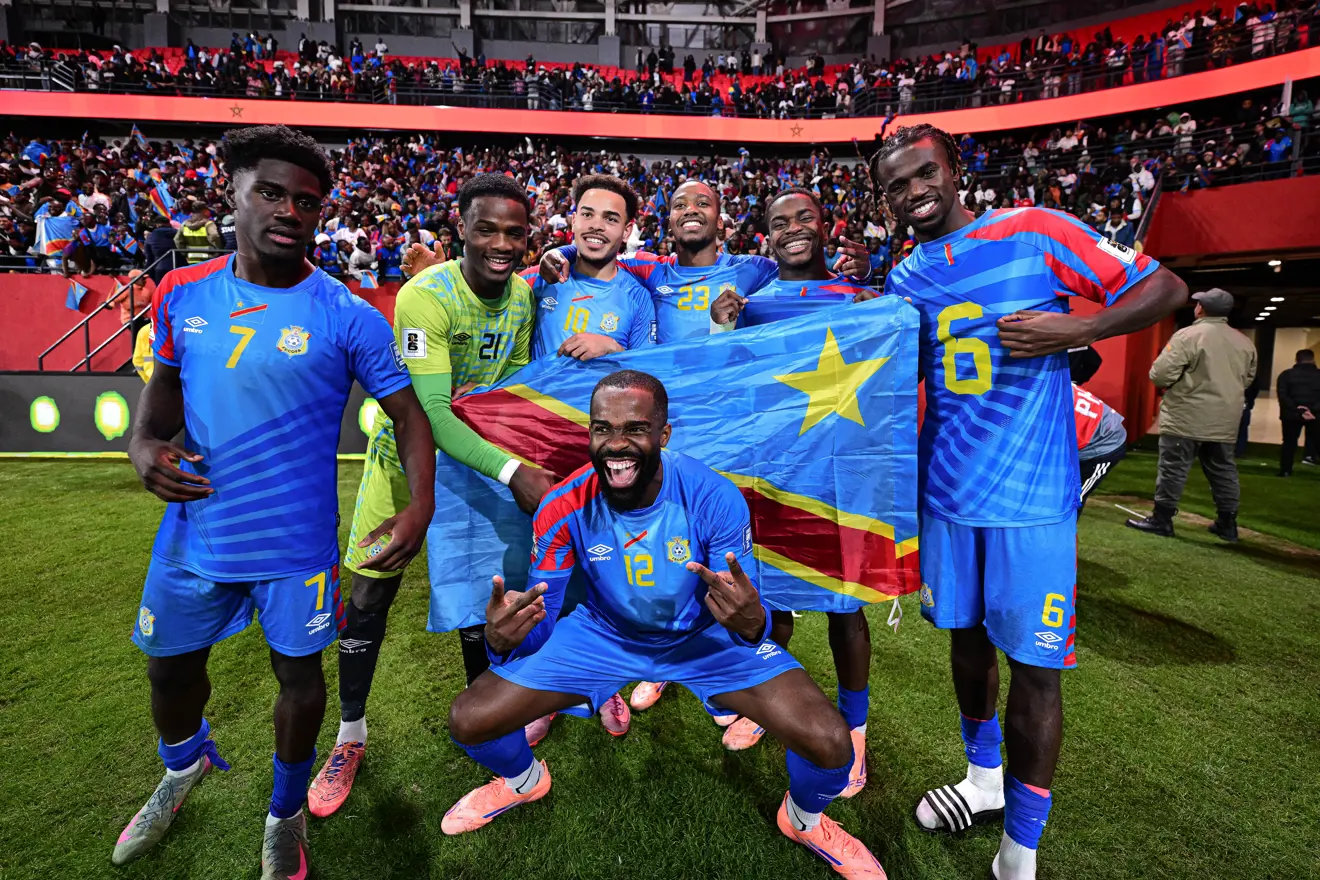
The setback comes at a significant moment in Congolese football history. Qualification for the 2026 FIFA World Cup represents DR Congo’s first appearance at football’s biggest tournament since 1974, when the country competed under the name Zaire. For many supporters, qualification ended a 52-year wait and marked one of the most important achievements in the nation’s sporting history.
The 2026 tournament, to be hosted by the United States, Canada and Mexico, will also be the largest FIFA World Cup ever staged, featuring 48 teams. For DR Congo, participation offers an opportunity to showcase both its footballing progress and a new generation of talent on the global stage. Thousands of supporters had viewed the Chile friendly as an important indicator of the team’s readiness before the tournament. Instead, attention has shifted from football to public health concerns.
Ebola Outbreak Shapes Preparations
The outbreak at the centre of the controversy was declared in eastern DR Congo in May and involves the Bundibugyo strain of Ebola. Health authorities have noted that there is currently no approved vaccine specifically for this strain.
The outbreak has already affected sporting preparations. The national team’s decision to move its training activities to Belgium was taken partly to minimise disruption and reassure international partners ahead of the World Cup.
Despite these measures, concerns among health officials in Spain led to the cancellation of the Chile match. The decision has generated debate among football supporters and observers, some of whom argue that precautions are necessary while others worry that African teams can face additional scrutiny during health emergencies.
World Cup Plans Continue
Despite the setback, DR Congo’s World Cup plans remain on track. The team is scheduled to face Denmark in a friendly in Liege as preparations continue in Belgium. The squad intends to travel to Houston, Texas, where it will be based during the tournament.
DR Congo are due to open their Group K campaign against Portugal on 17 June before further matches against Colombia and Uzbekistan. Reports also indicate that US authorities have introduced additional entry requirements linked to the Ebola outbreak, requiring certain travellers from affected countries to observe health-related restrictions before entering the United States.
What This Means for African Football
The cancellation highlights a reality that extends beyond DR Congo. Public health emergencies can influence far more than healthcare systems. They can affect travel, international sport, tourism, business activity and diplomatic engagement. For African teams preparing for major global competitions, success depends not only on talent, tactics and preparation but also on navigating external challenges that can emerge far from the football pitch.
The episode also illustrates how disease outbreaks can shape international perceptions of entire countries, even when athletes themselves are not directly connected to affected areas.
What Happens Next?
DR Congo’s immediate focus remains on completing preparations for their long-awaited World Cup return. Coach Sebastien Desabre and his staff will continue training in Belgium while fine-tuning plans for the team’s opening match against Portugal. The Denmark friendly is expected to provide a crucial opportunity to assess readiness before the tournament begins.
For now, the cancellation of the Chile match represents an unwelcome distraction rather than a derailment of DR Congo’s World Cup ambitions. Yet the episode serves as a reminder that for African nations on the global stage, the road to the World Cup can be shaped by events far beyond football itself.
Related posts:
 DR Congo seek FIFA ticket refunds after Ebola outbreak threatens World Cup travel
  Tottenham’s Mohammed Kudus ruled out of 2026 World Cup with injury
  Mexico’s Missing Persons Crisis Cast Into World Cup Spotlight as Activists Demand Action
  Ghana Coach Queiroz Stands By Partey’s Inclusion Ahead of World Cup
  Asamoah Gyan: Antoine Semenyo Is the Face of Ghana Football Now