Sudan War Crimes Investigation Reaches New Stage as ICC Says Evidence Mounts in Darfur


Follow Nukunya
Get the latest breaking news and updates from Nukunya.
The International Criminal Court (ICC) has announced that its investigation into alleged war crimes and crimes against humanity in Sudan’s Darfur region has entered a significant new phase, with prosecutors saying they have gathered substantial evidence relating to atrocities committed during the country’s ongoing conflict.
The development comes as Sudan’s civil war continues to devastate communities across the country, creating what the United Nations describes as one of the world’s worst humanitarian crises.
ICC Says Investigations Are Progressing
Speaking during a briefing to the United Nations Security Council, ICC Prosecutor Karim Khan said investigators have collected extensive witness testimony, digital evidence and other material relating to alleged crimes committed in Darfur.
While the prosecutor did not announce new arrest warrants, he indicated that investigators were making meaningful progress despite difficult operating conditions.
The ICC is examining allegations that include:
- Deliberate attacks against civilians
- Murder and mass killings
- Sexual violence
- Forced displacement
- Persecution based on ethnicity
- Destruction of villages
- Looting of humanitarian supplies
Investigators continue to work with international partners and regional organisations to gather evidence while ensuring the protection of witnesses.
Conflict Continues Across Sudan
Sudan has remained engulfed in conflict since April 2023 after fighting erupted between the Sudanese Armed Forces (SAF), led by General Abdel Fattah al-Burhan, and the Rapid Support Forces (RSF), commanded by Mohamed Hamdan Dagalo, widely known as Hemedti.
The conflict has spread across much of the country, with Darfur once again becoming a focal point for intense violence.
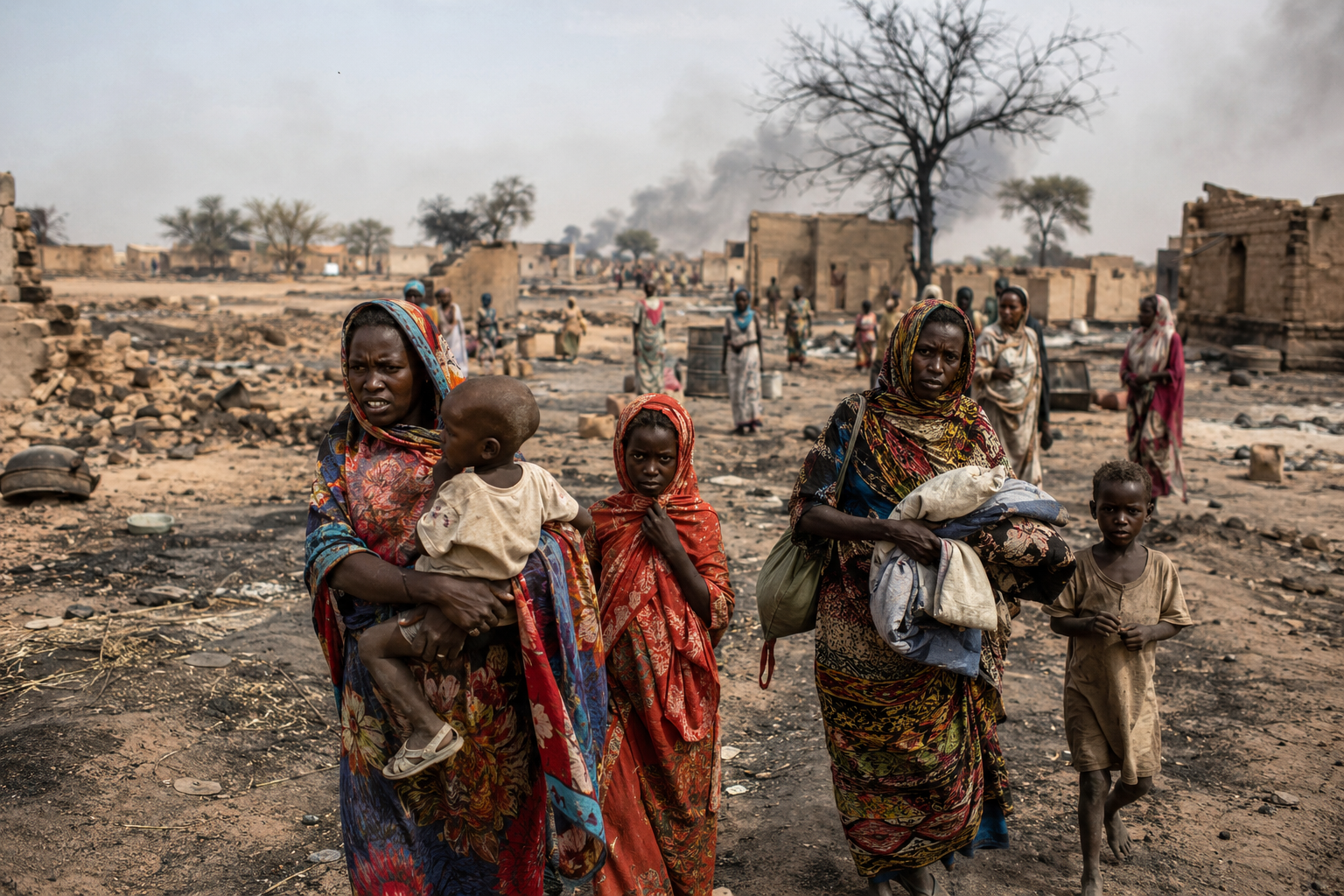
Entire communities have reportedly been displaced as towns and villages experience repeated attacks, while humanitarian organisations warn that civilians remain trapped between the warring parties.
Darfur Faces Renewed Atrocities
Darfur has a long history of violence dating back more than two decades.
The region became synonymous with allegations of genocide and ethnic cleansing during the conflict that began in 2003, leading to previous ICC investigations and arrest warrants against former Sudanese President Omar al-Bashir and several senior officials.
Human rights organisations now fear many of the same patterns of violence are re-emerging.
Reports from aid agencies describe widespread attacks on civilians, destruction of homes, sexual violence against women and girls, and targeted attacks based on ethnic identity.
The ICC says these allegations form an important part of its current investigation.
Humanitarian Crisis Deepens
Beyond the violence itself, Sudan faces an escalating humanitarian emergency.
Millions of people have been forced to flee their homes, with many seeking refuge in neighbouring Chad, South Sudan, Egypt and the Central African Republic.
According to the United Nations:
- More than 12 million people have been displaced.
- Millions face severe food insecurity.
- Healthcare facilities have been damaged or destroyed.
- Humanitarian access remains heavily restricted in several regions.
Aid agencies continue to warn that famine conditions could worsen if fighting prevents food deliveries.
Calls for Accountability
International human rights groups have welcomed the ICC’s continued work, arguing that accountability is essential to preventing further atrocities.
Legal experts note that documenting evidence during an active conflict is particularly challenging, making the collection of reliable testimony and forensic material especially important.
The ICC has urged all parties to cooperate with investigators and allow safe access to affected communities.
Challenges Remain
Despite progress, bringing suspects before the court remains difficult.
The ICC does not have its own police force and relies on states to execute arrest warrants.
Previous warrants relating to Darfur have remained outstanding for years, highlighting the challenges of international justice during ongoing conflicts.
Political instability and continued fighting may further complicate efforts to secure arrests and protect witnesses.
International Response
The United Nations, African Union and numerous governments have repeatedly called for an immediate ceasefire and unrestricted humanitarian access.
Diplomatic efforts continue to seek a negotiated settlement, although repeated attempts at mediation have so far failed to produce a lasting peace.
Observers say achieving accountability alongside humanitarian assistance will be essential for Sudan’s long-term recovery.
Why the ICC Investigation Matters
The latest developments signal that international investigators remain committed to documenting alleged crimes despite the conflict.
For survivors and victims’ families, the investigation represents an important step towards justice, even if prosecutions may take years to complete.
As fighting continues, the international community faces growing pressure to protect civilians while supporting efforts to hold those responsible for alleged atrocities accountable under international law.
Related posts:
 Ghana Pushes Border Cooperation as Sahel Insecurity Raises Regional Security Risks
  First group of Ghanaians repatriated from South Africa after migrant protests
  Community Police Assistant shot in Central Region as police launch manhunt
  China and African railway experts deepen cooperation through Qinghai–Xizang exchange
  Strait of Hormuz Crisis Deepens as Iran Declares Closure, Raising Fears Over Global Oil Supplies