
The Ghana Armed Forces recruitment portal opens September 4: What applicants should know
The Ghana Armed Forces will open its 2026 Military Enlistment Exercise portal on September 4. Here are the confirmed requirements, official application route and fraud warnings applicants should know

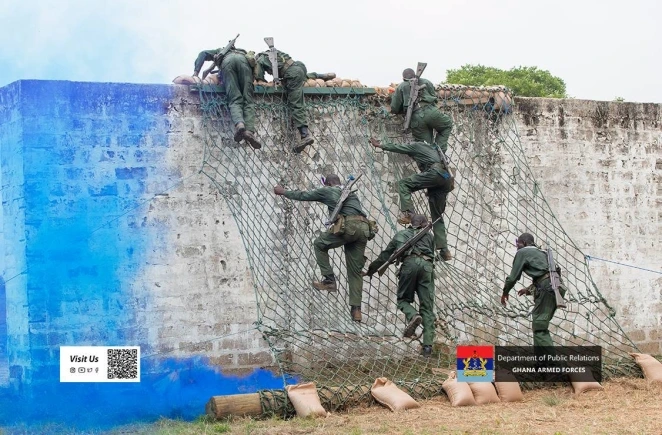

The Ghana Armed Forces will open its 2026 Military Enlistment Exercise portal on Friday, 4 September. Separate entry requirements have also been published for the 2026/2027 Ghana Military Academy intake, and applicants should check carefully which route applies to them.
ACCRA, Ghana – The Ghana Armed Forces will open its online recruitment portal for the 2026 Military Enlistment Exercise on Friday, 4 September, giving eligible Ghanaians an opportunity to apply to join the military. The Armed Forces has also published entry requirements for the 2026/2027 Ghana Military Academy intake, covering areas including age, height, academic qualifications, medical fitness and specialist degree requirements.
But applicants should not assume the two notices refer to exactly the same recruitment route.
The available notice does not clearly establish whether the Ghana Military Academy intake forms part of the September 4 Military Enlistment Exercise or whether they are separate streams. That distinction matters because requirements for cadets, officer candidates and other military recruits may differ.
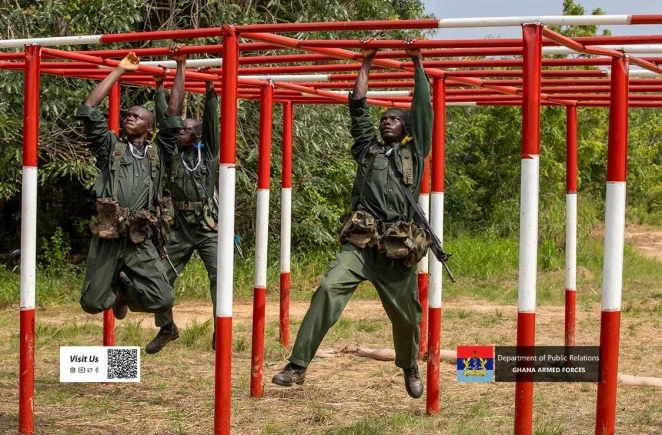

When does the GAF recruitment portal open?
The 2026 Military Enlistment Exercise portal is scheduled to open on:
Friday, 4 September 2026.
The official Ghana Armed Forces website currently carries a JOIN GAF section directing prospective applicants towards its careers pathway.
Applicants should use official GAF channels rather than links forwarded through social media, WhatsApp groups or unofficial websites.
What are the Ghana Military Academy requirements?
For the 2026/2027 Ghana Military Academy intake, applicants for the Regular Cadet course must be Ghanaian citizens of good character, medically fit to GAF standards and capable of passing the Pre-Joining Fitness Test.
They must also be unmarried and not bonded.
Applicants must be between 18 and 26 years old by 18 February 2027.
These requirements relate specifically to the Academy notice.
They should not automatically be treated as universal requirements for every category in the September 4 enlistment exercise unless GAF confirms that.
What are the height requirements?
The published Military Academy requirements give the following minimum heights:
Applicants should use the requirements for the specific branch or route they are applying to.
What academic qualifications are required?
The published Academy notice includes several qualification routes.
For BECE, applicants require six credits, Grades 1 to 6, including English, Mathematics and Science.
For WASSCE, applicants need six credits between A1 and C6, including Core English, Core Mathematics and Core Science.
For SSSCE, six credits between A and D are required in the relevant subjects.
The notice also includes a City and Guilds route.
Applicants should verify the exact academic requirement for their intended branch before submitting an application.
Degree holders can apply for specialist officer streams
The notice also covers applicants seeking admission under the Regular Career Officer Course.
Applicants generally require a first degree of at least Second Class Lower from an accredited institution in a discipline relevant to the chosen specialisation.
The advertised areas include traditional military streams such as infantry, armour, artillery and engineering, alongside newer technical fields including:
That range reflects how modern military recruitment increasingly extends beyond combat roles into technology, communications, logistics and specialist professional services.
Are foreign languages an advantage?
Yes.
The Academy notice says proficiency in languages including French, Spanish, Chinese, Arabic, German or Swahili is an added advantage.
It should not be interpreted as a compulsory requirement unless stated for a particular role.
What applicants should prepare before September 4
Applicants can use the days before the portal opens to check whether they meet the basic conditions for their intended route.
age
height
academic results
degree or specialist qualification
citizenship details
medical and fitness requirements
consistency of names and dates of birth across official documents
Where the process involves later document screening, mismatched names or dates can create avoidable problems.
The Ghana Armed Forces has used structured screening and selection stages in previous recruitment exercises, so applicants should expect their submitted information to be checked.
Be alert to recruitment fraud
This is one of the most important safeguards.
Military recruitment exercises often attract fraudsters who claim they can secure places in exchange for money.
Applicants should not pay an individual who claims to have a personal connection capable of guaranteeing recruitment.
They should also avoid unofficial websites requesting payment, passwords, PINs or verification codes.
The safest approach is to begin from the official Ghana Armed Forces website and follow the recruitment pathway provided there.
Visit official GAF website →What Nukunya can confirm so far
As of 1 September, the following points are confirmed:
The 2026 Military Enlistment Exercise portal is due to open on Friday, 4 September.
The Ghana Armed Forces official website is active and carries a recruitment pathway under JOIN GAF.
Separate requirements have been published for the 2026/2027 Ghana Military Academy intake.
What remains unclear is whether all of those Academy requirements apply directly to the September 4 Military Enlistment Exercise.
That uncertainty should stay visible until GAF clarifies the relationship between the two streams.
The safest application starts with the right recruitment route
The biggest risk for applicants may not be failing to meet a requirement.
It may be using the wrong set of requirements altogether.
The September 4 enlistment announcement and the Ghana Military Academy intake have been reported together, but they should not automatically be treated as identical recruitment pathways.
That is why applicants should first identify whether they are applying as a recruit, cadet, officer candidate or specialist.
Only then should they apply the relevant age, height, academic and professional requirements.
The second risk is fraud.
Periods of high-interest public recruitment often create opportunities for unofficial agents and fake application links.
For that reason, the most reliable rule is simple:
That is more useful than treating every requirement circulating online as universally applicable.
Related posts:
 Accra Building Collapse: At Least Two Feared Trapped as Rescue Efforts Continue.
  Interior Ministry urges Ghanaians to stay where they are as floods disrupt Accra
  Military Vehicle Crashes into STC Bus at Nkenkesu: 5 Latest Updates on Bawku Deployment
  Democracy Cup Trophy Tour Reaches Chief of Defence Staff
  Power outages expected in Accra, Volta and Ashanti during ECG maintenance