
Train Driver Killed, 89 Injured After Passenger Trains Collide Near Bedford

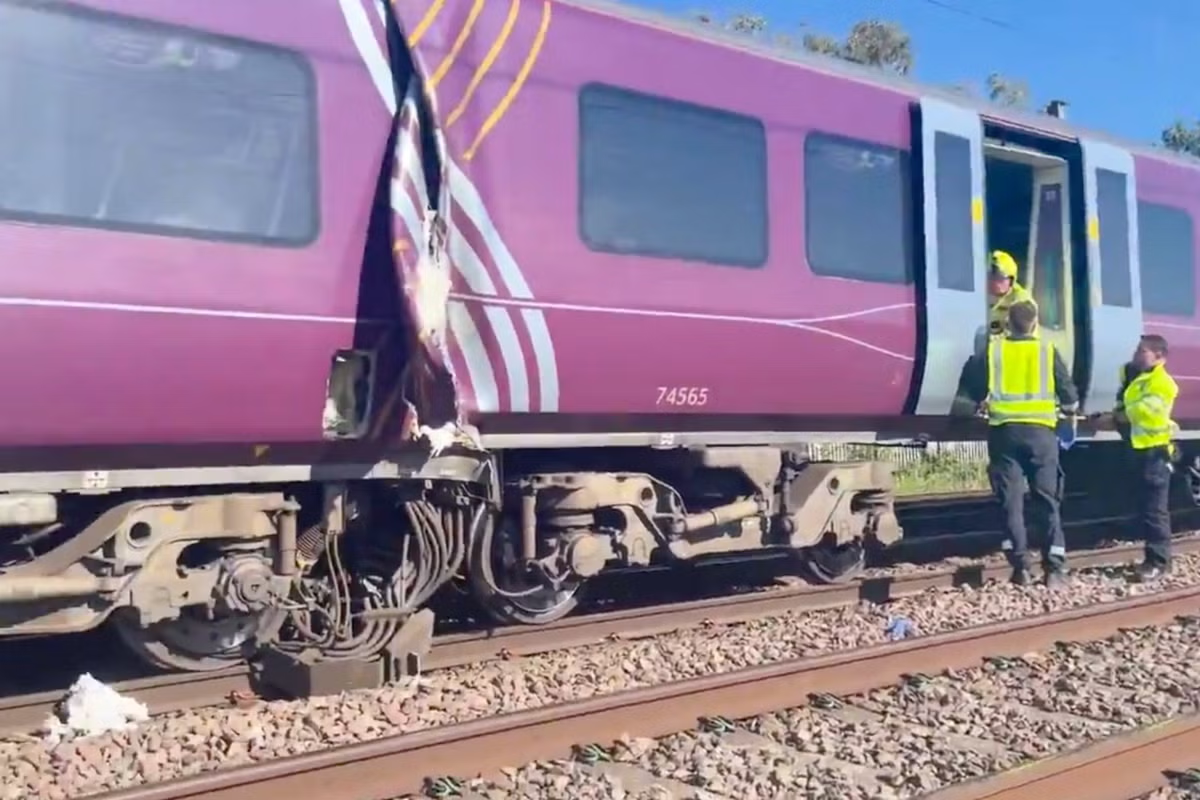

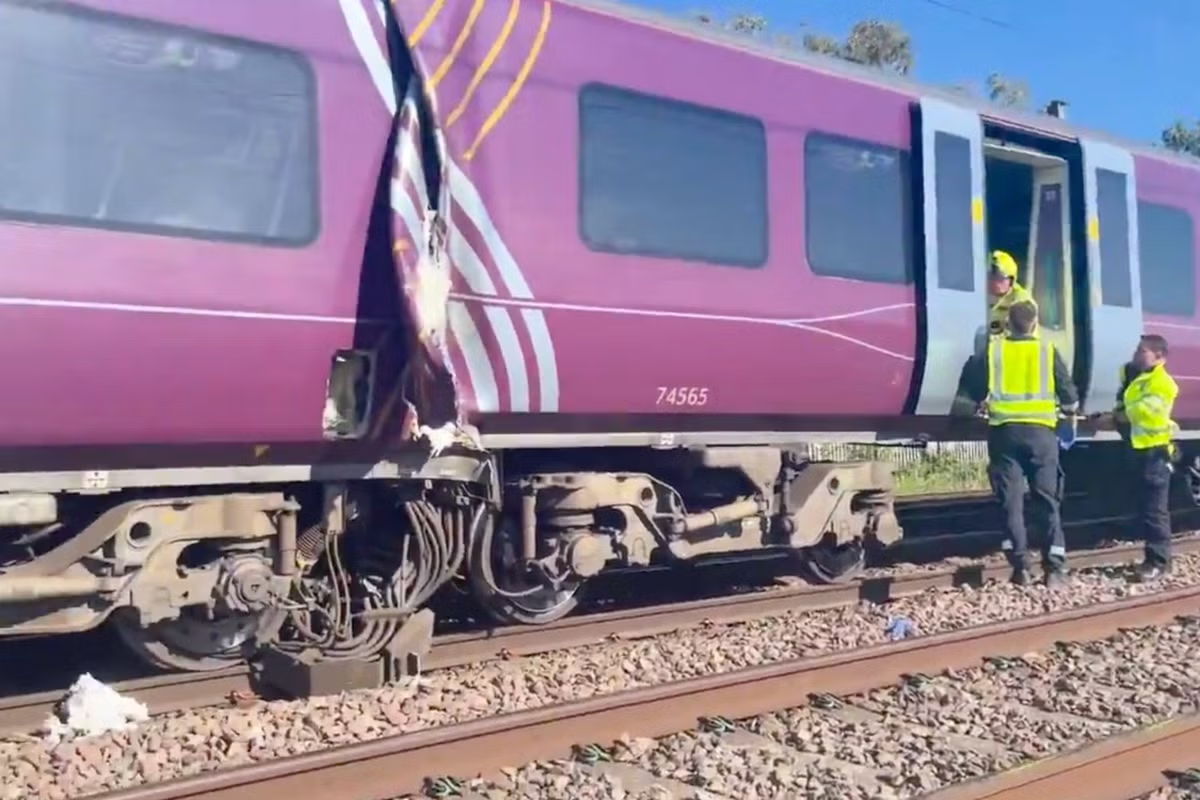
A train driver was killed and 89 people injured after two East Midlands Railway services collided south of Bedford, prompting a major investigation into one of Britain’s most serious rail accidents in recent years.
BEDFORD, England — A train driver was killed and 89 people injured after two East Midlands Railway passenger trains collided south of Bedford on Friday, prompting a major investigation into one of Britain’s most serious rail accidents in recent years.
British Transport Police said officers were called to the collision near Elstow, on the southern outskirts of Bedford, shortly after 5:15pm. The crash involved two East Midlands Railway services travelling towards London St Pancras on the Midland Main Line. Authorities confirmed that one train driver died at the scene. His family has been informed, and specialist officers are providing support.
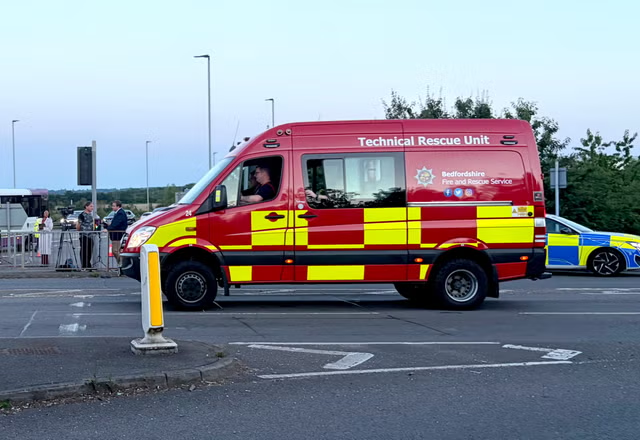
The East of England Ambulance Service said 89 people were injured. Eleven suffered very serious injuries, 22 sustained serious injuries, and a further 56 were treated for minor injuries. Emergency crews, including ambulance teams, firefighters, police officers and rail specialists, remained at the site overnight as investigators began examining the circumstances surrounding the collision.
What We Know So Far
- One train driver died.
- Eighty-nine people were injured.
- Eleven people suffered very serious injuries.
- The crash occurred near Elstow, south of Bedford.
- Two East Midlands Railway services were involved.
- The cause of the collision remains unknown.
- A formal rail safety investigation is under way.
Services Involved
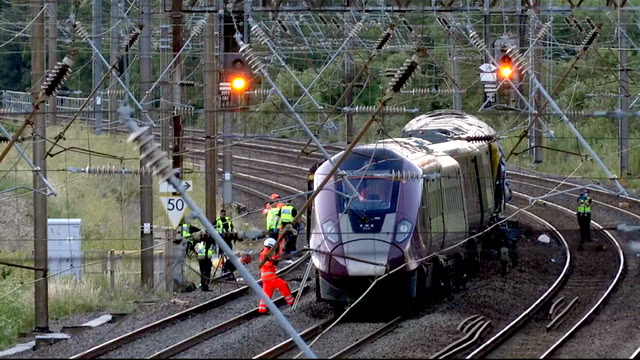
East Midlands Railway said the trains involved were the 4:40pm service from Corby to London St Pancras and the 3:50pm service from Nottingham to London St Pancras. Images from the scene showed significant damage to at least one carriage, while aerial footage indicated that sections of the train left the tracks following the impact.
The collision occurred on the Midland Main Line, one of Britain’s busiest rail corridors linking London with the East Midlands and northern England.
Witnesses Describe Scene
Passengers described confusion and panic immediately after the collision. Peter Knapp, who was travelling on one of the trains, told British media that he was thrown forward in his seat by the force of the impact.
Other passengers reported hearing loud bangs before seeing injured travellers and damaged carriages. Emergency services evacuated passengers while paramedics assessed injuries and transported casualties to nearby hospitals.
Investigation Under Way
British Transport Police said officers were working alongside Network Rail, East Midlands Railway, Bedfordshire Police, fire and rescue services and rail safety specialists to establish what happened.
Investigators are expected to examine:
- Onboard data recorders.
- Signalling systems.
- Maintenance records.
- Driver communications.
- Operational procedures.
- Witness statements.
Authorities have not yet indicated how long the investigation could take.
The Rail Accident Investigation Branch (RAIB) is expected to play a central role in determining the sequence of events that led to the crash. The organisation investigates major rail incidents to improve safety and identify lessons for the industry rather than assign criminal blame.
Government and Union Response
Prime Minister Sir Keir Starmer described reports of the collision as “hugely concerning” and thanked emergency services for their response. Transport Secretary Heidi Alexander said it was too early to speculate about the cause and pledged a full investigation. Rail unions also paid tribute to the driver.
The National Union of Rail, Maritime and Transport Workers (RMT) said it was devastated by the loss of a member of the railway community, while train drivers’ union ASLEF expressed condolences to the driver’s family, friends and colleagues.
Rail Safety Under Scrutiny
Britain’s rail network carries hundreds of millions of passenger journeys each year and is widely regarded as one of the safest in Europe. Fatal train collisions are relatively rare, making the Bedford incident particularly significant.
Transport experts say investigators will seek to determine whether signalling issues, operational factors, equipment failures or other circumstances contributed to the crash. The findings are likely to be closely examined across the rail industry because of their potential implications for safety standards and operational procedures nationwide.
Why This Matters Beyond Britain
The collision has relevance beyond the United Kingdom. Several African countries, including Ghana, Kenya, Nigeria and Tanzania, are investing heavily in rail infrastructure as part of broader transport modernisation programmes. Rail specialists frequently point to mature rail systems such as Britain’s as examples of how safety oversight, signalling technology, maintenance regimes and operational procedures must evolve alongside infrastructure investment. The Bedford collision serves as a reminder that even advanced rail networks require constant monitoring and continuous safety improvements.
What Happens Next
Investigators will now focus on reconstructing the events leading up to the collision. Specialists are expected to analyse technical data from both trains, inspect infrastructure at the site and interview witnesses. Officials have urged the public to avoid speculation while evidence is gathered. The investigation’s findings are expected to shape future safety recommendations for Britain’s rail network and may influence rail safety discussions internationally.
Related posts:
 DR Congo Ebola outbreak grows as Oxford scientists fast-track vaccine
  Teacher Injured Protecting Pupils After School Stabbing as Manchester Schoolgirl Arrested
  Belfast Violence Spreads After Knife Attack as Homes Burn and Bus Set Ablaze
  Russian Warship Fires Warning Shots at British Yacht: The Admiral Grigorovich Incident Exp
  Andy Burnham’s By-Election Victory Fuels Questions Over Labour’s Future