
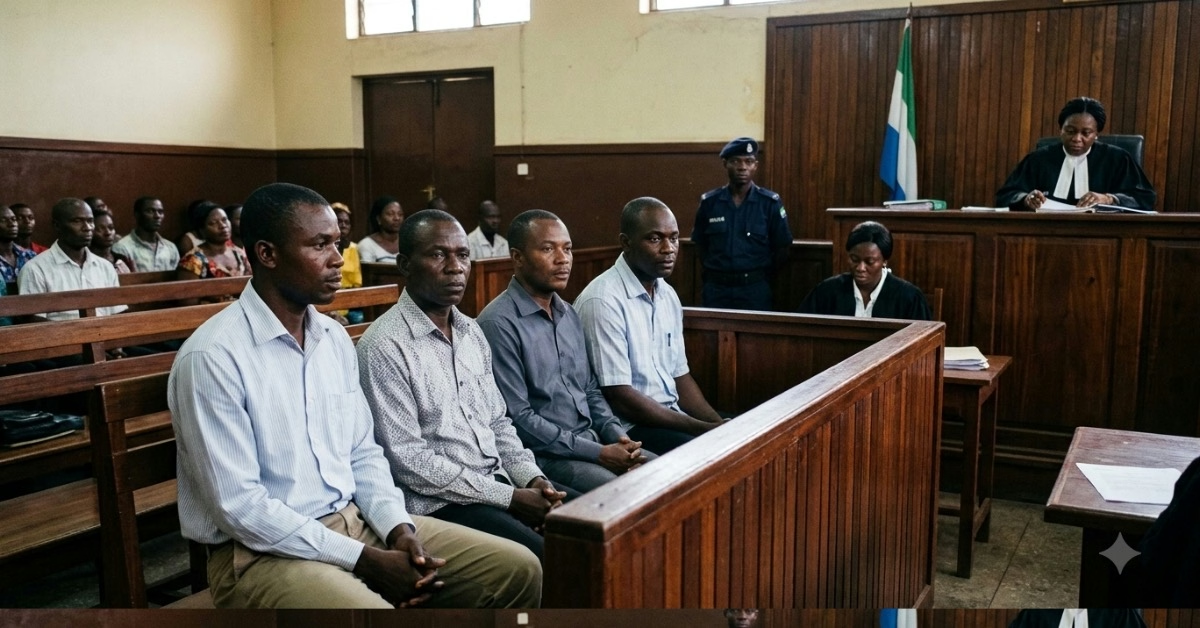
Four charged in Sierra Leone’s first child marriage prosecution under new law


Follow Nukunya
Get the latest breaking news and updates from Nukunya.
Four men have appeared before the High Court in Freetown after being charged under Sierra Leone’s Prohibition of Child Marriage Act, 2024, in what authorities say is the country’s first prosecution under the legislation. The case is being closely watched as an early test of the government’s strengthened legal framework to combat child marriage.
FREETOWN, Sierra Leone — Four men have appeared before the High Court in Freetown after being charged under Sierra Leone’s Prohibition of Child Marriage Act, 2024, in what authorities say is the country’s first prosecution since the legislation came into force two years ago.
The accused are facing charges relating to the alleged marriage of a 17-year-old girl. Prosecutors allege the offences include contracting marriage with a child, consenting to child marriage, and aiding and abetting child marriage under the 2024 law. The defendants have been charged but have not been convicted, and the allegations will be determined through the court process.
According to Sierra Leone’s Office of the Attorney-General and Minister of Justice, those charged are Sayo Marrah, Lansana Qura, Salieu Kamara and Abu Bakarr Kamara. Prosecutors allege Sayo Marrah contracted the marriage, while Salieu Kamara, identified as the girl’s father, consented to and participated in the ceremony. Lansana Qura and Abu Bakarr Kamara are accused of facilitating the union.
One of the defendants entered a plea that prosecutors subsequently treated as a plea of not guilty after he argued that he believed parental consent under customary practice permitted the marriage, according to court proceedings reported. The remaining defendants also deny wrongdoing, and the case is continuing before the High Court. If convicted, the defendants could face penalties provided under Sierra Leone’s child marriage legislation. The next court hearing has been scheduled for early July, according to court reports.
Landmark legal test
Attorney-General and Minister of Justice Alpha Sesay described the prosecution as a significant milestone in implementing the Prohibition of Child Marriage Act, 2024.
He said the legislation created a new legal framework by criminalising not only the contracting of child marriages but also consenting to, facilitating or participating in such unions. Before the Act came into force, aspects of customary law allowed parents to consent to the marriage of minors in certain circumstances, creating legal inconsistencies that have since been removed.
Authorities say the prosecution demonstrates the government’s commitment to enforcing the new law and strengthening protections for children.
Why the case matters
Child marriage remains a significant challenge in parts of Sierra Leone despite legal reforms. Human Rights Watch has reported that many girls are still married before reaching the age of 18, particularly in rural communities.
Campaigners have welcomed the prosecution, saying it signals that authorities are prepared to enforce legislation that was introduced to better protect children from forced and underage marriage. The case also follows a recent judgement by the ECOWAS Court of Justice concerning Sierra Leone’s obligations to prevent child marriage and protect girls from gender-based violence.
What changed under the 2024 law?
The Prohibition of Child Marriage Act, 2024:
- Sets 18 as the minimum legal age for marriage.
- Criminalises contracting a marriage with a child.
- Makes consenting to child marriage a criminal offence.
- Criminalises aiding, facilitating or participating in child marriages.
- Forms part of Sierra Leone’s wider child protection and gender equality reforms.
Key Facts
- Four men have been charged before the High Court in Freetown.
- Prosecutors say the case is the first under Sierra Leone’s Prohibition of Child Marriage Act, 2024.
- The allegations relate to the alleged marriage of a 17-year-old girl.
- The defendants have been charged but have not been convicted.
- The next hearing is scheduled for early July.
What this means for West Africa
The prosecution is being closely watched across the region because it represents one of the first major legal tests of Sierra Leone’s strengthened child marriage legislation. The outcome could influence how similar laws are enforced elsewhere in West Africa, where governments and rights organisations continue efforts to reduce child marriage and strengthen protections for girls.

Related posts:
 Ghana seeks AU intervention over xenophobic attacks in South Africa
  Ghana Parliament Passes Human Sexual Rights and Family Values Bill
  Teacher Arrested After Viral Assault Video Sparks Safeguarding Concerns at Nyinahin Catholic SHS
  Southwark Council Recovers Property Linked to Sierra Leone First Lady After Housing Investigation
  Kenya to Charge Eight Students With Murder Over Deadly School Dormitory Fire