Carlos Queiroz’s Farewell Exposes the Challenge Facing Ghana Football



Carlos Queiroz’s resignation after Ghana’s FIFA World Cup campaign marks the end of one of the shortest managerial tenures in Black Stars history. Yet his farewell message may prove more significant than his results, placing renewed focus on the institutions, planning and long-term investment that shape success beyond the touchline.
ACCRA, Ghana – Carlos Queiroz spent barely three months as head coach of Ghana’s Black Stars. Measured purely by time, his tenure ranks among the shortest in the modern history of the national team. Judged solely by results, it produced mixed outcomes: Ghana progressed from a difficult FIFA World Cup group before suffering a 1–0 defeat to Colombia in the Round of 32.
Yet it may not be the Portuguese coach’s record that leaves the greatest legacy.
Instead, it may be the argument he chose to make as he walked away.
Rather than discussing tactics, player selection or refereeing decisions, Queiroz directed attention elsewhere. In a farewell message published after announcing his resignation, he argued that the future of the Black Stars would depend not only on performances on the field but also on creating stronger structures away from it—institutions capable of preparing, protecting and developing Ghana’s football talent over the long term.
For a coach who has managed Portugal, Iran, Egypt and Colombia, and who arrived in Ghana with experience spanning five consecutive FIFA World Cups, those comments deserve careful consideration. Whether one agrees with every decision Queiroz made during his brief tenure is ultimately secondary.
The more important question is whether Ghanaian football has become trapped in a cycle where changing coaches receives more attention than changing systems. That question extends well beyond one tournament.
A Coach Hired for a Sprint, Not a Marathon
When Ghana appointed Queiroz in April 2026 following Otto Addo’s departure, expectations were immediate.
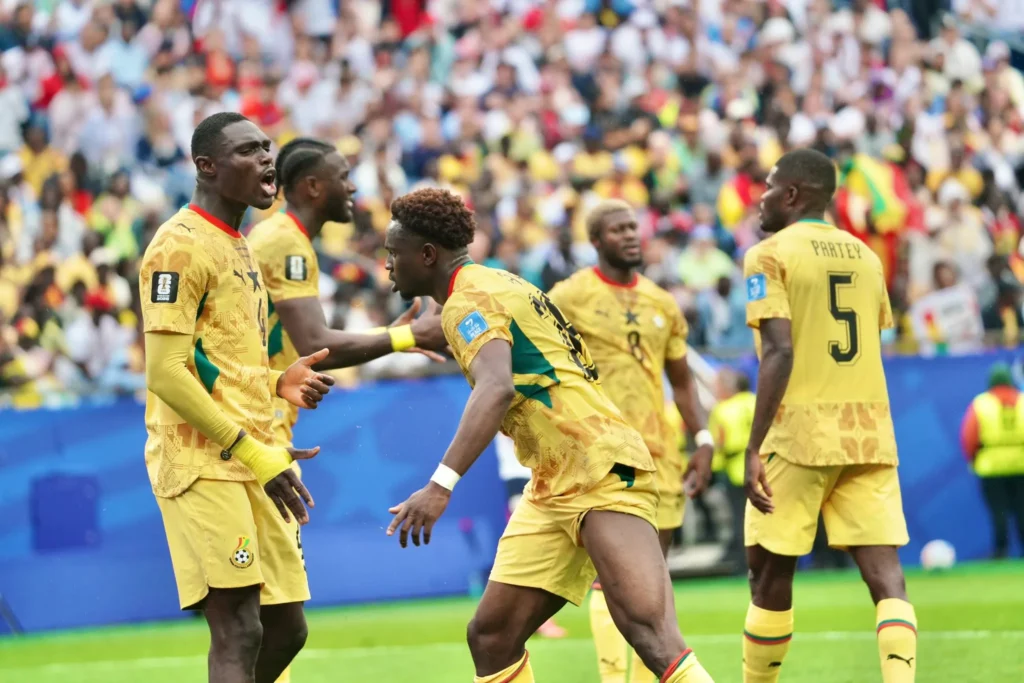
There was little time to reshape the squad, embed a new playing philosophy or oversee meaningful structural reforms. Reuters reports that Queiroz replaced Addo just 72 days before the World Cup and led the Black Stars in only one friendly before the tournament began.
In practical terms, the assignment resembled crisis management more than long-term team building. Despite those constraints, Ghana reached the knockout stage after defeating Panama, drawing with England and progressing as one of the tournament’s best third-placed teams before losing narrowly to Colombia.
Those results neither represent failure nor overwhelming success.
They illustrate something more nuanced. Ghana remained competitive against quality opposition but also exposed familiar weaknesses that have persisted across multiple coaching eras.
Against Colombia, for example, the Black Stars defended with commitment but struggled to create meaningful attacking opportunities, failing to register a shot on target despite remaining within one goal of their opponents for the entire match. That statistic became a symbol of broader issues that cannot reasonably be attributed to a coach appointed only weeks before the tournament.
The Farewell That Shifted the Conversation
In his departure statement, Queiroz expressed pride in what had been achieved while acknowledging “healthy dissatisfaction” with the belief that greater progress remained possible.
That phrase is revealing. It rejects both complacency and despair.
Rather than presenting Ghana’s World Cup campaign as either a success or a failure, it frames it as evidence that the country’s football ecosystem has potential but requires stronger foundations.
He went further.
According to his published statement, “The future of the Black Stars will not be built only on the pitch. Black Stars’ success must start off the field, by creating the best possible environment to prepare, protect and develop Ghana’s extraordinary football talent.”
Those words should not be dismissed as the routine reflections of a departing coach.
Throughout his career, Queiroz has repeatedly emphasised that elite football is increasingly determined by the quality of systems surrounding players rather than coaching sessions alone.
Modern international football relies on extensive performance departments, sports science, medical teams, logistics, scouting networks, player welfare, data analysis and long-term planning.
In that context, “off the pitch” is not a slogan. It is an organisational philosophy.
Carlos Queiroz Has Gone — But Ghana’s Bigger Football Problem Remains
Another World Cup campaign has ended with another coaching departure. Yet Ghana’s recurring cycle extends far beyond the technical area.
Key Points
- Ghana exited the FIFA World Cup after a 1–0 defeat to Colombia.
- Carlos Queiroz resigned shortly afterwards.
- The debate now turns to continuity, governance and long-term planning.
- The next coach must be part of a wider football strategy.
Fact vs Analysis
Verified Facts
- Ghana lost 1–0 to Colombia.
- The Black Stars exited the FIFA World Cup.
- Carlos Queiroz resigned shortly afterwards.
- He called for stronger off-field structures.
Editorial Analysis
- Frequent coaching changes may be limiting long-term progress.
- Continuity appears to matter as much as tactical quality.
- The next appointment alone is unlikely to resolve broader structural questions.
Beyond Coaching: Ghana’s Recurring Cycle
Ghana’s football history is full of gifted generations.
From Abedi Pele to Michael Essien, Asamoah Gyan, André Ayew and Mohammed Kudus, individual quality has rarely been the country’s biggest challenge.
Continuity has.
World Cups and Africa Cup of Nations campaigns have repeatedly been followed by coaching changes, technical restructures and fresh promises of renewal.
The result has often been another rebuilding cycle before the previous one had fully matured.
Timeline: Carlos Queiroz’s Ghana Journey
| Date | Event |
|---|---|
| 23 April 2026 | Appointment as Black Stars head coach following Otto Addo’s departure. |
| May 2026 | Oversees one pre-World Cup friendly. |
| June 2026 | Leads Ghana at the FIFA World Cup. |
| Round of 32 | Ghana lose 1–0 to Colombia and are eliminated. |
| 5 July 2026 | Queiroz announces his resignation and urges stronger off-field structures. |
What Ghana Must Fix Before Choosing the Next Coach
1. Long-term football strategy
Develop a multi-year technical vision that survives coaching changes.
2. Youth development
Strengthen pathways from youth teams into the senior national side.
3. Scouting
Expand domestic and diaspora talent identification with transparent selection principles.
4. Technical continuity
Ensure playing philosophy remains consistent regardless of who is head coach.
5. Accountability
Clarify performance measurement, decision-making and responsibility across the football structure.
6. Domestic football alignment
Connect national-team planning with the Ghana Premier League, academies and youth competitions.
Nukunya Insight
The easiest response to Ghana’s World Cup exit would be to appoint another coach and begin again.
The more difficult response is to ask whether repeated managerial changes have distracted attention from the deeper reforms required to compete consistently at the highest level.
Carlos Queiroz’s farewell ensures Ghanaian football can no longer avoid that question.
Frequently Asked Questions
Why did Carlos Queiroz leave Ghana?
Queiroz resigned after Ghana’s World Cup elimination and called attention to the need for stronger football structures beyond the coaching role.
What is Ghana’s recurring football cycle?
It refers to the pattern of changing coaches after disappointing tournaments without consistently addressing wider issues such as planning, governance, development pathways and long-term continuity.
What should Ghana do next?
Ghana should treat the next coaching appointment as part of a wider football strategy, with clear technical direction, accountability, player development and institutional continuity.
Related posts:
 Asamoah Gyan appointed Ghana football ambassador ahead of 2026 World Cup push
  Tottenham’s Mohammed Kudus ruled out of 2026 World Cup with injury
  Ghana Challenges Canada’s Thomas Partey Visa Decision as World Cup Row Deepens
  Ghana Edge Closer to World Cup Knockouts After Holding England to Draw
  Ghana Black Stars qualify for FIFA World Cup Round of 32 before Croatia showdown