Court Rejects President Hassan Sheikh Mohamud Term Extension
Somalia's Supreme Court has ruled that President Hassan Sheikh Mohamud unlawfully extended his term, sparking a constitutional crisis and ordering rapid.

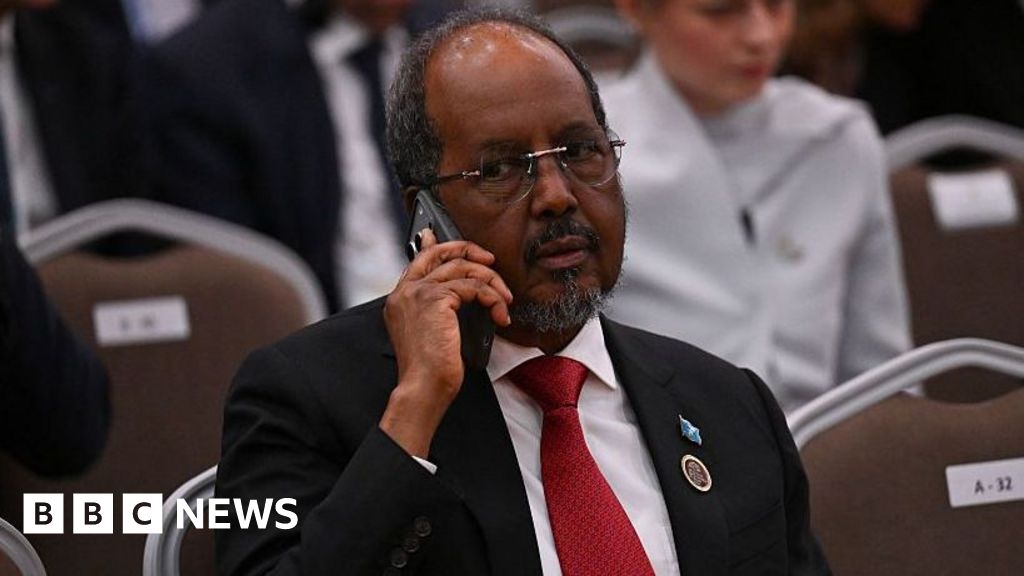

The Supreme Court Ruling on President Hassan Sheikh Mohamud
“The court said the president lacked the authority to take the move of dismissing the Chief Justice.”
In a landmark decision that has reshaped the political landscape of the Horn of Africa, the Somalia Supreme Court has officially struck down the term extension of President Hassan Sheikh Mohamud. The ruling, delivered on Thursday, declared that the president’s continued stay in office beyond the expiration of his four-year mandate in May was unlawful. This judicial intervention comes at a time of heightened tension, as the administration had previously sought to justify the extension through legislative changes approved by parliament earlier this year.
The constitutional crisis began when the federal parliament passed amendments in March that effectively added a year to the presidential term. While the government argued these constitutional changes were necessary to facilitate a transition to universal suffrage, opposition leaders and civil society groups petitioned the court, alleging a blatant power grab by President Hassan Sheikh Mohamud. The Somalia Supreme Court ruled that such a fundamental change to the democratic cycle could not be implemented retroactively to benefit the incumbent officeholder. This landmark decision effectively voided the term extension and placed the administration of President Hassan Sheikh Mohamud in a state of legal uncertainty regarding its future mandate.
Dismissal of Chief Justice Bashe Yusuf Ahmed

The legal battle intensified significantly in the 24 hours preceding the ruling when President Mohamud issued a decree attempting to sack Chief Justice Bashe Yusuf Ahmed. The presidency cited administrative irregularities as the reason for the dismissal, but the judiciary interpreted the move as a direct assault on the independence of the courts. In its final judgment, the Supreme Court addressed this dismissal directly, stating that the president lacked the constitutional authority to remove the Chief Justice unilaterally.
This standoff in Mogadishu has created a historic constitutional ruling that reinforces the separation of powers. By rejecting the dismissal, the court has signaled that the judiciary will not be intimidated by executive orders. Legal experts note that the attempt to remove the head of the judiciary during an active deliberation over the president’s mandate further delegitimized the administration’s stance in the eyes of the court and the public.
Judicial Directives and Next Steps
The Supreme Court has ordered Somalia’s political leaders to agree on an electoral plan within 30 days and hold elections within 90 days.
To prevent a total power vacuum, the court provided a strict roadmap for the government and opposition to follow. The directives focus on immediate political reconciliation and the resumption of democratic processes:
- The 30-Day Consultation Window: Political stakeholders, including federal and regional leaders, are ordered to convene and reach a consensus on a comprehensive electoral plan within 30 days.
- The 90-Day Election Deadline: The court mandated that credible elections must be organized and held within 90 days of the ruling to restore constitutional order.
- Interim Governance Limitations: The ruling implies that the current administration must serve in a “caretaker” capacity, focusing solely on election preparations rather than major policy shifts.
- Judicial Oversight: The Supreme Court will remain the final arbiter of any disputes arising during the short-term transition period.
Impact on Somalia’s 2025 Election Plans
The court’s decision significantly disrupts the government’s long-term strategy for Somalia elections 2025. Prior to this ruling, the administration was working toward the first nationwide “one-person, one-vote” elections since 1969. While the goal of universal suffrage remains a priority for many, the court found that the constitutional timeline could not be sacrificed for the sake of these systemic changes. This ruling forces a return to the negotiating table, where the model of the upcoming elections—whether direct or indirect—must be decided under intense time pressure.
Economists and political analysts are closely watching how this instability might affect regional development. Similar to shift seen in African trade trends, political stability is a prerequisite for foreign investment and domestic economic growth. A prolonged crisis in Mogadishu could stall critical reforms needed to integrate Somalia more deeply into the regional trade network, highlighting the fragility of the nation’s progress toward economic self-sufficiency.
Regional Security Concerns
The timing of the Somalia political crisis is particularly precarious given the security situation. Somalia is currently navigating the planned withdrawal of international peacekeeping forces, a transition meant to place the national army in full control of security by the end of the year. Domestic political infighting risks distracting the government from offensive operations against insurgent groups, who often exploit periods of political vacuum in the capital.
International partners have expressed concern that the dispute between the presidency and the judiciary could undermine years of state-building efforts. Furthermore, just as global transformation and diaspora initiatives have played a role in rebuilding Somali infrastructure and social services, the diaspora community is now calling for a peaceful resolution to ensure that recent gains in stability are not reversed by a struggle for executive control.
FAQ: Somalia Political Standoff
As the situation develops, several questions remain regarding the legality of the current administration and the feasibility of the court-mandated timeline. Many citizens are concerned about whether a 90-day window is sufficient to organize a national vote in a country still facing significant logistical and security hurdles. The Supreme Court’s insistence on this deadline, however, serves as a mechanism to force political actors to prioritize the election above all other legislative agendas.
The international community continues to urge all parties to respect the independence of the judiciary and the rule of law. Whether President Hassan Sheikh Mohamud will fully comply with the 30-day negotiation order remains the most critical factor in determining if Somalia can avoid a deeper descent into civil and political unrest.
Frequently asked questions
When did President Hassan Sheikh Mohamud’s term officially end?
President Hassan Sheikh Mohamud’s four-year mandate officially expired in May.
What is the court’s timeline for new elections?
The court has ordered that political leaders agree on a plan within 30 days and conduct elections within 90 days.
Related posts:
 South Africa Police Chief Suspended Over $21m Corruption Probe
 Africa’s drought crisis intensifies as food insecurity rises
 Ghana seeks AU intervention over xenophobic attacks in South Africa
 WHO Warns DR Congo Ebola Outbreak May Be Spreading Faster as Death Toll Hits 131
 Ethiopia–Sudan Rift: Consulates Shut as Drone Allegations and Power Crisis Deepen